I think mining is a really primitive way of making a living. You gouge it out of the earth and you ship it away. It can never be sustainable: unlike a forest, where you can say “Well, we plant two trees for every one cut and we leave behind the nests and the habitats, we use the forest for eco-tours and to teach about local Indigenous culture.” Once it’s mined it’s gone, it can never grow back: the uranium, ore, oil or copper and the mountaintop as well. We call them ‘mines’ when really they are ‘ourses’ or even ‘earth’s’. Australian Conservation Foundation point out the mines in Western Australia make close to a billion dollars profit a week taking minerals “they didn’t make, out of land they don’t own.” Mining turns irreplaceable materials into disposable products; it fuels industries which have not caught up with the parlous state of the poisoned world; it’s a primitive, dangerous occupation and I think it attracts primitive, dangerous people.
Blog
-
dentist, draftmaker, drill seargeant
Whenever people ask, So do you make a living from your writing, I feel obscurely coal-hauled, if not outright keel-hauled. Does anyone ask this question of an architect, a dentist? It’s so personal and somehow lip-smackingly censorious. I hear behind it two subtext questions: 2: “So. Is your writing any good?” and 3: “And am I subsidizing it?”
The hundreds of times I have been asked, “So: do you make a living from it?” the question has never once been accompanied by, “Ah! Is your writing for sale? Where can I buy some?” But I answer the spoken and the unspoken questions either to myself or, if asked rudely enough, out loud: 1: No. 2: Yes. 3: No, so you’re not my employer, so you can put those eyebrows down.
-
poor freedom
Queenslanders! If you want to feel good about everything, get yourself a European recently arrived from their winter and take him to the beach. Mine had never seen waves above hip-height before, but he charged into the surf like a snuffling dog. Every time I wiped the salt from my eyes there he was, plunging and lounging, spearing under curly-headed wavelets like a cormorant, trying to catch already broken arriving waves (“This one’s mine!”), surfacing with a massive smile across his face. I lay in the water, it’s been so long, and the line of buildings tilted on one end of the sea and the mountaintops tilted at the other. Plumped up Australians dragged their bellies and boards. When I was a child only ladies who’d had children were jiggly, and old men might have a beer belly: now it seems the whole nation’s jiggling, even muscular men in their 20s. Sugar, sugar. The water accepted us all. The ocean too is thicker and slower than it used to be and off the coast of California, apparently, carpeted with deceased sea creatures. But on the surface between the flags we were quite happy, one of us ecstatic. He plunged past me spluttering in sheer joy, legs flailing. “It’s… like…. pure freedom!” he shouted.
-
tall
The other day we found a bookstore which has a cafe in it. These are little paradices, or is it paradie. What a sweet cool feeling to leave behind the clamour of the street and let the doors close on a spacious room whose wall to wall shelving is interrupted only by a serving counter, an espresso machine, a stack of cups.
We separated and began foraging round the overfull shelves like fish nibbling at the walls of a fish tank. I pounced on exactly the book I wanted, Alan Bennett’s diary extracts and essays; he carried to the table a small pyramid of Marshall McLuhans. Our coffee arrived. We began to read. The older couple at the next table got up and came past us on their way to the counter. The man, a bluff, rural Queenslander type, addressed me across my companion’s back. “So. How tall IS he?”
I said, “He’s right here. Why don’t you ask him yourself, if you want to know. Don’t you think it’s rude to talk across somebody about them, without addressing them directly?”
He was hurt. “I just noticed as he was wandering round the shop. I kept wondering, how tall is that bloke.”
I put my hand on my companion’s beautiful shoulder. He closed his book. “Imagine he gets asked that question a lot. Imagine we both do. Maybe it feels dehumanising to constantly be asked about something you can’t do anything about. I get asked it, too.”
His wife said, “Our daughter’s tall.”
I said, “Well, then, she will know what it feels like. It’s amazing how people feel entitled to ask that question when we are not even in conversation, we haven’t even spoken. I’ve even had people ask me my height, and then refuse to give their own – as though mine were some kind of freakish public statistic but theirs is personal information.”
“Our daughter’s six foot two,” she said, gamely. “Me too,” I said. Her husband said, across me, “Seven feet?”
“Nearly,” said the Marshall McLuhan fan.
“He’s about six foot eight,” I said. A series of fresh questions ran through my head: How old are you? How much do you weigh? Have you measured that beer belly, what’s its circumference? But the poor man was labouring so hard to restore the goodwill he imagined he’d lost, was so awkward in his warm-heartedness, that I didn’t want to make the point because clearly he would think I was being hurtful, he wouldn’t get it, he would perhaps even not have the resources for self-expression and processing his emotions that some of us have worked hard for, and I didn’t want to leave him with an insect sting all the rest of the long hot trafficky afternoon. The only thing I feel certain of in life is this: you don’t gain ground by hurting the people who have hurt you.
-
sun crema
Sunday. Drive down to the beach. Past all the worlds. Seaworld, Dreamworld, Movieworld. This tiny horseshoe strand was a favourite of mine. Now to get to it you have to round a dozen roundabouts: long miles of wilderness which now are smooth resorts. At the mouth of the bay a smooth cafe stands. It is full with people in smooth shoes and clothes. The irons have entered their souls. Only a few dozen are on the beach itself, or in the ocean, the water and sand rough on their skin. Years before, the beach would be full, the cafe empty. As we come down the hard-trod beach bridge with our feet scritching the yowling hot dry soft sand a girl comes up past us, body folded round her swimsuit the way a skin forms on sour yoghurt, smooth youth creased and jiggling like old age, her eyes down, her thumb ardently scrolling the smooth glassy surface of the palm-sized computer which gives her a mirror, I suppose, of who she is on this wildly sunny day on this hidden beach between the shaggy headlands and behind the smooth cafe. She has bought a lifetime season ticket to Phoneworld. She is never alone, but she’s always alone. Oblivious and knowing behind her the surf brings in its trays of crema.
-
beekeeper
@…………..
Sister-in-law: “Yeah that was my uncle who used to be a beekeeper. But then he lost all his bees.” Brother (mournfully): “Yeah. ‘I used to be a beekeeper but now I’m just… a keeper.’” Mum: “But he didn’t keep them, he didn’t keep them at all!” Brother: “‘I used to be a beekeeper, but now I’m just… a bloke.’” Nephew: “We have four chooks. Salty, Fairytales, Slippers, Goldie, and Superchook.” Second brother: “Only Salty turned out to be a rooster so we sent him out to a farm. He’s died now.” Me: “Really?” Brother: “Yeah. And the neighbours have two chooks that turned into roosters. The neighbours closer to town.” Nephew: “We could play chess. But there’s too many of us.”
-
so little, so long
We say, they have so little, yet they complain so little. They have so much suffering and stress, yet they smile so much. Secretly we think, I think, That’s because they feel things less. Otherwise the difference would rub intolerably. Secretly we must think, the smiles mean they need less: we deserve all this.
Imagine someone living in a long row of tents between two countries. Imagine them imagining a mansion, overspilling with one unhappy person who is home alone, with the maid, the cleaner, can’t count it all, a lottery winner to whom a lot means but a little. Imagine that lonely pioneer of loneliness is on the moon, left behind, shut out of the endlessly imagined Gatsby parties, a liner of communion which steams by while they are on their fur-lined raft. Once again they go to the fridge, open the two doors on the rows of shoes, can’t count and don’t count, roaming their overfilled unfulfilled life like a coin in a bloated cow’s belly. Or so we might imagine.
Isn’t it amazing how bright the children smile? They have a sack filled with rags and are kicking it. Children are easy to love, like foetuses. The first tenet in an advice column “how to tell if your children are spoilt” was: do they find it difficult to enjoy themselves? Does nothing seem to make them happy?
-
bigness
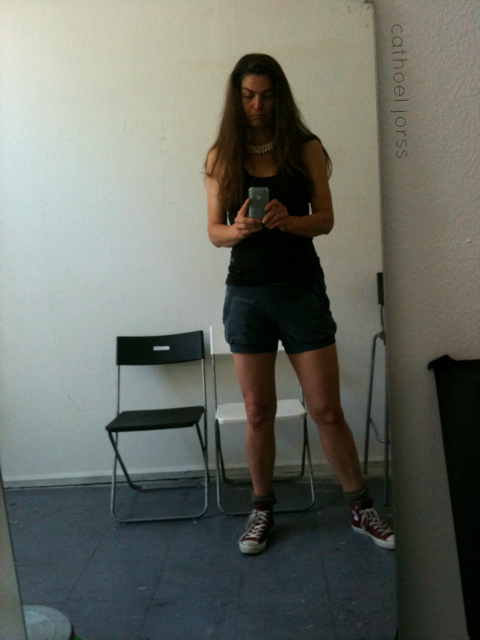
Deciding not to put up with the height shite any longer has been inneresting. 18 months’ Northern Europe offered a break, I suppose, from the constant commentary that has been part of my life uninvited since I was 11 or 12 and now I see it so sharply and can’t stand it anymore. It’s not so cruel I think as the more dangerous kinds of discrimination and prejudice people encounter, for example on the basis of race. But its essence is the same. You are different to me; what I am is the norm; that gives me the right to comment uninvited and pass judgement on your qualities that are not behavioural, are simply genetic, that exclude you and you can do nothing about.
“How’s the weather up there?” reminds me that to some it’s surprising to realise we are both living in the same shared world. “You are both too tall!” as the girl at the fruit shop blurted this afternoon invites only one answer, “Too tall for what?” and it’s simply not convincing when she smiles encouragingly, comfortingly, and assures me, “Good! I meant it’s good!” No, you didn’t. Any more than the oft-repeated “Jeez, you’re a big girl! How tall are you?” is persuasive when followed with, “No, no, it’s a compliment!” I get that great height brings with it presumptions of power and influence, particularly for people who are still responding, in their hearts, every time they look up at someone, the same way they felt when they were tiny and everyone taller than them was a teacher or parent or adult and thus had mysterious power and authority over them. But the compliment, if there is one, is something like, “You are enjoying an unearned advantage, you have a natural wealth that I don’t share in, I am envious, your life must be somehow easier and more pleasurable because of it and I imagine you coasting into things I have to work for….”… “You are different from me, I resent that.”
I can’t imagine tackling some stranger with their back turned to me on the bus with a question like, “Jeez, you’re a big girl, I’m not sure I’ve really ever seen a girl as big as you…. How much DO you weigh?” And then persisting when they say they’d rather not say, with “Oh, no – it’s a compliment.” I learn a little something about our rudeness to each other every week of adulthood. And strangely I have no regrets about not getting to know the very short, very bald guy who came up to me on the dance floor when I was all lissom and loose and had forgotten my height, weight, age, address, ambitions, and day job and only the sweat held me down beneath the floating plastic ceiling of the music and smiled greasily and said, like he was making me an offer, “I’d like to climb you.”