Kookaburra under the eaves of the giant Storey Bridge, last night as it grew dusk and we were all gathering to watch Utopia. Laughing and laughing and laughing. The laughter echoed and magnified around the joists and girders and cars passed overhead, one at a time, each one thumping quietly the joints that let that bridge breathe and expand. Maybe bridges don’t breathe. Maybe birds don’t laugh. But I stand here with my human head thrown back and this is about all I see.
Blog
-
the drug of war
War on drugs is not working. Except, of course, as a war: dispute over territories, profit for those who manufacture destructive products, wasted expenditure, huge casualties. I wish compassion could be administered as machine-gun bullets can but it’s a laborious infantry, a science in its infancy, a sophisticated machinery many of us are too fearful to use. What is the point of making war on one another and war on our own weakness. War is war.
-
treaty
February 6
On this day in 1840 the Treaty of Waitangi was signed in New Zealand to make peace between British invaders and North Island Maori chiefs. To this day no treaty has ever been signed with the Indigenous nations of Australia, so you could say we are still at war. In his film Welcome to Australia John Pilger points out that though we lionize the fallen of the disastrous Gallipoli conflict in World War One, the cenotaph standing in every tiny Australian town is unaccompanied by any monument to the Aboriginal warriors who died fighting to defend their land. Nor to the women and children slain with poisoned flour and poisoned waterholes. Nor to the young men who manage mysteriously to hang themselves on boot laces whilst under police custody.
At the Dreaming festival at Woodford I saw a powerful performance by a Maori singer who introduced the other members of her band. She said to the audience, Don’t you worry ’bout them haka boys, I’m gonna introduce you to the really scary members of my band. The ‘haka boys’ crouched with tongues out, ferocious faces. The really scary band members were her sister and sister-in-law, who sang backing vocals. She told us how when they had landed at Cairns airport a few days before, “your whole bloody Australian army was swarming the place.” Her backing vocalists amused themselves by going up to soldiers in camouflage gear and saying, Eh. Boys. We can still see you.
Recognising the wrongs of the past, righting the wrongs of the present. Rejoicing in the wit and verve and resilience, the sacred seriousness of the displaced cultures, honouring our own settler/invader cultures by humbly asking Indigenous culture to be once again the root, the stem, the foundation of our nations: surely it’s time.
-
coffee olympics
Coffee Olympics, on an outdoor table whose whitewasher left a paintbrush hair behind. Because they is the trouble with whitewashing as a concealment: it’s the forensics. No one is foreign, no one’s a nullius, no one’s illegal: that’s a sickness. And even our splashiest televised distractions leave traces of political ecology in every frame of their fake tannery. Lather up, history.
-
how tall is he
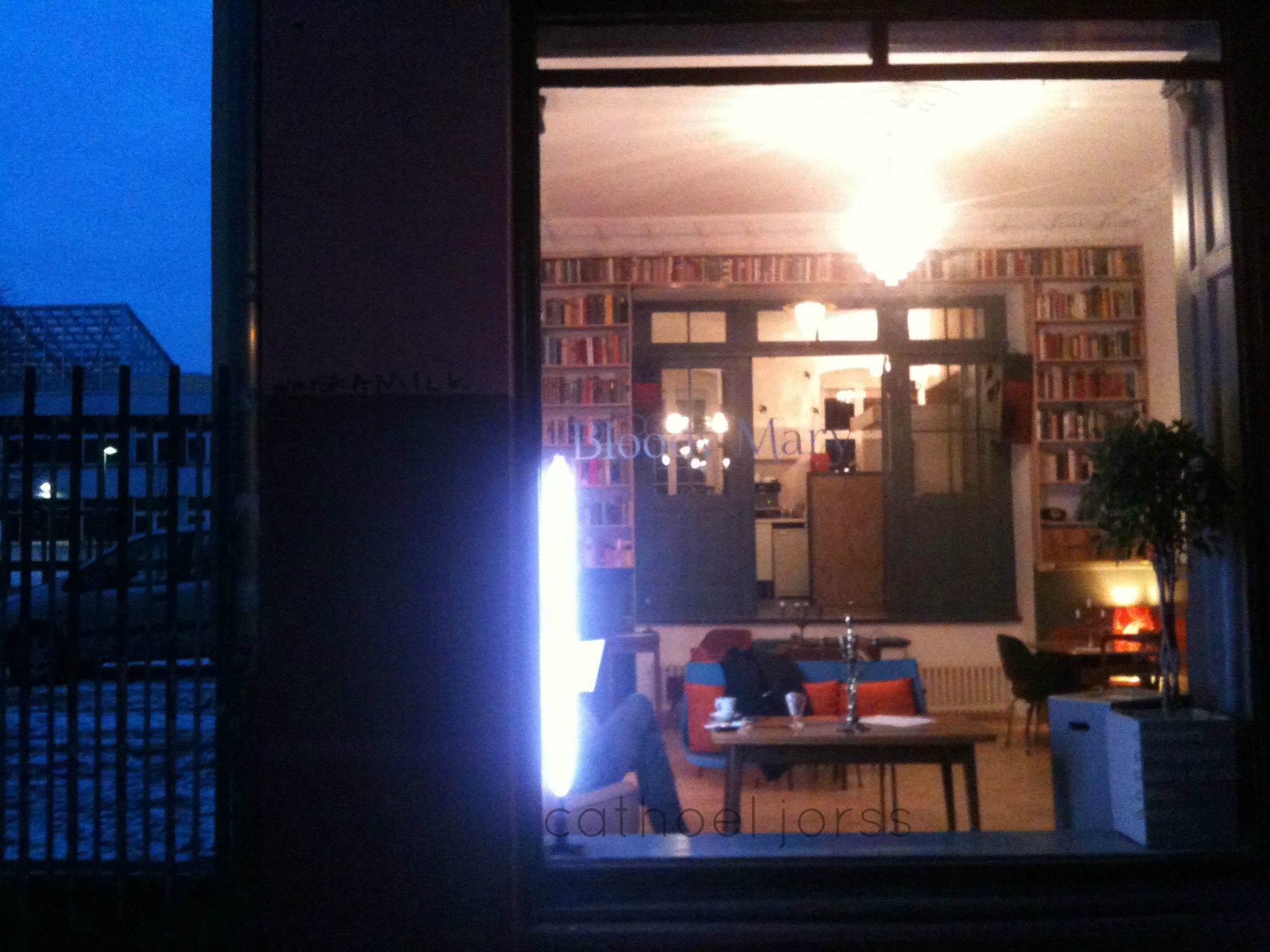
In Brisbane we found a bookstore which has a cafe in it. These are little paradises, or is it paradie. What a sweet cool feeling to leave behind the clamour of the street and let the doors close on a spacious room whose wall to wall shelving is interrupted only by a serving counter, an espresso machine, a stack of cups.
We separated and began foraging round the overfull shelves like fish nibbling at the walls of a fish tank. I pounced on exactly the book I wanted, Alan Bennett’s diary extracts and essays; he carried to the table a small pyramid of Marshall McLuhans. Our coffee arrived. We began to read. The older couple at the next table got up and came past us on their way to the counter. The man, a bluff, rural Queenslander type, addressed me across my companion’s back. “So. How tall IS he?”
I said, “He’s right here. Why don’t you ask him yourself, if you want to know. Don’t you think it’s rude to talk across somebody about them, without addressing them directly?”
He was hurt. “I just noticed as he was wandering round the shop. I kept wondering, how tall is that bloke.”
I put my hand on my companion’s beautiful shoulder. He closed his book. “Imagine he gets asked that question a lot. Imagine we both do. Maybe it feels dehumanising to constantly be asked about something you can’t do anything about. I get asked it, too.”
His wife said, “Our daughter’s tall.”
I said, “Well, then, she will know what it feels like. It’s amazing how people feel entitled to ask that question when we are not even in conversation, we haven’t even spoken. I’ve even had people ask me my height, and then refuse to give their own – as though mine were some kind of freakish public statistic but theirs is personal information.”
“Our daughter’s six foot two,” she said, gamely. “Me too,” I said. Her husband said, across me, “Seven feet?”
“Nearly,” said the Marshall McLuhan fan.
“He’s about six foot eight,” I said. A series of fresh questions ran through my head: How old are you? How much do you weigh? Have you measured that beer belly, what’s its circumference? But the poor man was labouring so hard to restore the goodwill he imagined he’d lost, was so awkward in his warm-heartedness, that I didn’t want to make the point because clearly he would think I was being hurtful, he wouldn’t get it, he would perhaps even not have the resources for self-expression and processing his emotions that some of us have worked hard for, and I didn’t want to leave him with an insect sting all the rest of the long hot trafficky afternoon. The only thing I feel certain of in life is this: you don’t gain much ground by hurting the people who have hurt you. -
Survival Day
Survival Day gleanings. This is what I cleaned out of my bag after we got home. Started out to hear the speeches and to march, ended up with our hearts broken and opened up all over again, robust in anger and delicately rejoicing, heart flooded like mangrove roots with a myriad various Indigenous faces including people I’d had warm contact with in the past and hadn’t thought of as Indigenous until we met again in this context, fringes of greenery shaping the old wood lace under the eaves of beautiful Jagera Hall every time I looked up to give my mind a digestion break from John Pilger’s movie, bellyful of sweet crumbling smooth bunya nuts and lilipillies, whole handsful of intensely beautiful gleanings from overhead and underfoot. The ones that caught my eye today were the colours of blood, resistance, kidney, heart, lung, fury. Oh and we brought home a bird. Just a tiny baby wattle bird, who fell down out of the overhanging tree onto a lane of the road as we passed and was kept alive in a sun hat filled with grasses and fed on pulped lilipilly and coaxed to take little beaky sips of water fed to it on a stalk of grass. He seemed to bond instantly with my companion and rode home serenely – we walked, under starlight and bursts of fireworks – on an outstretched finger. By the time we had reached the river he was asleep, with his scrappy head tucked into his fledging feathers, bobbing gently as we went along. Yesterday he rode around the house on his new, male, mum’s shoulder and began to let out lovely peeps. Today he is feeling more adventurous and is being given flying lessons, in German, by a man with no feathers, no beak, and no wings.
-
the dogover nation
To the person who decided that every cafe, restaurant, waiting room, bus station, bus, and public space had to have a television screen in it: I disagree with you.