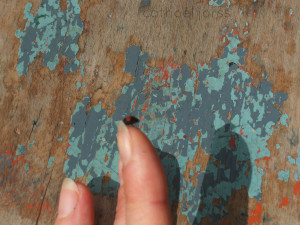
I found a radish! Just sitting in the middle of the road all by itself. It looked a little bruised and chipped. Poor little radish.
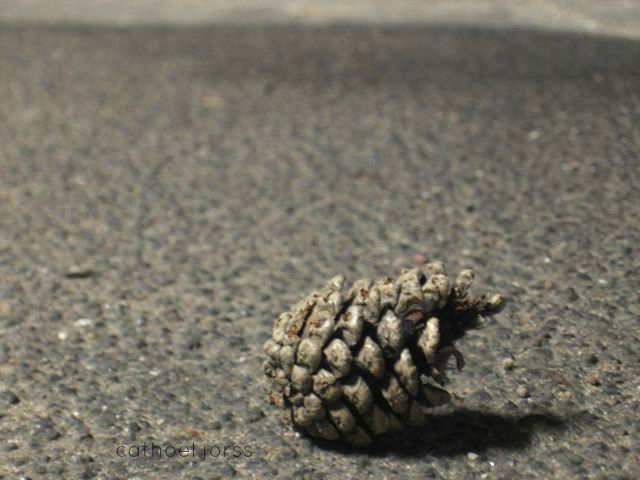
I found a radish! Just sitting in the middle of the road all by itself. It looked a little bruised and chipped. Poor little radish.
Today I’m having ale and potato chips for lunch. Last night, ice cream for dinner. I was planning a little ice-cream-shop crawl but the first (pistachio with hazelnuts) was so rich and creamy it did me in. In between there were pancakes for breakfast. A snack ‘n’ dessert weekend.
I love how the real ale movement has been belatedly followed by an awakening in the handmade chips guild: Oi! We can’t be doing with that! Those beers deserve better bowlsful!
Heart-curdling rage in the city today. I was in a crowded shopping street when a man began to roar at his son. He was bantam-weight, wiry, blond, apoplectic: the boy looked six or seven at most. His little sister, used to keeping out of it, hung her head and looked away. Around them hundreds of people turned their heads – it was loud, roaring, full-bore, insanity’s volume. Shopping bags rustled, buskers busked. I stopped. A teenaged boy on a bicycle stopped too. I laid my hands flat on the air in front of my stomach, a placatory gesture. “Please,” I said. “Calm yourself. Your children are frightened.”
He didn’t hear, didn’t answer, knew in that instant no one but themselves and his own swollen, massive entitlement to rage. He roared and roared, putting his face close to the child. The boy was bent double, both his arms rigid, pulling back and curving his body away from the danger as far as he could. The man held him by both hands in one large fist, the other hand making big threats in the air. I exchanged glances with the boy on the bicycle. I put one hand on each little dark head, smoothed and cupped them. Their soft hair, their stiff little faces. “There’s no need to shout like that. He can hear you. We can all hear you. You’re frightening him.”
Giving me a vile look he dragged the child away. The girl followed willingly, willlessly I suppose. The man was blond and Nordic, red in the face; the little children looked to be Moroccan maybe or Egyptian. To my shame I was wondering how did this blond man get hold of these two small, dark children. Perhaps he was married to their mother. Perhaps they were his by blood, though none the more his to abuse and to frighten. Perhaps they were adopted. Maybe, stolen. I walked round the corner where they had gone, fretting and wondering, my heart a drum. The teenaged man on his bicycle came behind and I saw him swoop past the man and call out something. The man shouted back. My ears were filled with an army of blood. Making a determined effort I crossed the narrow laneway and caught up with them. “Sir,” I said, “sir, do you speak English? Please stop. Let me talk to you.”
He turned and snarled, he raised his fist and planted it two feet from my face. “You’re not from here,” he sneered, “you know nothing.” I said, “Listen. You don’t need to frighten your children. Look at them: they’re terrified of you. Be gentle. Be kind. Find your kindness. Please!”
He made a feint at me, not meaning it, just wanting to put me off. “Fuck you,” he shouted. “Fuck off!” I cupped my hand round the little boy’s nape. Probably he spoke no English at all. “Are you alright, little boy? Are you ok?”
The poor darling. His father, the monster, dragged him away, gesturing curtly for the girl to follow. He was still detailing to the child in coarse roaring snorts how the boy was at fault, was faulty, would amount to nothing. I hope for the boy’s sake he saw that of those six hundred people who didn’t know what to do, there were two who could not accept he be treated that way. It’s not ok, you are someone, you exist and we can see you. Maybe that is a candle that keeps him alight until he can run away into the world. I did nothing, I made it worse, it’s not about me. Despairing I bellowed after the man, a last effort: “Be a real man and protect the children!”
A girl came out of a shop, wondering. I showed her what had happened – the boy dragged around the corner, disappearing now, hanging back as hard as he could. She said, “Oh, my god. How could he.” We stared into each other’s gentle, sane eyes. “If he’s that loud, in public,” I said, slowly, “if he feels that entitled to shout and scream in the middle of a Saturday afternoon right here – imagine what he’s like at home.”
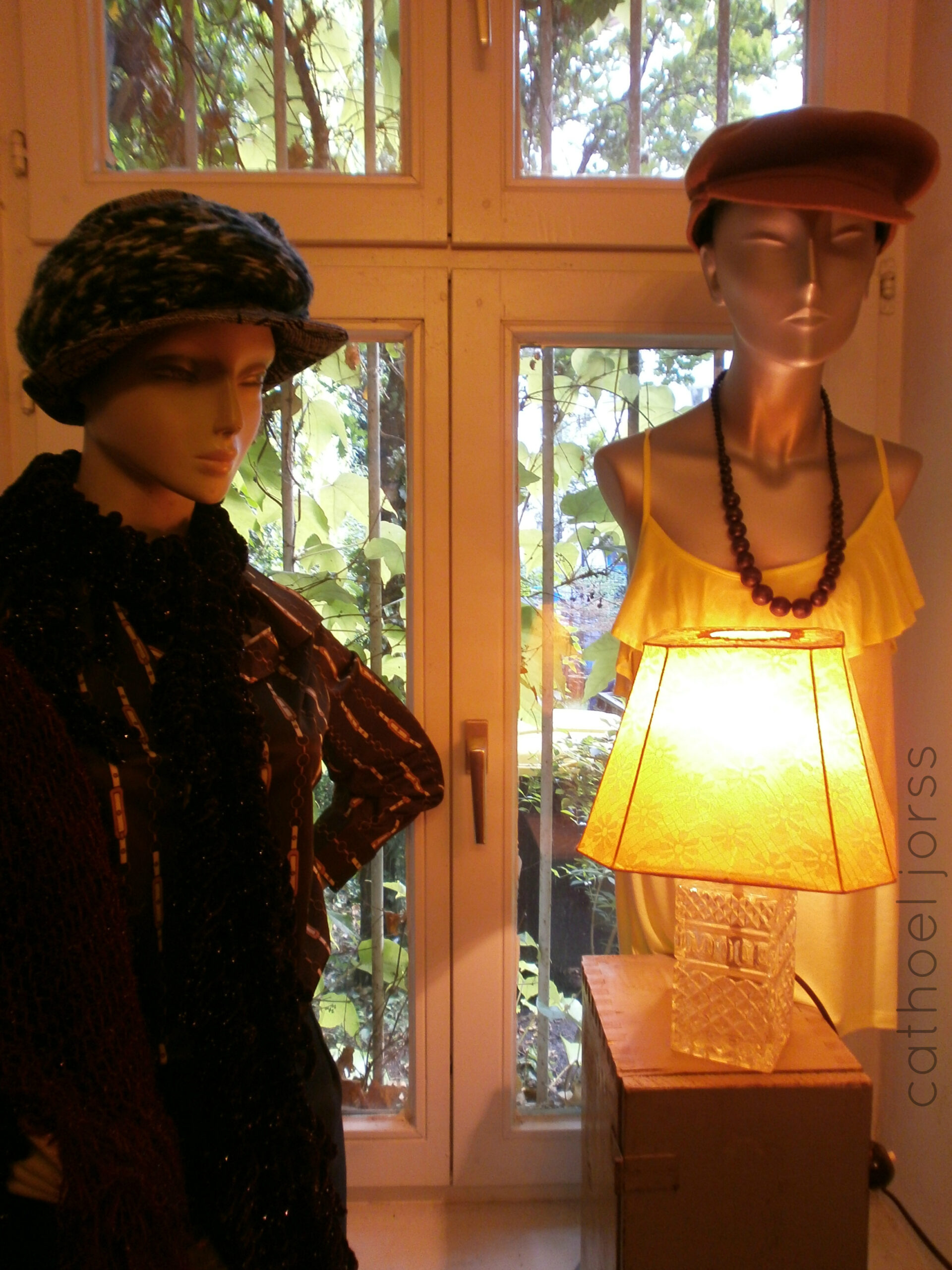
Hearing an old song on the radio this morning, the earwormly Islands in the Stream, it suddenly pierced me how sad I will be when Dolly Parton dies. I hope she’s happy and I hope it’s not for a long, long time. Some people remember what the world was like and they remind us how we can be human, I think.
To Dolly. Who even on the surface was beautiful long before it ‘took a lot of money to look this sheep.’
A German friend trying to understand a phone call from a Polish colleague just asked me could I stop typing… as I was rattling away at a fine old pace and it was very distracting. I learned to type on an old manual typewriter where you had to exert actual pressure to get the keys to move… so my typing is, he has said, like “a herd of gazelle.” Afterwards he apologized, in faulty idiom. “I didn’t mean to smoosh-smoosh you.” “Ah it’s ok. You can shush-shush me. I know I get overexcited, writing.”
Last night I had occasion to take a taxi and struck the cab driver from hell. Well, hell is an understatement: he was from purgatory. Drove with his hands in the air as he banged on to me about greenies and their so-called eco crisis, a plot to make money.
I couldn’t help it, I laughed in his face. “Gee, sorry. I think if I was out for a quick buck I’d be in oil wells, not solar panels.” “And what about palm oil?” he ranted. “All it’s doing is making money for the Indonesians.”
You can always tell, when someone lumps a group of people together and prefixes with “the”, there is hatred involved. Or at the very least, disrespect. “Palm oil’s not green,” I said. We charged down the streets. I changed the subject three times. “Isn’t it a wonderful night?” (It was.) “Have you been working long this evening?”
All ruses led back to Rome, and the Fall. He was breathing heavily with rage. Meantime an iridescent something had appeared in the road in front of us, it seemed to be some kind of fine streamer whickering in the air – “Did they just get married, you think?” I asked, pointing.
The car on the right had the same gleaming trail. “I think maybe they both just drove through an old cassette tape,” said the driver, and he was right. Long loops of glorious analog spurled through the air, dancing with light and with movement, a magic. He started talking about fisheries, how ridiculous it is to have quotas: because who is going to explain to the fish that they must not swim into the net? I wasn’t listening, I was watching the wind. The scarf that bore Isadora Duncan to heaven had unfurled itself from the car in front and whipped round the passenger-side mirror, inches from my hand. I unwound the window to let the night in. So beautiful, so triste. Because no matter how we block each other out – by hating greenies, by not listening to taxi drivers – sooner or later life slings its tendrils like lassos around our hearts and we have to wind the window down and let the night in.
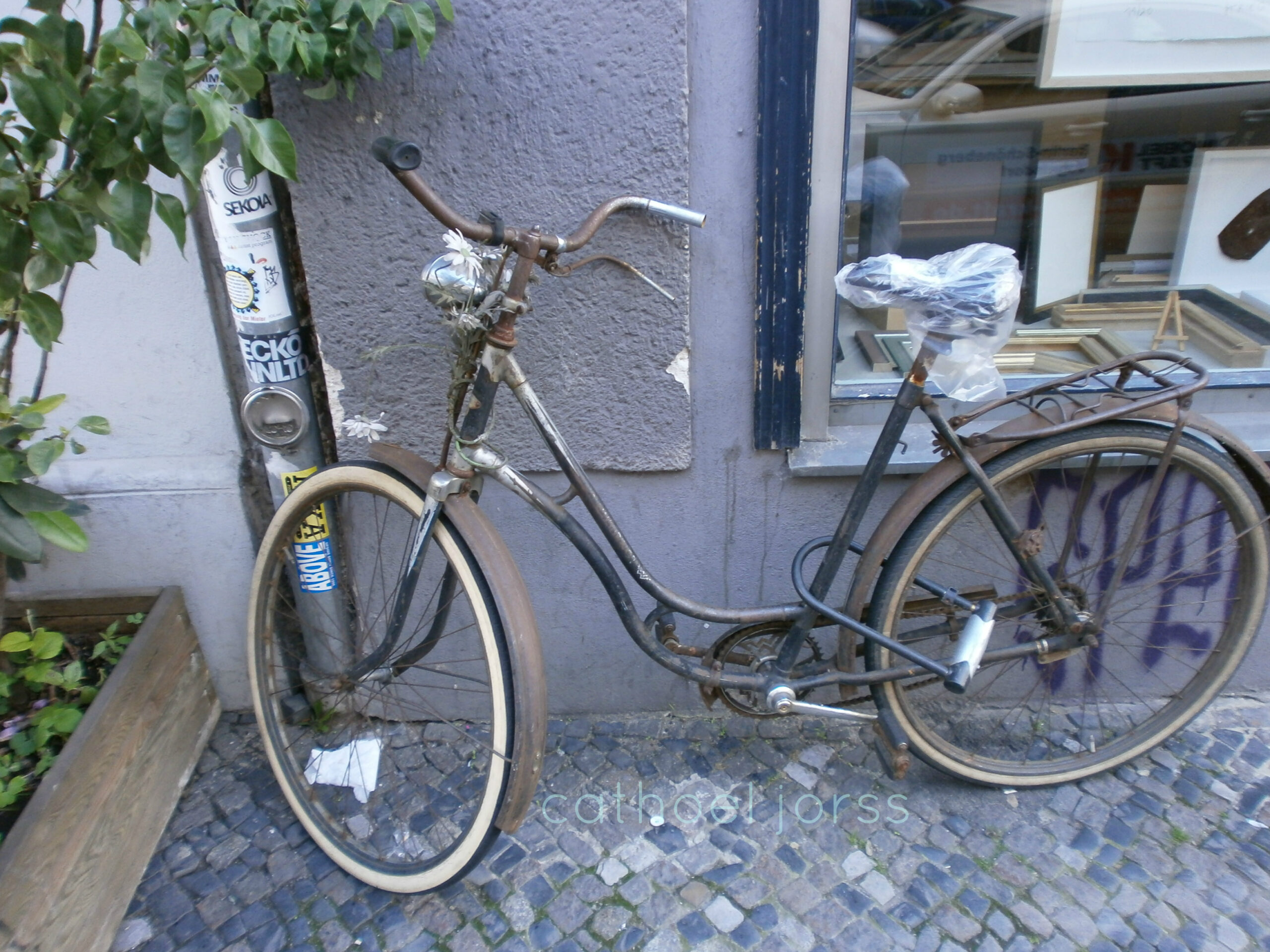
A man just jogged down the stairs holding his bicycle, by the nape of its seat, with one hand. In his other hand casually he carried a satchel spilling books. Its wheels are spinning helplessly: in the fluttering pit of my stomach I know the feeling.
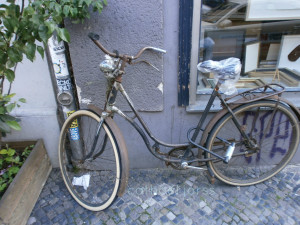
Perception is a funny thing. I’m feeling, though cheerful enough, somewhat tired & old, chubby & worn. Men are looking at me. One of them twisted his head to look back and came close to walking himself into a pole.
Another time I was feeling all fresh & funky, I had on this beautiful green print sundress, I scampered early out of the Adelaide Writers Week crowd and began lolloping up the hill. I was laughing with shame, having just inadvertently told Clive James I thought his poetry was quite good, “especially lately.” Argh. As I passed a group of people sitting on the low wall a young man raised his head and sang out, “Ew! You’re old. Get away from me! I hate old people.”
That was fifteen years ago. Today it’s all smiles & waves. Is it the dungarees? The grubby sandshoes? The sunshine? The moon? Billy Bragg puts it neatly, mortality: “Like a pale moon in a sunny sky/death gazes down as I pass by/to remind me that I’m but my father’s son.”
People in coffee shops who wipe down their table with the paper napkin and push their splayed chairs back in. People at bus stops who engross three seats for their handbags and parcels when elderly women are standing. I’d rather give a shit than be one.