Blog

  • knifegold

    An hour ago I made friends with two Israeli dudes selling Vietnamese knives on a drearily dripping, cheerily lighted Berlin market. It is so warming and cozy to wander under damp vinyl awnings and it has been so frustrating trying to chop vegetables with a bread knife all these weeks.

    One was called Coia and the other something even more beautiful which I forget. They stood there in their pigtailed dreads and ludicrously cute knotty woollen hats, relaxed with hands in pockets, offering one carrot after another so I could slice and scrape and find out all the properties of the knives laid out like eyeless sharks on the flowered cloth. Thinner, lighter blades go through things easily and are best for small vegetables and watery stuff (like fruit). Denser blades suit heavier applications like meat and potatoes and bone. You can sharpen your blade every six months or so on the underside of a ceramic plate, and Coia demonstrated for me what the sound should be like (a kind of tabla whoomph). A few stalls along the Turkish keycutter had a whompa-slupf, whompa-slupf going from behind his counter somewhere and I stopped to ask is that music? Or is it a machinery.

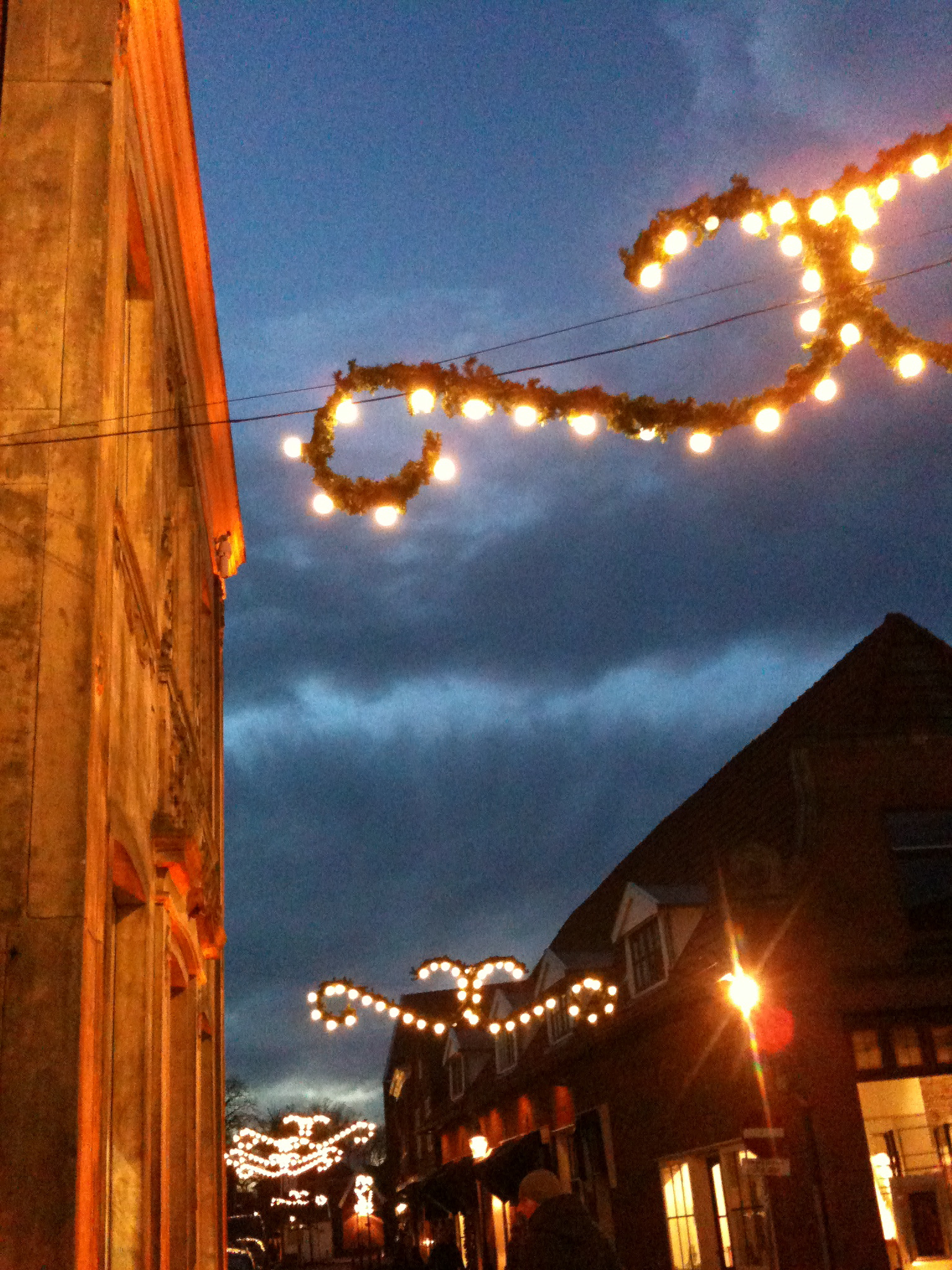
    Turns out it’s a machinery. But it had this sort of repetitive organic quality like two taps dripping at a sink that made me want to record a sample and build something over the top of it. Key music, knife music. Market friendships. Golden lights.


  • like lamps

    like lamps

    Just now walking down the street the most miraculous small experience. It’s growing dark and the shop windows glow like lamps. I came out of a side street full of bars and cafes onto a shopping strip thronged with parcels. Among the clots and clumps of other people approaching from the opposite direction I met eyes with 10, 12, fifteen, twenty strangers: we each of us looked into each other seriously, momentarily: and it felt like we exchanged between us something palpable. Sometimes the early dark and gloomy days here crush me unbearably. Other times it feels like the civilisation that has built itself here and endured and spawned so many writers, so much beauty, so much music and art, says: we have woven something here. We light our lanterns as the cold closes in. We endure and turn our endurance into a survival and our survival into a flourishing life. We defy you, winter! We defy you, death! We defy you, lack of meaning!

    Even as I think this I am wondering, too: is it not in fact death, and decay, and winter, that give meaning to life, and evolution, and spring? Seems like it is and I am only too frightened within my own mortal mind to see it.

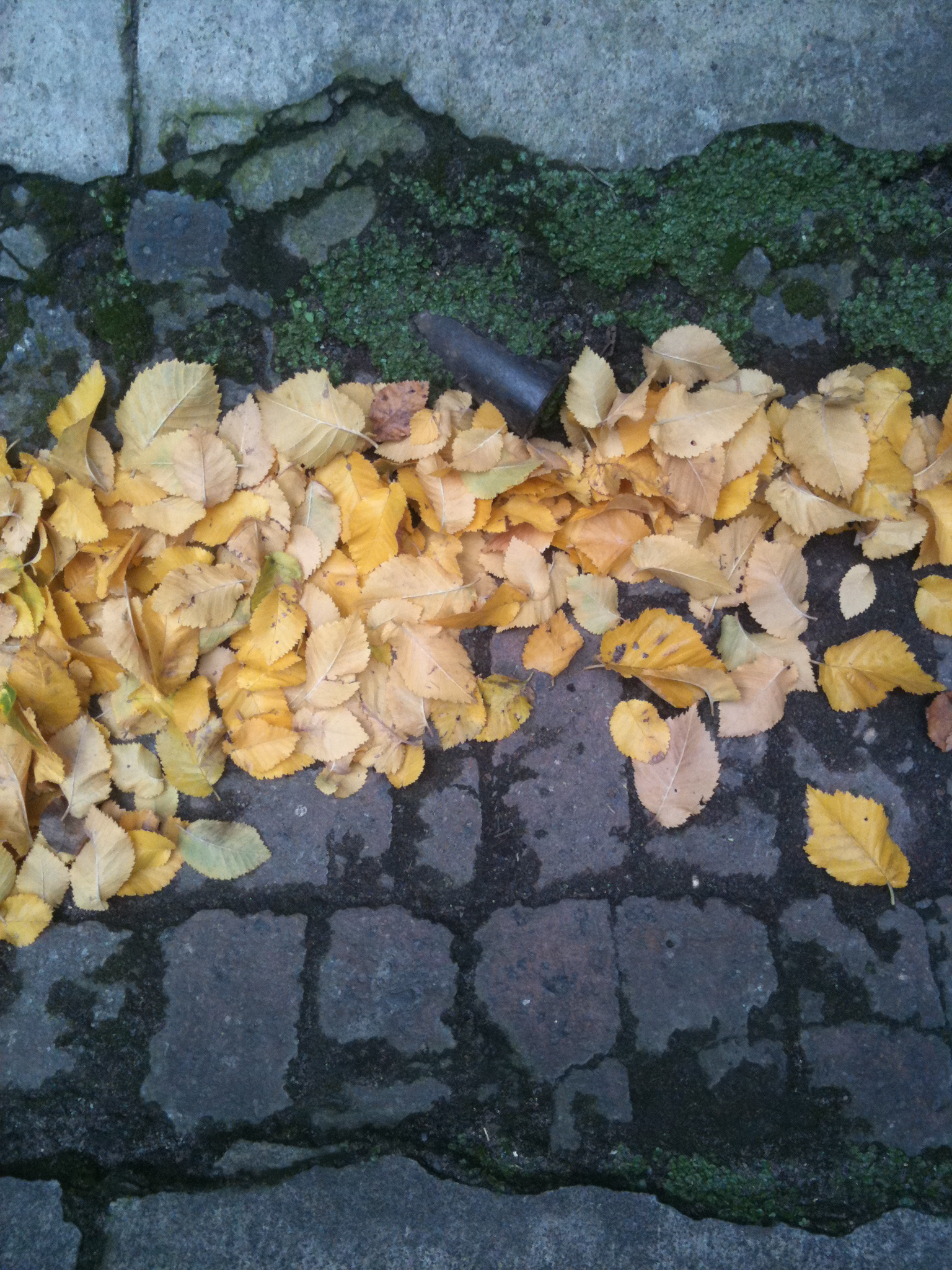
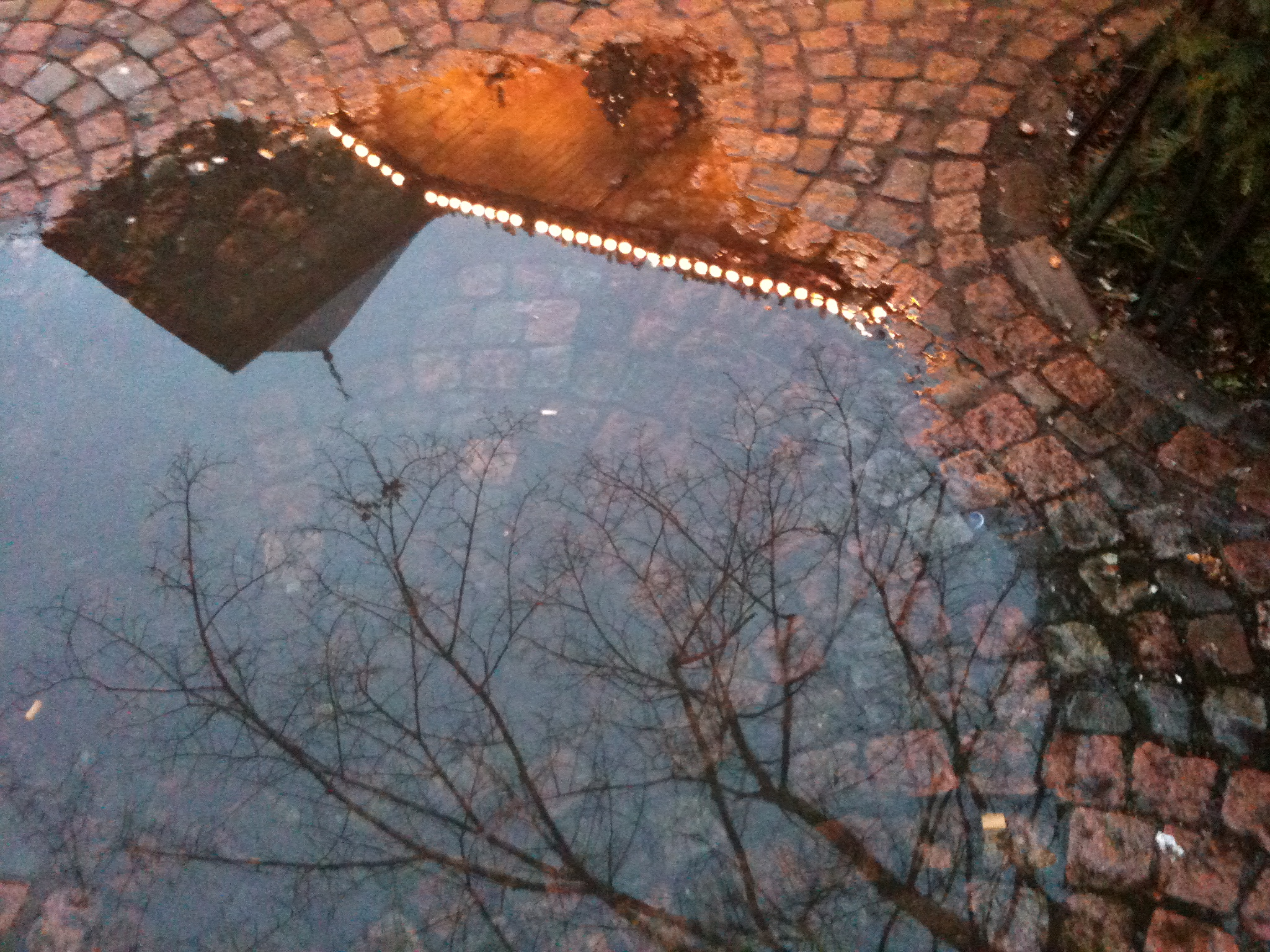
    h20 HoL cobbles puddle copper

  • a novel filled with good advice

    a novel filled with good advice

    The place I’ve sublet has a shelf of Joanna Trollope novels and I’ve just reread two of them. It’s so interesting learning all the signs she uses to indicate class. In the gentry, rudeness indicates an unwillingness to pander to form, it is authenticity. In factory workers, rudeness betrays a lack of breeding. Horsey women have good-quality possessions which they do not value and treat casually. They do things carelessly, having nothing to prove, dropping tea bags on the floor, “sloshing” milk into mugs and speaking in clipped half-sentences: “Shut up! Bloody dogs. Sit over there, it’s the only comfortable chair. Chuck the cat off.”

    The landed class recognize one another by signs: tea is always “China”, never “India”, perhaps because China eluded colonization by these characters’ forbears and thus like a spirited horse showed independence. To have middling-quality possessions and to take care of them is unmistakeably a sign one is trapped in the worst of all worlds: bourgeois, unimaginative, burgerlich middle class. At least the poor have their realness and dignity. At least the gentry have their self-assurance and intricate codes: ‘”Daddy says,” one ten year old said cheerfully to our main character Liza, surveying a French pronoun exercise almost obliterated in red ink, “that there’s really no hope for me because I’m as utterly thick as him.”‘ Very often Trollope’s plots seem to unravel the marital miseries of a couple ill-suited as to class: in the case of A Passionate Man, a lordly doctor and his timid wife whose appearance is dismissed as “pretty.” She’s not of good enough stock to be either ugly or beautiful.

    In fact the approval of both aristocratic and poorly educated character types in these novels seems to revolve on their ‘realness’ – excusable bluntness in the gentry, forgiveable gaucheness in the “frightful woman” who runs the post office. The middle class, by aping their “superiors” but without access to the insider knowledge that would let them buy the right kind of tea, show themselves to be false.

    The other novel I read yesterday, The Best of Friends, was reviewed (on the cover) by The Observer as “above all a novel filled with good advice.” Like a recipe book.

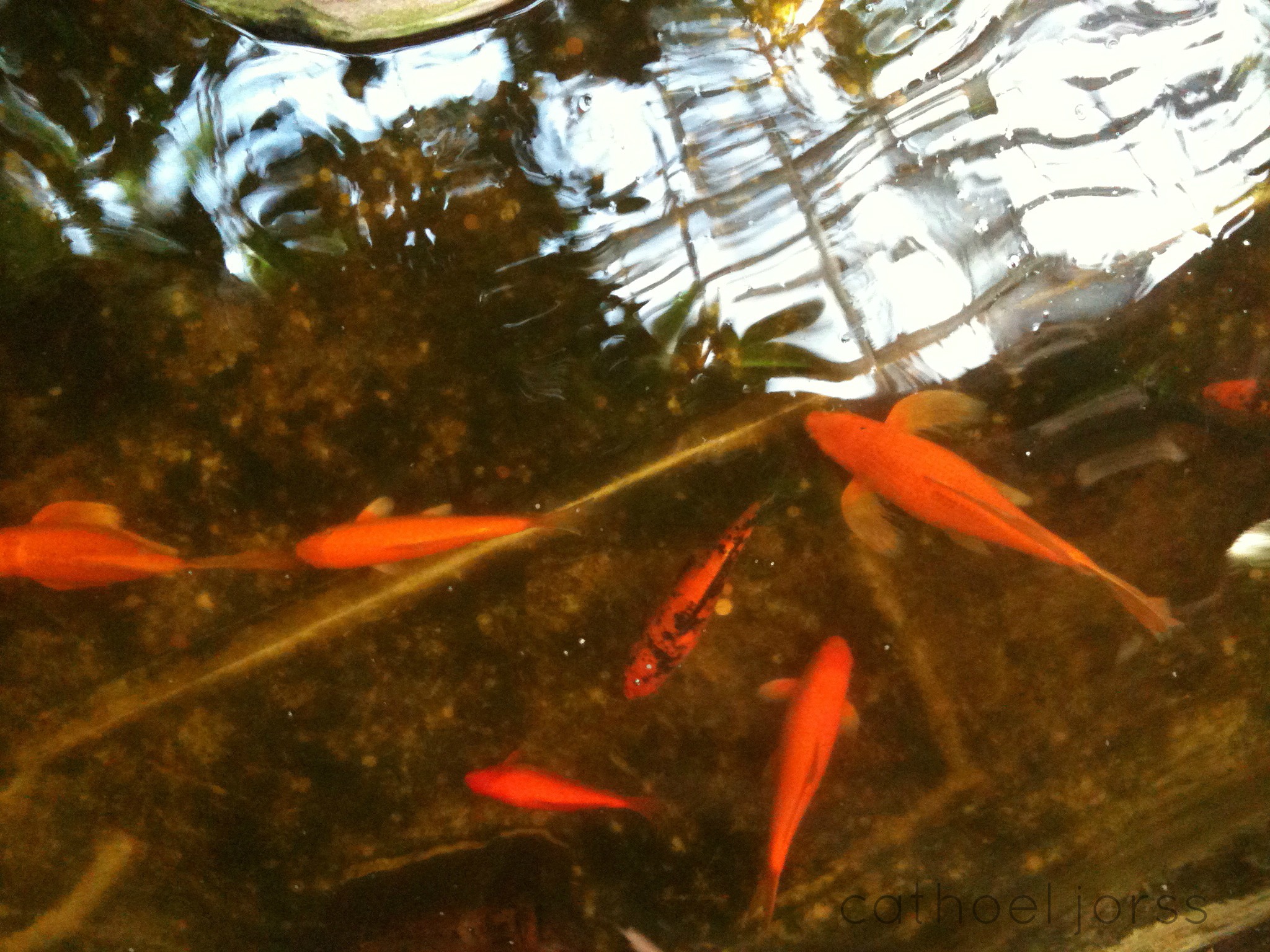
    H2O HoL goldfish

  • hipsteroid rage

    hipsteroid rage

    The problem of hipsters. Nobody is one, yet everyone complains about them. It’s a bit like environmental damage: everybody thinks someone else needs to change.

    I am listening to the couple at the next table lament how hip this neighbourhood has become. On this leafy street they can no longer find a seat, on a sunny Saturday, and it’s all because of hipsters. The woman has a chic-knotted green scarf and little red shoes. But that’s just the trouble: if I say, yeah, I wish I were cool enough to qualify as hip but sadly, I lack the raw materials… I come off sounding like I wanna be *too* cool ~ hip enough to not even care about not being hip.

    Like my neighbours, I like a quiet street which is not too crowded with popularness. Yet I want the cafes to be good enough to draw such a crowd: Great coffee. Decent service. Music that doesn’t depress me. Essentially I am wishing failure & suffering on the businesses I claim to support: or partial success. “Emerging artist” status.

    It’s like indie bands. One must discover a talent that is great enough to be worth a thorough listening; but not so great that it’s filling stadiums. Like infinite growth on a finite globe, this enterprise seems to me destined to failure. And failure is to hipsterism as stubble is to chic: a whiff of it, you’re a groovy artist. Too much and you’re under a bridge. Hipster or dumpster. It’s bloody brutal.

    The other problem with hipness, or as I think of it, ‘atmosphere’, is it requires a willing peasantry. This groovy part of Berlin is enjoyable because of its mix of cultures and the picturesque and endearing ways that troubled souls, drug addicts and unorthodox people fill the streets with life. I don’t see any of these hipster-allergic folk wanting to move to the suburbs, or to genuine country communities where there may be very few artists. Other human beings serve as background scenery: a form of tourism. The scenery’s got to be grating enough to be ironic, to set the heroic Self free in bold, beautiful relief against its lesser-talented background. Like Park Slope.

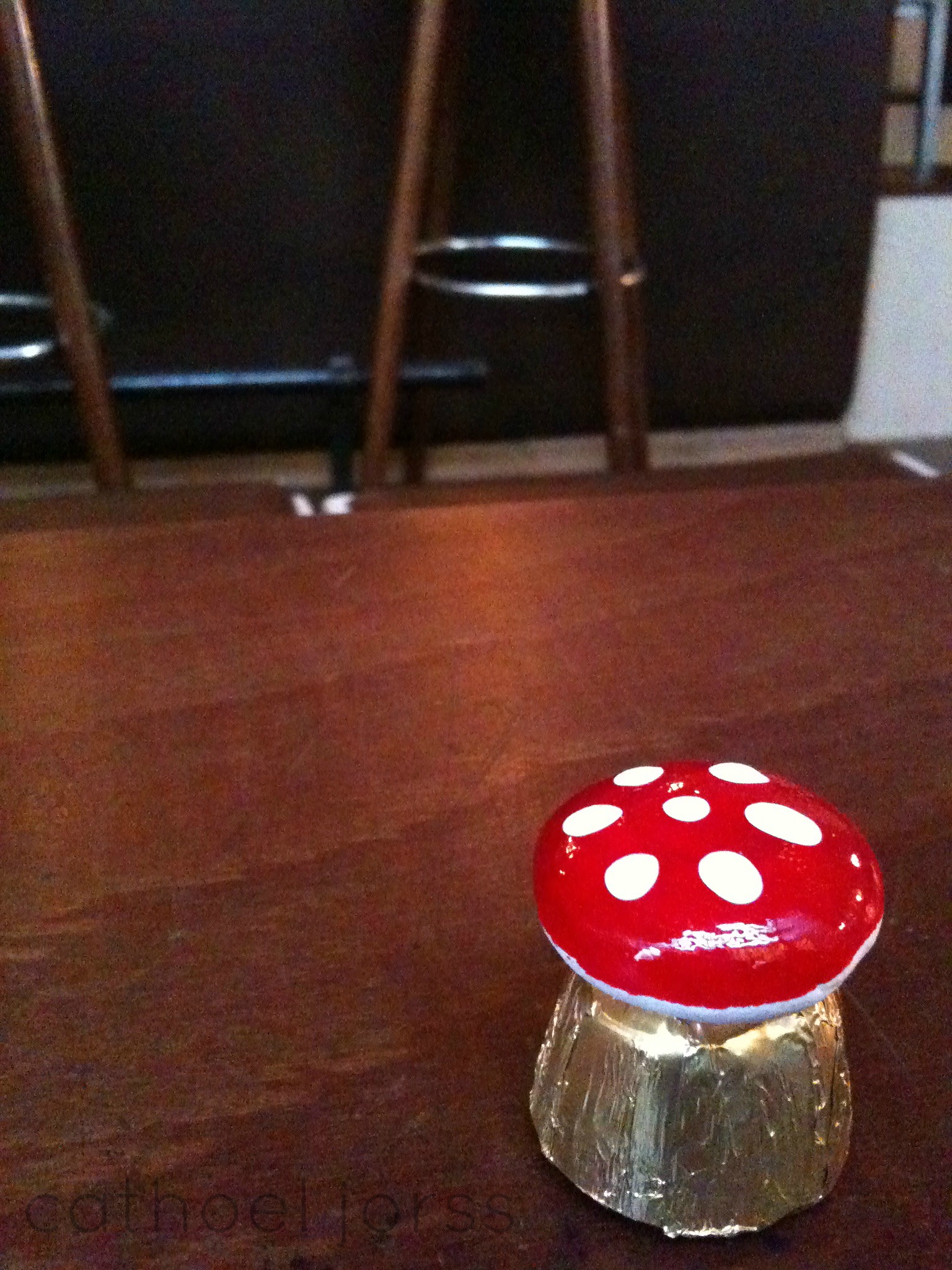
    H2O HoL hipster shroom

  • eros unregulated

    eros unregulated

    On New Year’s Eve after a quiet dinner party at the home of a Romanian artist & Swedish poet, I climbed the round hill that gives Kreuzberg its name: cross mountain. In the dark it resembled Borobudur, with heads facing outwards as far as the eye could reach like ten hundred white buddhas. Three different, unevenly consecutive countdowns announced midnight’s arrival: I was tempted to start a fourth, even more raggedly: Zehn! Neun! Acht! 7! 6!~ Looking back as flares lit the sky I noticed something strange: though walking here we had passed through dozens of gaggles of Turkish dudes with their mini rocket launchers & quivers of searing flares, this crowd was Caucasian entirely. My companion looked thoughtful when I remarked that I could not remember ever being in such a homogenous crowd. Maybe it’s more segregated here, he said at length. Hmm maybe.

    Meantime the most unregulated fireworks display in living memory had gotten underway. All around us people let off Roman candles and stepped back (with difficulty) to let lighted rockets propped upright in empty champagne bottles go off. Within seconds of the first countdown the entire city rim was alight. I was laughing with jubilation, such a night: for ten minutes or more the crowded mountain was the sparkling centre (from the viewpoint of those on it) of a sparkling city, its whole horizon lit and sinking and sparking and burning with explosion after explosion. I’m not describing this very well but the effect was just transporting. We screamed and hollered. People waved giant sparklers. And every ghost in the vicinity picked up its tatty skirts and hiked out of there. 2013::EROS.


  • cafe dating

    First date in a cafe. “They always play such excellent jazz here,” he is saying. “Try the cakes, they’re always good.”

    “Right,” the girl says lightly. He has over-ordered, wanting to induct her into his routines. “I think heaven must be an eternal breakfast,” he says. The girl is drinking coffee as though it were ice cream, with a spoon. Elbow on the table she slumps onto her hand. “May I?” She tears the best bit off his croissant, the fresh, unbroken, creamy end of the horn. I watch him watching it all the way into her mouth, his resentment almost audible.

    Now the waitress brings his fruit salad, poignant with yoghurt. The yoghurt shimmers fat and glossy and unbroken. “Go ahead,” he says, “try.” She shakes her head. The third dish arrives, two soft-boiled eggs in a glass, with pretty salad arranged all around it in a tide. “I’ll just try a bit of your egg,” says the girl to her date, having presumably told him she is not hungry, that she never eats breakfast. “Or maybe I can just take half, some salad, a little of your bread?” She draws the saucer from underneath her coffee cup and holds it out.

    “I usually don’t ruin it,” he says. “They always arrange it so nicely here. But – yes! Please! Of course you can! Please: help yourself.” They are neither of them native speakers but both speak in English. I think she is Spanish and I think he is German. His voice is soft and seducing but I think the relationship is off to a stony start. Now they are talking about her work. “It’s an animal. No, it’s a fung, a fungus, right?” “Ja,” she says, “a fungus.” “Have you ever given a name to a bacteria?” he asks her. “There must be some good bacteria out there.” Maybe tonight this girl will call one of her closest friends. “There must be some good men out there,” they will say. Maybe the man will ask himself how come a woman can be so resistant to being induced into the world he has already arranged so perfectly for her. It just has this one hole to be filled, a her-shaped vacancy. Why won’t she fill it? Don’t women want love?

  • Absicht makes the heart

    A guy in an aggressively shiny waxed car reefed in front of me all of a sudden, as I was travelling by bike towards a red traffic light. There was nowhere to go but brake. He wound his window down. “Das war Absicht,” he advised: that was deliberate. I wasn’t sure whether that meant “that was intentional” or “that was unintentional” and had to ask the person cycling alongside of me. I agree that we all need to obey the same road rules and that tragically often, you only get one chance to get it wrong. I don’t agree that endangering people is a useful way to teach them that lesson. We travelled on, in a wheeling pack now. Fat people, thin people, everybody bikes. I stayed in the lane. Ahead at the next lights a compact, muscular guy dinking his girlfriend stopped to strip off his hoodie and slung it in the basket behind him. She turned and smiled at him. On the pedestrian path a child passed slowly in a tiny low wagon, drawn by its father, on foot. This child was so cherubic and had such golden curls I had to work out if it was a real child or some large waxen doll. But he or she was smiling upwards, twirling his fingers at the tiny ribbed umbrella protecting him from the high clouds, so evidently sunk in a deeply contemplative world of his own that the rest of us were so much intrusion and noise. That slow, blinking smile. That poet’s mind.

  • pink for the body, blue for the sky

    chapter xi: the window does not trap what it views

    At the wilderness fundraiser we are third from the top, through no merit of our own. We are a last-minute substitution, they’ve bought tickets expecting to see a rockabilly quintet from Melbourne. It’s two months since we last played. From backstage we can hear the crowd talking in a dull roar between sets. I am perched on a stool with Sid’s drumsticks, riffing along the back of the rank green room couch trying to dispel a sudden onset of nerves.

    Pommie Dave the bass player leans like a bouncer against the green room door, trapping the five of us in. His bulging arms are folded, he is retelling an interminable story. His marriage – that doghouse, that hobble, that curse – has finally come to an end, and inexplicably he’s decided to fight his wife for custody of the three kids whose birthdays he forgets year after year. The repetition of his bewilderment, the gloomy force of his aggrieved pursuit, have driven both the name bands out of the room towards the bar. He is used to holding court with endless tales of his wife’s cupidity. Now he is reduced to an audience of one: the borrowed fiddle player, a wiry folkie seconded from our guitarist’s Celtic project, who is too much of a guest, presumably, to tell Dave where to get off.

    The fiddler lays out his borrowed chord sheets and frowns over them. I hope he’s had time to learn the songs. I wish Dave would leave him to concentrate. I have met the wife a couple of times, and liked her: a leathery, crop-haired woman who does not in any way resemble the sailor girl tattooed on Dave’s left bicep.

    Secretly I applaud her feist in quashing his outrageous bid. Through her lawyers she has made allegations of drug use (true) and mental incompetence (debatable). As a result Dave has had to undergo ‘a state test’ of his sanity, and he is spluttering from sheer insult. “I mean, a test of your sanity?” he half-shouts, for the dozenth time. “What does that even mean?”

    The fiddler’s name, I suddenly remember, is William. He calls himself Sweet William, but I can’t bring myself to. Behind him Sid hunches over his mess of rolling papers, dropping splinters of wiry tobacco. I feel for my own packet, deep in my bag. Like a wounded boxer Dave lurches his head, looking for a response. None of us is game to meet his eye.

    “Seriously,” he says again. His voice rises. “What’s sanity, anyway. How can you test it. How can any of us prove our sanity?”

    Rashly, I snort. He swings on me, points his trembling finger. Terror nibbles at me, vague and tiny and far away. “You, for example,” he says bitterly. “You crazy hippie chick. What could you possibly offer to prove your sanity to a court?”

    Could I? What could I? I look from one face to the other. The others stare blearily back, too lazy for hostility. Is this my life then? I ask myself. That I should be shouted at by angry guys, be penned in the back of a beer-stinking hall, be pleased to be playing for free in someone else’s stead?

    My mediocre guitar, my vague ambitions. The ill-formed songs I labour over in the middle of the night, with their lyrical subtleties no audience ever hears. Outside the crowd begins to roar and I catch a blur of movement in the long bank of mirrors. It is me, lissom and wiry in a tank top and sequinned shorts.

    “Come on then,” accuses Dave doggedly. He levers himself upright at last. “Just name one thing you could prove in court – to prove your so-called sanity.”

    This malice is new in him. Performance adrenalin kicks in. Something in my gut turns, a key in the lock of me, and I say quietly, “Any aspect of my fucking life, mate.”

    “What’s that? Speak up!”

    I stand up, knocking over the stool. I throw down the sticks. “I said,” I say, through clenched teeth, “any – aspect – of my – fucking – life.” I suck in a deep breath and all of a sudden I am shouting. “Go through my private papers, I don’t care! It’s all me! It’s all proceeding from the same intersection!”

    Dave retreats, muttering. “Well that’s all very well,” he mutters. Behind me I hear a strangely unexpected sound. William the fiddle player is humming, actually humming. He has taken up the drumsticks where they fell and is plying them like a pair of chopsticks, pretending to be picking up letters off the chord charts and gleefully eating them. Our eyes meet, his are smiling, he offers me a secretive encouragement. From his couch at the far side of the room Sid stands up. “They’re done,” he says, and it’s true: the MC is back onstage, this is it, we’re on. “Ok!” says Dave. “Ok!” He touches my arm lightly as we pass through the narrow door.

    We start hard. We play a tight set, angry, gradually unfolding, becoming joyful. Up the front people are holding out their hands across the lights. Dave shoots me a glinting glance of apology or challenge. We are in it for the music, and the music is in us. The low ceiling glints with lights. Men up the back leaning against the bar are bobbing their heads over their beers. We have set up a good pulsing dirty old blues with plenty of forwards but plenty of side-to-side. By the fourth number the whole place has that groove on, it has grown into a massive solid swaying, back and forth as though all of us were growing out of the sand on some shallow, shared seabed.

    “Integrity means integrated,” Trix likes to say. I can hardly hear the fiddle over the din of the drums. But on the last song William steps forward into the light. He raises his bow and lets it descend, his long arms taut with an unexpected muscle. I step back, humming a backing vocal to give him the room. With a half nod he turns to stare at me hard, over the red-shining body of his old violin. He is mouthing something and I almost start forward, catching myself, gaining the chorus. The song crashes to an end and we are stumbling off in the dark, jostling one another at the door.

    In the long narrow hallway William slows infinitesimally, letting me come alongside. He leans in and says, “You looked like the queen out there.” I take a breath, feeling the coils of my blood pulsing hard under his words. “Well,” he says, the other blokes pushing from behind – “not The Queen. But queen of some other, nicer world.”

    Somehow it happens that after the bump-out and shoulder-slapping William offers me a lift in his old postal van. I climb in, sweating under my sequins, and we hurry home, screeching through the streets perhaps not fast but with the feel of speed, from his ill-tended brakes and the gleam in his eye, his flying scruff of hair and reckless cornering.

    The city is sultry under low cloud. I follow him up the dark staircase to his flat. We crawl under the covers like two sleepy animals. Then he turns, and takes hold of me, and our animals are not in fact sleepy at all. We are racing, singing, climbing, falling, finding eachother and falling away, grimacing with a certainty that is fleeting and false but compelling. Compelling. Compelling.
  • je dis, elle dit, edit

    je dis, elle dit, edit

    I feel widowed. I am winnowing. Dancing through this manuscript one last time with my tiny stave ~ of ink ~ finding out the hollow places where the old log gives ~ and pressing down ~ and crumbling those away, a crocodile who stores everything edible beneath the melted snowline, in a slurry ~ these are final final edits, so I tell myself, believing myself ~ and I glean the tiniest changes, like when an apostrophe is shaped to the wrong font, and must be corrected. I winkle them out & fling them far far into the shoreline glimmering dislodged like oysters.

    The name of this collection is Comb the Sky With Satellites, It’s Still a Wilderness. And it talks about the world we live in and how we have failed to wreck it.

  • pessimist the point

    Pessimists (cynics) invariably believe they are ‘realists’ and therefore can smugly feel that optimists must sooner or later knuckle down ~ that is, be beaten down by ‘reality’ & ‘experience’ ~ and join them. I’ve realized the reason optimists know we are optimists is because it is jolly hard work. To assess the world truthfully ~ and garner experience, and learn from it ~ and still stay true to the knowledge of the essential goodness of most human hearts (check out your nearest toddler for example) ~ this is difficult and exacting. And it requires far more toughness & strength than merely retreating into the told-you-so comfort zone of Martin Seligman’s zinger “A pessimist would rather be right than be happy.”