Tag: books

  • desperate for literature

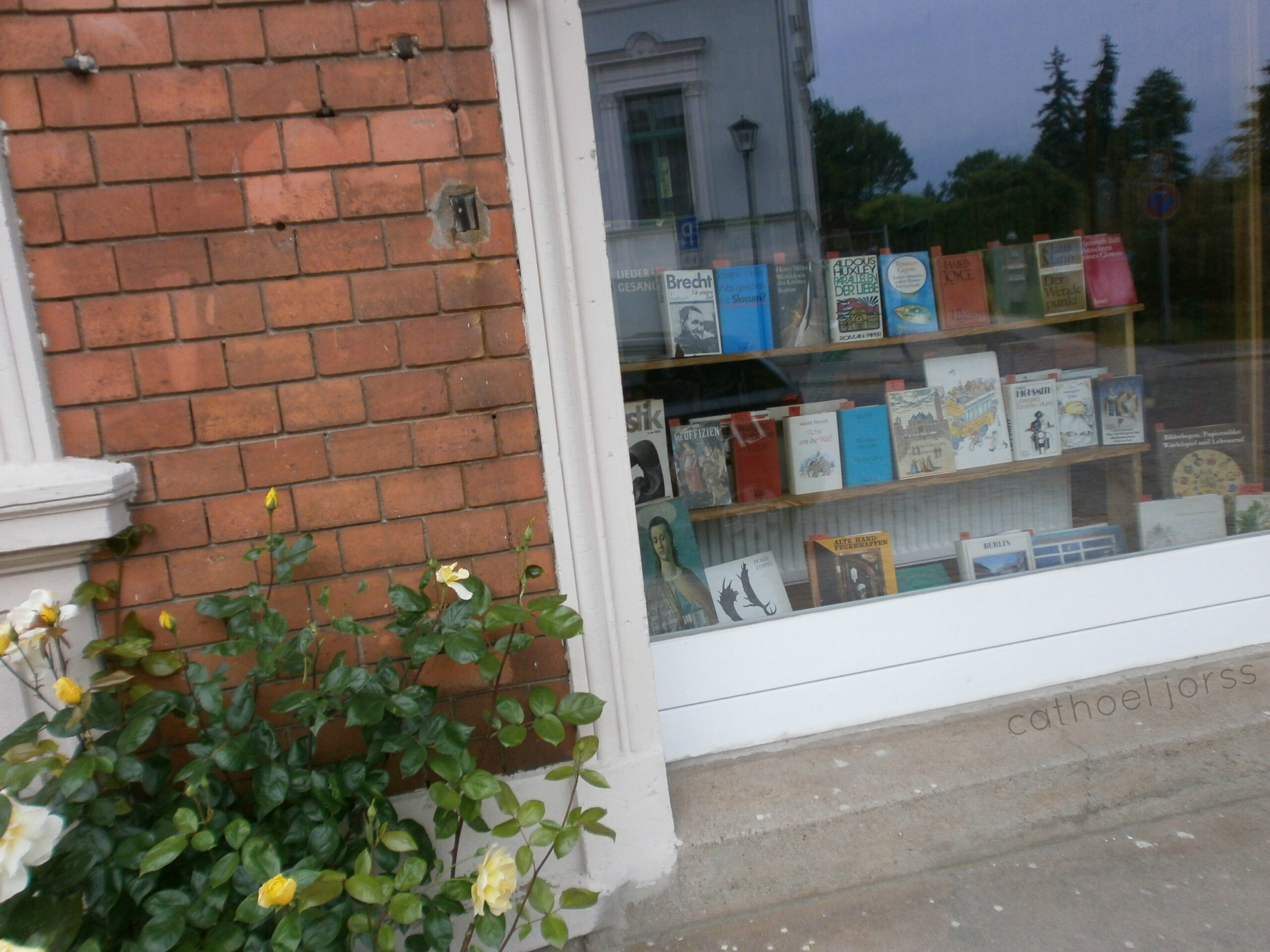
    At ten o’clock at night I went out walking round the curve of the road under bright green trees lit from the lamps, everything beautiful, hot and radiant. A bookshop was open, or so I thought. When I pushed on the door two guys came running out from the rush-bottomed chairs where they’d been chatting. “Oh, sorry,” I said, “you look as if you’ve just closed, actually.” “No, no, come in, come in.” The books were in English down one wall and Spanish on the other, stacked on shelves which started out polished and neat and then wound up built from raw old wood and bricks. A beautiful woman came out from some back room and told me, “The books up the back are just as good as the books up the front here, keep looking.” They sat down and continued their chat. “What was the name of the girl in To Kill a Mockingbird? Cass?” “Was it Cass?”

    I said, “I know people in Hollywood have named babies after her, so if we could just think of the right baby…” “Scout!” said the man with the beard who had Google in his hand. We talked for a moment about the new novel and how there is some concern Harper Lee may have been… persuaded into finally publishing it. “It’s about Scout’s life as an adult,” said the other guy, an American. A small crowd of people came in at the narrow front door. One said, I think, this reminded him of Shakespeare and Co in Paris, and the English man said pointing to his partner, whose name was Charlotte, “That’s where we worked! Up until three days ago!” Two hours earlier he and Charlotte had taken over this tiny store, which is called Desperate Literature, from their American friend, whose name is Cory. “So we’ve met!” said Charlotte, a gorgeous woman who acts as though being beautiful gives her no special status. The little man who had mentioned Shakespeare and Co gave a cry. “We’ve met! So you’ve patted my book!” “I’ve patted your book!” she said. “Wait – what book was it.” Without hesitation he named the book everybody buys when they visit Shakespeare and Co in Paris. “The Autobiography of Alice B Toklas.” “That was you!” she cried. I was out the back laughing. The timing was so wonderful, the sense of willing group improvisation that is true conversation, as at the loveliest dinner parties. Charlotte was jubilant that they’d sold a copy of WisÅ‚awa Szymborska (to me) on their first night and her partner Terry introduced himself and told me, as he had told the Paris customers, “We are having a big party here on Thursday night, come by.” He looked around the tiny, crowded rooms. “Well – a little party.”
     

  • a plan for the rest of the year

    a plan for the rest of the year

    It occurred to me today I might read only Sebald and Shirley Hazzard, alternately, for the rest of the year and read deeply rather than widely. This novel is so good I have just sat down and read thirty pages aloud in the afternoon sun, the leaves scratching shadows on the page and the riverwater spiralling past my feet.


  • a book’s a passport

    a book’s a passport

    A friend who was enamoured of it took one of my books to Hong Kong, and tried hard to get the lady in the passport booth to stamp it. She would not be persuaded. Instead I received a series of postcards through the mail: Dear Cathoel, it’s a beautiful day in Hong Kong and I am taking your book for a stroll by the river. Dear Cathoel, your book and I are having chicken noodle soup on the markets.

    H2O HoL mossy steps

  • desert smoke

    desert smoke

    In 1999 I published my first book. A week later the girlfriend who used to live across the road returned to Brisbane from the desert and said, do you wanna make a road trip? We set off on retread tyres and with (it turned out) not enough tools to help out when things went wrong. Just outside Toowoomba (an hour west) I phoned my Mum. “Mum the van’s overheated! We forgot to check the water.” Anyway we made our way west, west, west. Spent the night in a grand hotel in Longreach with verandahs broad enough to foxtrot on. In the morning I stashed my packet of tobacco in a potplant and that is how I finally quit smoking.

    We spent the third night in Alice Springs. By this time we had bonded and had told each other our life stories. I read her passages from my diary. She told me stories of her abused mother’s fight to shift her relationship with the now aging grandfather, using delayed cups of lukewarm tea, passive-aggression, and humour. Only 700km to Uluru (‘Ayers Rock’): we were on the home stretch! It felt like our own driveway. Then we blew a tyre. Like superheroes we got down and changed it, yay for us. Then we blew another. Two people who were travelling round Australia in a mobile home stopped to help us. The man was seamed and nuggety, he said, Don’t you girls dare go a whisker over 30 kays, now: you’ll blow the tread, and then you’re really rooted. So we crawled home to the tiny community of Mutitjulu where she worked – the short drive took us more than seven hours. We daren’t stop. When one of us needed to pee the other took the wheel and we hung our bottoms out the window. She was still smoking but somehow, I had lost the knack. I had last left Uluru when I turned 21 and quit my tour guide job. I spent ten days in a dream of homecoming, rolling myself naked in the red dust of an evening, walking out the door or her little house, magnetically drawn, almost every time I glanced up and saw Uluru. Crouching there like something, someone, it’s unsacred to speak of. I found the tiny second hand shop in the resort, run by a ranger’s wife, and consisting of things the high-turnover staff had left behind. I bought old-man’s underpants and a singlet and dyed them to form a swimsuit. After that I swam laps every day in the Sheraton pool. A rich lady befriended me at the bar and confided if you showed up at the front desk with enough confidence, you could ask them for the keys for a ‘poolside room’ (that is, on the asssumption that your own room was too far away upstairs) and so that is what I did. I lazed in the big white beds and had baths. I wrapped myself in dense velvety white bathrobes every day. I met interesting people from faraway places. And I kept going back to the sacred place, every day, every day. One night I cycled round the base as it grew dark and had to follow a very merry carload of local men home: I could not find which sandhill concealed the community. Never been so glad to hear a booming generator.

    I took copies of my book into the newsagent and they said, yes, they would buy some and sell them. I went out dancing on the same dancefloor I’d loved when I was 20, and danced til I could barely remember my own name. When I was ready to come home, there was a problem: at that stage I had never owned a car, and saw no reason to carry my driver’s license in my purse. So as well as no shoes I had no photo ID. There was a tiny library for staff and the librarian was a Justice of the Peace. I explained to her my dilemma. I showed her the book, whose title is Going for the Eggs in the Middle of the Night. I showed her how the poem titles were printed in my own handwriting. And how it has photos in it of our family when we were kids, photos of me and taken by me as a child. “Ok,” she said, “it’s you.” And after she’d signed an affadavit I was entitled to buy a plane ticket and fly across the detailed and sumptuous red plains, to Brisneyland.

    H2O HoL ric with firepit

  • antaquarium

    When I went to Copenhagen on my own it was cold and windy and there were times I felt very lost and alone. When I felt lost and alone I would take refuge in one of two places: the library, which has free wifi and a cafe and people clustered around low tables on Eames chairs, earnestly chatting; or this antiquarian bookshop I found, labyrinthine and lined to the ceiling in leather books, which has been made over into a student caff. There are little tables tucked under the shelves and in corners. They make a very rich hot chocolate and they serve cheap food. I loved to sit in there out of the wind and just gaze and gaze, letting people’s conversations filter through me, feeling how the venerable books stand shoulder to shoulder, a phalanx of minds, and how their massed presence like the presence of noble clouds grounded and rooted me with a kind of magic spell. I grew sleepy and the world seemed much kinder. My ears blurred. I sat for hours as though underwater.


  • you sneak up, & I’ll sneak

    you sneak up, & I’ll sneak

    Years before I had driven from Adelaide to Melbourne with my then partner. We towed behind us the tower of terror: all of our possessions lashed to a homemade trailer. His possessions were mostly tools and mine were mostly books.

    In a seaside town we stopped with his best friend and her husband. They had a four-year-old boy and he and I fell in love. The grown-ups strolled on ahead down the wickety dunes, talking and idly watching the seagulls wheel overhead, and the two of us scampered and bolted, climbed under and hid. We found things in the sand which have no name. We found soft glass and seagrapes, rusted and tasting salty.

    We burst back onto the roadside with its sparse traffic, three heads disappearing far out in front. In a rush of inspiration he turned to me: “I know! How about, you sneak up on your daddy, and I’ll sneak up on my daddy!”

    I remember the feeling of protective love that washed me in that weird warm moment. I was so frightened of seeing the hope and ambition, the trickery, fade from his eyes and their expression subdue and dim. I was frightened he might suddenly realize: Ach no! You’re one of Them! But we did it. He sneaked up on his daddy. And I sneaked up on mine. Ambush!


  • Jared Diamond

    Jared Diamond

    Picked up the most marvellous book, it’s by Jared Diamond & it’s about traditional societies (which, he points out, survive in partial form in even the most harried industrialized landscape and were universal to us until 11,000 years ago: a blip). He says how some things ‘modernity’ does better and some things, tradition. Like a bolt of cloth falling from a high shelf it struck me when he pointed out that all of psychology is based on a very narrow sample: mostly, undergraduate American psychology students, who were the ones most available to undergo tests and to fill out questionnaires. He cites the acronym WEIRD: Westernized, educated, industrialized, rich, democratic.

    The name of this book is The World Until Yesterday. How people picked up their babies and carried them upright with lots of body contact. Babies learned the world at eye level. How your chances of being killed by falling out of a tree or by having a tree fall on you were rather high. When I was a child in Jakarta we heard about a tribal man to the north, coming home from the village meeting through the familiar jungle who was eaten, whole, by a large snake. His body was cut out of its belly entire after the animal was captured.

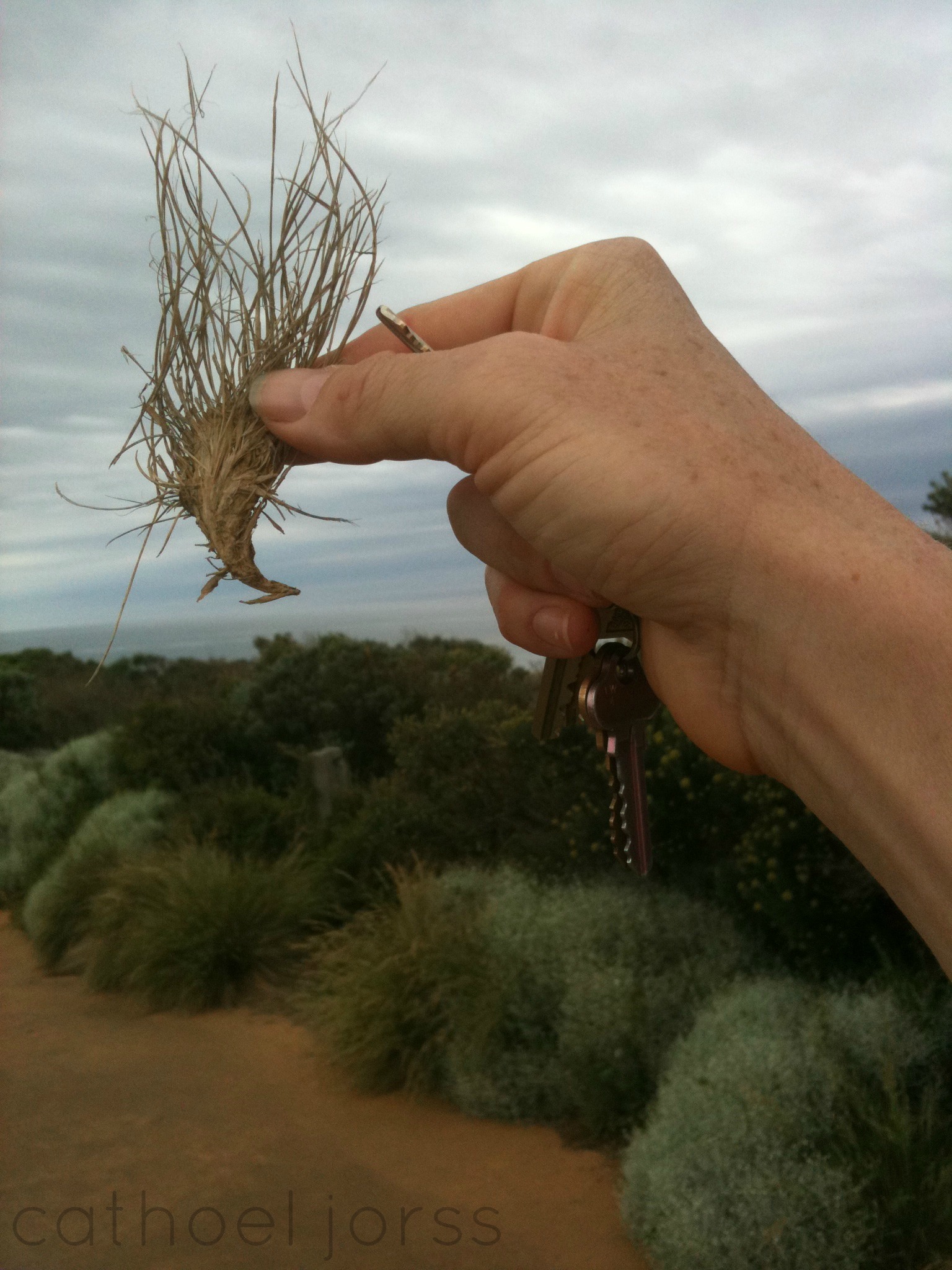
    H2O HoL fist with keys & grass

  • his three favourite things

    his three favourite things

    Hired a bike and visited my only friend in Denmark, who runs a beautiful second-hand store that sells his three favourite things: books, and records, and coffee. He has two splendid crimson armchairs and windows onto a cobbled street. How we met was, I was in Berlin over the summer and dropped in on the bookstore that had agreed to trial one of my books in their English-language section. The pile was sitting untouched but I saw this tall man hovering and said to him, unexpectedly, “You should buy this one! I wrote it.” So he did and we have been friends ever since. God love good bookshops, the friendship agency of the civilized world. Today he had on Nick Cave’s new album and was listening to it “over and over.” I said, “He’s Australian! Like, the coolest Australian since… 1975.” In the riverside cafe where I ate dinner afterwards they were playing Olivia Newton-John, who has no use for cool and was singing “Hopelessly Devoted to You” as though her heart would crumble. What a song. I and the elderly waiter were both singing it. Two tough-minded Danish women in their fifties walked in to order beers, wearing what seemed to me very insufficient clothing. Outside, the water darkly rippled and a skin of ice extended itself infinitesimally.

  • “high, wild, savage and frightening”

    “high, wild, savage and frightening”

    What is that book you’re always carrying? my friend wanted to know. So I opened it and read to him:

    “But the first of the thunder and lightning was always high, wild, savage and frightening. Every year people in our part of the land were killed by lightning. Yet long before I learned at school that lightning was electricity, and all else physics had to say about it, I caught the symbolic ‘other’ from Klara, for whom it was a pure phenomenon of the spirit. While the women of our community on their different farms would fold up the silver and metal in the house in sheets and blankets in the belief that otherwise they would attract the lightning, hanging towels over all the mirrors and drawing the curtains in their haste, Klara would sit with me on our great verandah and make me look at the lightning because she said that every human being had the same light as the lightning in his eye, and the fiercer the lightning outside, the brighter the light with which the eyes must look directly, steadily and without swerving, back at the lightning. She believed that if the light in one’s own eyes did not respond and flare all the brighter because of the example of the lightning, there was a form of lightning that would go black and invisible, and that that form of lightning was the lightning that killed.

    “This was for me one of the earliest and most convincing illustrations of how symbolic the Bushman spirit was, how rich in the primordial wisdom stored up in that two-million-year old being of which Jung spoke to me later, describing at as ‘a living treasure of the all the experience and knowledge gained since the beginning of time’, and warning that if one lost touch with this innermost source and its symbols, life, rootless and adrift on the tides of fate, would fail and die. Fairly early in my life, thinking of the Bushman symbolism as I had done from the beginning, I thought of the lightning and the light in the Bushman eye staring back at the lightning as images of consciousness and awareness, and I ended up where I still stand today by thinking of lightning as the call to the battle for increase of awareness which is the imperative in creation.”

    ~Laurens van der Post, The Voice of the Thunder

    HoL blue point tree

  • a novel filled with good advice

    a novel filled with good advice

    The place I’ve sublet has a shelf of Joanna Trollope novels and I’ve just reread two of them. It’s so interesting learning all the signs she uses to indicate class. In the gentry, rudeness indicates an unwillingness to pander to form, it is authenticity. In factory workers, rudeness betrays a lack of breeding. Horsey women have good-quality possessions which they do not value and treat casually. They do things carelessly, having nothing to prove, dropping tea bags on the floor, “sloshing” milk into mugs and speaking in clipped half-sentences: “Shut up! Bloody dogs. Sit over there, it’s the only comfortable chair. Chuck the cat off.”

    The landed class recognize one another by signs: tea is always “China”, never “India”, perhaps because China eluded colonization by these characters’ forbears and thus like a spirited horse showed independence. To have middling-quality possessions and to take care of them is unmistakeably a sign one is trapped in the worst of all worlds: bourgeois, unimaginative, burgerlich middle class. At least the poor have their realness and dignity. At least the gentry have their self-assurance and intricate codes: ‘”Daddy says,” one ten year old said cheerfully to our main character Liza, surveying a French pronoun exercise almost obliterated in red ink, “that there’s really no hope for me because I’m as utterly thick as him.”‘ Very often Trollope’s plots seem to unravel the marital miseries of a couple ill-suited as to class: in the case of A Passionate Man, a lordly doctor and his timid wife whose appearance is dismissed as “pretty.” She’s not of good enough stock to be either ugly or beautiful.

    In fact the approval of both aristocratic and poorly educated character types in these novels seems to revolve on their ‘realness’ – excusable bluntness in the gentry, forgiveable gaucheness in the “frightful woman” who runs the post office. The middle class, by aping their “superiors” but without access to the insider knowledge that would let them buy the right kind of tea, show themselves to be false.

    The other novel I read yesterday, The Best of Friends, was reviewed (on the cover) by The Observer as “above all a novel filled with good advice.” Like a recipe book.

    H2O HoL goldfish