Tag: Brisbane

  • Wednesday afternoon in the Valley

    Two girls in high heels and tiny skirts chatting outside Eye Candy peep show. A dishevelled guy lying supine in the bus stop bench with his arm slung negligently over the side, as comfortable as if he were in his bath. Guy with a ginger beard that starts outside his face, threading it thoughtfully between his fingers in two skeins while his earnest friend tells him something seriously, endlessly.

    Driver of a dull gold off-roader, stopped across a pedestrian crossing and mouthing “Ah, come ON!” to people who cross, with the lights, in front of him. The sharp calls of tropical birds, the sun pouring over everything. The old fig tree whose high-walled, circuitous roots resemble the coils of some fire-breathing cave creature. Little boy with his father’s smartphone taking a photo of the orange Lamborghini in the display room window. The old man who closes his door on a dim apartment where the fridge is right in the front entrance. Girl in racing togs, wrapped in a damp maroon towel, who is walking home from the Valley Pool, her feet bare and her hair wet, the muscles of her back gleaming.

  • til the day I die

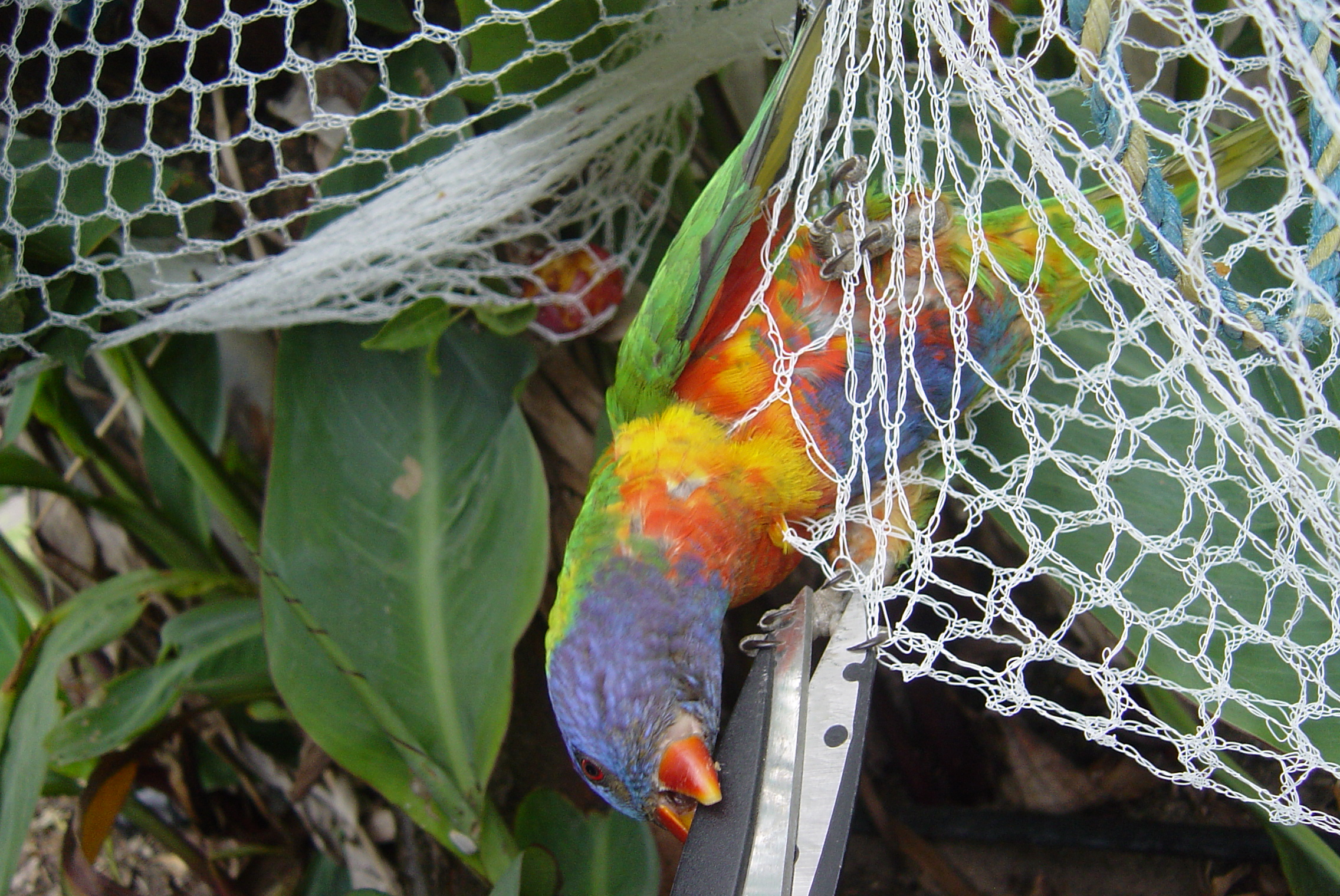
    This morning carrying coffee I walked past the hostel where an old Aboriginal man, gold-chocolate skinned and with a round white beard, sometimes sits in a folding chair under the trees waking up slowly. He and I like each other and we often say g’day. “Might get some rain,” he said, and I said, “Feels like it, doesn’t it?” Above our heads the murky trees were cacophonous with bird squabble. These are the rainbow lorikeets who yesterday dumped a couple twigs on my head when I passed them by underneath. “Those birds’ve got something to say about it, too,” I said. Later in the day I was crying in the car, having had some unexpected news. It’s ok. The radio was spurling some country song I had never heard before, the lyrics masculine and earnest. That’s because I listen to Murri Country, 4AAA. Every time they replay their station tag, “Murri Country,” meaning, Aboriginal, Indigenous Country, I think: yeah, a good thing, too. I think of it like a drip drip on the stone that slowly might wear a hole. So the blood can come out, the more justice and kindness. The singer said something that made me laugh, a kind of watery giggle. “I’m not going to stop loving you,” he sang, “until the day I die.” Immediately I saw him in his death bed, primly folded in the neatly pressed hospital sheets, flapping his hand to get rid of the wife who has not realised this means, “but, girl – on that day you are on your own.” “You,” he says calmly, “get lost.” She says, “But we had a contract! You promised! You were gunna love me until the day…” He says, his voice gravelier now but the same voice still, “Yeah, love – actually you misread that.”

  • tattoo virgin

    Wandered into a cavernous caff in West End and the girl there was showing me her tattoos. I am squeamish and have never pierced my ears. Tattoos are beyond me, I wouldn’t, I couldn’t. We stood poring over her long brown arms, turning and tracing the story which evolved from something simple into something faceted. “It’s nice talking with like-minded people,” she said.

    I thought about this word like-minded and what it means. The people I hear using it seem to be people I feel comfortable with. I wondered is it just what I’m hearing, or is it that people who use this word tend to be people I get along with and like. Is it a less judgmental and more fluid term than for example “they have values I respect.” Is it less confining and more welcoming and free from expectation than the older “we have a lot in common.”

    This girl bristled with insignias I don’t desire or share. There was an age gap. We were strangers. I was her customer. What was it that lept the gap in such a brief conversation, that left us feeling comfortable, feeling even a mild affection? How did we divine our like-mindedness? Well, through expression and language and tone and eyes, the languages of the soul and body. Does like-minded maybe mean not so much “our minds are alike” as “we both tend to like people’s minds”?

    I think about the conversations I have with the people I would call “like-minded.” Every week, some spark, and some do not. There is something exploratory. An acceptance of difference. A failure to require the stranger to conform to a recipe either of us have arrived with, or that has been ready-handed to us.

    In the miracle bowl of my brain and the miracle foreign world of hers, something gleamed. There was an element like sunshine or moonlight or rain that we could enjoy in one another that was universal and therefore shared. The sparkling sea of rain that sloshes round a souvenir: an experience there are more than fifty words for: two separate worlds stood side by side for a fleeting instant, worlds transparent yet ineffable, in a shared kind of frame, like snowdomes for entirely different monuments.

  • plain clothes police

    This cafe installed in a loading bay has floor-length open windows, I am sitting with my back to the sun reading an ambitious local free paper. It has a row of Brisbaneites each standing holding their sign, the sign of what they’d love best to see, the signs of the kind of world they want. Invariably, or infinitely variably, it is a form of ‘everyone accepted for themselves’ or ‘a world without prejudice’ or ‘an end to war’. However underneath the idealism are pragmatic and tousled lists of self-love, love in the most measly sense: what I’m wearing? Label X jacket, shoes by Label Y. Even the youngest, even the oldest, are able to parse their outfits breezily, ‘a loafer,’ ‘a pant.’ Where I like to eat? Groovy Bar Z.

    Last week we read an earlier issue of this publication in the same two seats in the loading bay, then as now a cold breeze running through the crooked, open space like large, stately passages of cool sea water. A fly tried to drown in my eggcup of honey, I fished him out with a teaspoon. Flung him out into the sunny breeze and he flew free, a kite trail of honey sprinkling the grass. Moments later my companion nudged me: Butterfly! Indeed, as if out of thin blue sky, her brown wings velvety light and tremoring she supped the round drops of honey. She laid her wings open in an ecstasy. I scooped a little more out and flung it wide, see if I could make her dance. She did.

    A police car pulled up under the tree. A man in casual clothes got out. He was unshaven and looked rumpled and sweaty. He slammed the door then thought better of it, reached back in to retrieve something, a folder, locked up behind himself and came past the long draughty doorway. I began to laugh and pointed past him at the police car, accusingly. “Did you steal that?” “No,” he said, surprised, good-humoured. “I know,” I said, “just it would be so funny.” I cracked myself up. My tablemate reported the off-duty officer was still laughing when he crossed past the open passageway which is their galley kitchen and which ends in a slice of street. Two men came in and sat across from each other at our next table. The table was white-legged with a polished wooden top; of a series of mismatched chairs the guy in neon pink singlet drew out the one painted egg-yolk orange. I went over to them and crouched by their table. They looked startled. “I’m sorry to interrupt. I have this friend who’s obsessed with orange. Would you mind if I took a photo of your shirt and the back of that chair?” He waved his hand and the other guy barely smiled. “Sure, knock yourself out.” But twenty minutes later when they had finished talking and I had filled three more pages of my notebook they got up to leave and stopped off with us. “Did you get it?”

  • we want our country back

    Most joyous demo/march I’ve ever been involved in. There was a sense of colourful exultation, a kind of rejoicing, a feeling of laughing at each others’ placards and of coming together to ridicule the ridiculous. So many intelligent, open facial expressions, so many cool handmade signs. Someone had made extra signs, proper ones on poles, and left them leaning on the corner of the old Treasury building for people to pick up: one of those said: YOU WORK FOR US. There was HOW DARE YOU, ABBOTT, HANDS OFF OUR WORLD HERITAGE. There was a family of three solemnly crossing the road every time the traffic stopped, holding high their placards so the waiting drivers could read them. Before the march, joyous reefs of cheers rose up during the distant speeches. The square was teeming and people stood thickly on the sidewalks on all sides, holding their signs. When we set off, an upper storey of more drunken Australians leaned over from the balcony of the Irish pub, cheering and clapping and unfurling huge flags. My friend dropped out to get a bit of shade and when we ran into each other again, she was exultant: there were people going past me for ten minutes!

    I fell back, attracted by the band. They had struck up a spurling tumultuous din and I boogied and jittered my way down shady Adelaide Street and back into the sun. I’ve never seen so many people lining the route of a march holding up their own signs: LET THEM LAND, LET THEM STAY, and HANDS OFF OUR COUNTRY. A guy up a tree rattled his sign and whistled and waved. A man propped against a light post held: WHAT HAPPENED TO THE CARING, SHARING AUSTRALIA? I ARRIVED AS A REFUGEE 26 YEARS BACK.

    Everywhere evidence of people’s sincerity and generosity. Four girls in front of us had on boat hats folded from newspaper. A bikie with a creamy white beard stood in front of his motorbike on his head and his big boots did the splits up in the air – his friends either side held up placards and everybody hooted and hollered. An eight year old boy had made his own fiercely vehement, illegibly penciled sign on a folded piece of paper studded with exclamation points and was wearing it paperclipped to his visor.

    Now, I hate marches. I’m shy and I don’t enjoy crowds. I find it mildly traumatic to be around mobs of angry people, even when I agree with them. But this was delicious from start to end. We rounded the corner back into the shade, there were colourful people filling the street as far forward and as far back as I could see. A man marched on crutches. A plump guy held a gigantic placard saying YOU KNOW THINGS ARE BAD WHEN EVEN I GET OFF THE COUCH. The feeling that ran through the whole gathering, for me, was that reasonable, kind, humane, open, curious-minded people have mobilized and sat up and said, man, this is an outrage, we’re putting a stop to it. Before all the dancing I was marching in hot aching tears: for my country, beloved and troubled occupation that has yet to face its own history. For the goodness and generosity in our hearts. For the inexplicable bold kind tyranny that fearless truth-telling and balanced perspective have over shady dealings, and dire manipulations, and all the kinds of politics that sink us into the stupidest and most destructive, dangerous kind of animal.

    “If this was in Germany,” my companion pointed out, “the entire route would be thickly lined with riot police in riot gear.” Instead, our friend told him, the Queensland police have been really supportive of this gathering. I could feel joy and celebration in the air and I felt we were all on the same page, same rambunctious rampage. A bewilderness of thrumming democracy, an entire array of people, a luscious diversity, a beautiful thing.


  • no use to a lizard

    A small scream from the other room. “What? What?” “Can you come here?” On the rug is lying toes-up a small, lucid-bellied, iridescent, recently murdered gecko. Its tail has been severed to a bloody stump: it didn’t just drop, it was ripped off. By its extreme corners I pick up the rug and gingerly carry it to the ferns. “Tisch! Tisch! Where are you, you little cat-monster?” A cat-bell is no use to a lizard. We both stand over it mournfully, uselessly. “Poor little dragon,” he says.

  • easy cure

    Found this dim-lit, twinkling little bar in an unexpected quarter of town. All seats were empty and the bar owner and his staff were sat around a corral of lounges playing The Cure and playing guitar. I mean The Cure, as in 1979: doomph/slup/doomph/slup/“Accuracy…” We sat down and the barman quickly flipped for the Rolling Stones. Ugh, I said to my companion as we let our eyes run over the heads and shoulders of the weird beers they had on display, these guys are like one-twelfth the band The Cure were. Sir Jagger left his garden party prematurely to drizzle out “Ruby Tuesday” and it felt like flat champagne, the musical excitement level had just dropped to a sad low tide. I remembered how actually the supposedly sweet, supposedly fulsome folk singer Melanie had turned this drear song inside out, stringently, dragging out of its melancholic chorus the brisk, tripping threat “stillummonnamissyou…” Guy who owned the bar came over to talk beers. He was finally able to explain why a German person would never have heard of a “lager.” (“How come now I’m in Australia I never see anyone drinking Fosters?” “ugh. Those are our… Export Beers.”) Lager is like a Pilsner only, he told us, “more lager.” They wanted to know would we like to join them. Meanwhile two ladies had burst in asking “do you do coffees?” then ordered tea. I described to him the album I had made with “a kind of collective” of musos recruited in clubs, on the streets, how part of it was kind of jazz and part of it “a kind of folk.” He took from me a card saying, “How did you know I would be into that stuff?” I lifted my hand to flop round the bare ceiling, the little white-clad tables, the squashy couches, the bare backed beers, the I dunno… “The Cure, baby.”


  • bristanbul

    bristanbul

    Brisbane always was like this…. for me. Suburban and shrill in the day; shadowed and sultry by night.


  • the language barrio

    Berliner to Brisbaner, who has urged him to cross against the lights, at peak hour, right in the middle of the city: Ah no thanks. I don’t like jail walking. Not with so many police around.

    Brisbaner: (folds her face into his shirt feeling the weakness of language adoration take hold.)


  • underStorey

    Kookaburra under the eaves of the giant Storey Bridge, last night as it grew dusk and we were all gathering to watch Utopia. Laughing and laughing and laughing. The laughter echoed and magnified around the joists and girders and cars passed overhead, one at a time, each one thumping quietly the joints that let that bridge breathe and expand. Maybe bridges don’t breathe. Maybe birds don’t laugh. But I stand here with my human head thrown back and this is about all I see.