Tag: Brisneyland

  • the pickling palace

    The people across the road are drunk and two of them are planning to have sex together tonight for the first time. That’s at this stage, it’s not even dark yet, we’ve still got the Fight that Blows Up Out of Nowhere and Falling Asleep in the Pizza up our sleeves. Their voices carry and then the Friday afternoon traffic will surge up the hill again to carry them away. He says something and she says, “You are fucking kidding me.” “No,” he says, something something. “You’re just making that up!” Her incredulity is a dare. Climb this tree for me and bring that fruit. He says, “No, I’m deadset serious. Anything you like.” One of the other blokes says something and then the girl begins to sing, or chant, like she was at a football game: “Je-sus, Je-sus, Je-sus, Je-sus.” The positive guy sings something over the top of her, harmonizing. He’s making it up. He’s fucking-kidding her. Their verandah falls apart in a seething heap of laughs just as a truck roars down the road. When the noise clears he is saying, aggrieved, “…been doing it all my life.” I know that feeling, I have too. I have just got home from a delicate day of negotiations in my unconscious and as we swept over the bridge with its hanging-lantern streetlights and banners I felt a song unbrew in me. I sang it out the window in handfuls of confetti and as we pulled away from under the biggest fig tree, that the road goes around (the greatest kind of road), I said, to my long-legged companion who was driving, “Did you see that girl on the corner, the beautiful girl, with the guy who’s just so in love with her?” “Yes,” he said, his voice warm as if fond of them. “How she was just standing there in her little purple dress,” I said, “holding the orange flowers he brought her. He’s looking at her so carefully, he’s in love with her every little gesture. She’s not even noticing, telling him something, he’s in love with the way that she says it.” “So is she in love?” he wanted to know. I said, “Could be. But she’s not thinking about it, she is remembering something that happened and telling him. So it was hard to tell.”

    We drove round a sweeping corner prickly with pedestrians. We had watched a giant ibis as it took off from a street sign and flew the length of Charlotte Street, its white wings insignia. The prosperous tropical colonialism and sandstone and big bunches of trees made me feel at home. I wound my seat back and propped my foot out the side window. I said, sentimentally, “Both of them standing there with their bicycles.”

  • coffee name

    On the markets I ordered a cup of coffee under canvas, under trees. The fig trees in Brisbane are extraordinarily broad and they spread lumpy dragon roots as well as branches. “What name shall I put that under?” he wanted to know, and I said, “Toby.” The man looked me over thoughtfully. His eyes were bright and shrewd, his face seamed and gnomish. “Toby,” he said, almost spelling it out, as he wrote it down letter by letter. “That’s my coffee name,” I confided. He let out a shout of laughter. “That’s a good one!” “Uh, thanks,” I said. He said, “See, I’m retiring, and today is my last day.” “Oh, well!” I said, brightening. “In that case, congratulations on a working life well spent, I have no doubt. Here, let me shake your hand.” I stuck out my hand and we shook. He explained, “It’s just that it’s so great for something completely new and fresh to happen on the last day. I was not expecting that.” “My name’s hard to spell,” I told him, “it’s Cathoel, and I don’t like being called Cath. So if you had hollered out ‘coffee for Cath!’ that would have pissed me off.” He was laughing again. “Thanks, Cathoel. I’m so glad you showed up on my very last day.”

  • this wind

    Brisbane is in the grip of its Spring gales and of a morning I wake up to a back deck strewn with leaves and towels blown off the line. Yesterday sharp seed pods rained down on my head as I crossed the street. Posted out another 20 poetry books yesterday and I had the feeling if I just held them up high on a hilltop and then released them, they would fly off in all directions like rain-beaten pigeons, saving the postage.

    A hippie friend used to warn me never to try to conduct difficult conversations when it’s windy: “Too much friction.” This same person always intoned one must beware of anger because “think about it, that’s just Danger without the D.” But as songwriters point out, “Take the L out of Llama, and it’s… Lama.” I shall try agreeing with everybody about everything because: new experiences are broadening.

  • brisbanally retentive at last

    Brisbane. Took me ten years to settle here, having uprooted from sultry Jakarta and a school which had barely two students of each nation in one class. This was the first time we’d lived in the suburbs, since I was a tiny baby by the sea, a child learning to walk in the desert. I used to lie on my bed listening to lawn mowers almost frantic with the choking feeling that lives go nowhere and end in dust. Lawn clippings and agapanthus and dust. But then there was sultry West End, the village which now has devolved to a suburb at last. And then I moved away and now I am back. It has taken me months to move out of the suburbs and into a place of my own. And six months and tonight I feel the trickle of sweet familiarity at last, a trust in the landscape, a kind of security that releases a kind of intrigue it is hard to feel when you are always new, like how it’s hard to be deeply creative and free and wild with no safe home place and without a routine. I felt I belonged at last. God damn it, Brisbane.

  • the stolid inability to learn

    Somehow I just made enough dahl for twelve people. There’s two of us. Similarly every time I make a cup of tea I pour in just too much boiling water so that when you get to adding the honey & the milk it either slops over just a little, or else you have to lean in and apply a hot, furry sip with lots of breath in it before lifting the cup and carrying it to the desk. Every time it’s a surprise, I was convinced it would all fit. I’d like to think this is my generous nature. But it could be I just lack a grasp of basic physics.

  • housewarbling

    I cannot describe what a privilege it is to have a home of my own after two years of house-guesting, couch-surfing, and six-week sublets. A friend who is also deeply introverted said, You must feel like a tortoise with no shell. I do! I did. But we’ve found a tiny high house with a tree-shadowed back deck, crowded between the new high-rises that despoil old Brisbane and at the same time bring her to life. Hemmed in by light industry, free from lawn mowers as nobody has the space, roaring with traffic all night and all day, wonderful. Within four days of first seeing the place we’d moved in.

    Winter in Brisbane is beautiful. It’s not cold, but it’s cold. In a month’s time my beloved goes back to Berlin and my throat shrivels at the thought. But for now, a branch to rest on. Our first place together. An afternoon in the sun. A soft prong of furry grey ears that rises from the doona as I go in to collect my jacket off the hook.

    At first it was like camping: a spacious, luxurious, first-world camping, serene in serendipity. We had cold showers and tea-light candles, newspaper for toilet roll. The flickering space so golden at night embraced us from the start. We moved our stuff in. I could feel, or felt I could feel, the kindliness of whoever lived here before, three exotic names in the letterbox, and the shallow tree resting out back with its branches never inactive, the artist who lives next door and who when we were chasing our cat spread his hands saying, “My yard is your yard,” the piercing weird tropical birds at night which that first night were louder than traffic, let me feel at last I was at home at last. Oh, at last, at last.

    In the mornings I take a pair of double-handled mugs and scuttle down to the hole-in-the-wall cafe which spills with office workers. I take away two coffees and carry them uphill home. The neighbour who spends his days smoking behind a frangipani tree waves and I call back. From inside the house I can hear the morning mewling of my cat, who is back after two years lodging on the soft laps of my parents, who thus enabled me to travel and delay coming home. That’s if this is home: funny Brisbane, which doubles in size every time you turn your back, where we moved from Jakarta when I was twelve and which I left so many times, forever leaving, last heading south in 2003.

    After four days’ flicker the power came on and I carried the stinking kerosene lamp outdoors. We had hunted down the kerosene in the local midnight convenience, in its ribbed bottle that in ribbing says poison; on the lowest shelf, but with child-proof cap. It stood next to a bottle of clear methylated spirits. The corner shop when I lived in West End used to sell meths cold, from the fridge. I remembered that, and the painter friends in a rickety place in Paddington who agonised over the old man who liked to take refuge under their high house on a steep slope to drink his meths and milk. This was years ago. He was rotting himself. They were relieved he didn’t smoke. These houses are like matchboxes on stilts and it’s a revelation to a Berliner how it can be colder inside the house than it is outside in the mid-morning winter sun. The whole place would go up in a giant torch, the house itself is tinder.

    I set fire to my house once, late one night. I set a pan of oil on to heat and then sat down to write. Maybe that’s a story for another occasion. The firemen came clanging down our narrow street and couldn’t get through, they had to leave the vehicle and leap out, they rushed in and stomped through, after I’d put the fire out, in their giant boots and yellow rubber overalls. The guy in charge swept a glance up and down my walls, which were floor-to-ceiling books, and said, “This House…. is a Fire Trap. You have got to get rid of some paper.” I was glad, then, to be rid of the flammable kero, its brilliant, electric, improbable blue. Carrying it to the checkout I realised something, and said to the plump fellow staffing the till, “Hey! They probably added this colour because it looks toxic – to show that it’s poison. There’s nothing like it in nature. But, now… we actually have energy drinks that are exactly this colour!”

    “Yeah,” he said, incurious, bagging my groceries though I’d said, “No bag,” standing unmoved as I fetched them back out again and piled them under my arms. Sometimes it seems the whole world is an artificial blue whose dire warning passes unheeded. Sirens are not lovely temptresses on wet rocks, combing and combing themselves, calling us off-course to pleasure, but flashing kerosene-coloured lights that revolve with a wet sound that’s unbearable and which we tune out and ignore. I wonder how deep have we poisoned our minds. Are we lit inside like the material world, carpeted in concrete and no longer allowed to grow dark (its dearest crop). The hoop of day revolves around and round earth’s hub and the thousand flights track the near cloud like lit flies, the native, believable blue and green of the world’s watery and earthly chores lying at ease, overridden, injected a billion times with a million kinds of toxic compounds of our own fevered invention: carrying home plastic instead of water, dining off plastic instead of wood; is this why a home of one’s own, until the water rises, is the kind of refuge that it is… nowadays.
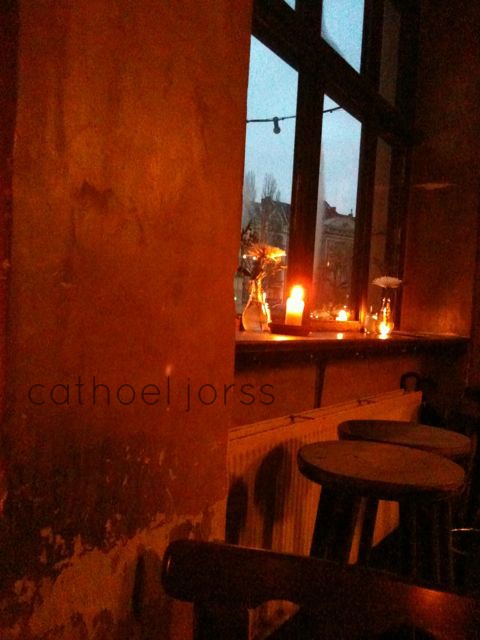
  • the underground birdcage

    Brisbane’s underground opened up unexpectedly and swallowed us whole. Like two fishes we went down, happy to be coveted. Brisbane sprawls on the surface of several hills, sunny and pleased with itself, the city centre sprouting like rockets deteriorates into sleeping suburbs at its very walls, a castle hemmed in by shanties: who knew there was anything underground, mysterious, culturally exploratory at all?

    It’s above ground, it turns out, like a 70s pool. Perched above a suburban railway station in a decayed birdcage shelter like a lean-to, stripped inside, its tin roof bared and its internal walls mostly gone. This might have once have been the house of the shopkeeper who founded the burger bar downstairs, barred and bolted at street level: as we ducked under the sagging verandah to come up we read: Award-Winning Coffee! PLUS: Bacon & Egg Rolls.

    The milk bar was closed, it being late on Good Friday, everything was closed in fact, everyone gone. Miles of car dealerships gleamed up and down the highway. The railway station was empty and cool-lit. Huge billboards loomed. We went up a rickety flight of stairs and into the unlit living room of a couple who host these gigs intermittently, whose devotion to experimental music lies thick like dust over every surface in sight. They had stacks of tapes on a milk-crate table, I’d not heard of even one of the bands. We sat down on a velvety car seat and a milk crate filled with comics. Outside, the verandah was hedged with netting and the lights from the dealership opposite swam. People smoked various plants. Eventually two bands played. One was the Loop Orchestra, which morphed out of Severed Heads, and whose members have been assiduously pursuing the random mismatching of tape loops since 1979. They took a long time to set up. Their equipment was heavy. Their sound was intoxicating and strange. Compelling re-occuring beats splurted from old splices in the tape. One man wore dozens of loops round his wrist like loose dark bracelets, slipping them off when he wanted to change and refit. A young audience member scrolled his phone throughout the set. Another, in his fifties, sat on the floor like a child being told the best stories and when his attention wandered he picked up an old flyer off the floor and held it up close to his eyes to read.

    A girl with plaits attached to her hat turned her head next to me and gazed glassily past. Her smile was vague and convulsive. The man in the Bauhaus t-shirt who kept bending over some detailed arrangement behind the stacks of jars in the cluttered kitchen corner turned out to be the drummer for the second band. He told me their name but I forgot it. It was clever. His drums were built out of scrap. I was perfectly comfortable in my warm car seat, I took many dark photos, my mind just sank away. Everything was dark and people’s shadows cut the reading light delineating the stage. With care it was possible to pick a way along the verandah which felt like at every moment it would dissolve into the highway and disappear in a smear of rapidly swept past headlight. The light from the head, and the light from the heart. The moon climbed impaired and creamy through the dark netting and lighted the shining untouched vehicles displayed forever, from last century, from a comatose time when people thought it was ok to mine whole mountains hollow and smelt their insides into trash. So many different kinds of sleep. Our audience stirred when one set closed and another opened and applause was low to the ground, enthusiastic. Up the back it was possible to buy t-shirts, so I did: five dollars, screen-printed, awkward cut-out letters claiming boldly and purply Real Bad Music. A rack of tapes and records and cds ranged from five dollars to twenty; four twenty-dollar notes unfurled in the tall jar into which I dropped my coins. People came up the back stairs at intervals and slipped in between the shadows watching and swaying. House plants trailed from tins hung from the tongue and groove walls and from the tiny thicket outside, garden plants reached in. The imperfect floor had a board missing here and there and had been repaired with layers of steel shop signs and advertising placards. My favourite said, in white on grey, “…your business the exposure it deserves.”


  • brandy barter

    brandy barter

    I must have lived in Berlin too long because it’s screeching hot on a Sunday afternoon, I am exhausted, and somehow the idea has crept into my head that I would like to drink a martini. It won’t dislodge. Opening my parents’ liquor cabinet is a dispiriting experience. It is a small, oval, glass-panelled thing on turned legs and inside, it resembles a brown mouth half-filled with decayed molars. An uneven semi-circle of discoloured flasks: these are the bottles of something your old workmates gave you for Christmas and that no one enjoys enough to actually drink. Plus a bottle of cheap brandy from which I made the pudding butter five days ago. Outside, Brisbane sprawls on all sides, as far as the sea and the hills, suburban and stupefied by shimmering heat. I cannot accept that there isn’t some strange punk bar or pirate bar within a block’s walk, opening late and staying open even later, candles on the tables, dogs under them, where a charmingly incompetent twenty-five-year-old bartender will make me a martini that begins with him holding up a Cinzano bottle that is actually labelled ‘Martini’ and showing me, “It’s empty.” After that I will explain that you don’t need a bottle marked ‘Martini,’ you need gin. I wish I could buy a vile martini for three euros, or a sublime martini for four, and have the bartender bring his black leather wallet to my table afterwards and have to remember that when you pay, it is customary to tip, but advisable not to say “Danke” when you hand over a twenty-euro note: this means, in the German sense, “Nein, danke,” which means “keep the change,” and it took me almost all of an eighteen-month stint there to learn this.

    On Christmas Day I met for the first time in three years my uncle, with whom I had been having a feud. He lives across the road and is stubborn, a unhelpful family trait shared by us all. Our feud arose because three years ago I was staying with my folks a few months before moving to Melbourne. During that time I had set up a writing room in their dining room and pinned out the manuscript for my poetry book along the tongue and groove walls. It was a quiet, dim, and sacred space. The first song in my album was recorded there, on a single microphone propped by the couch. But for now it was just me in there every day, working, working. The walls were lined with shelves and high up above the rows of books lay three ugly old clocks, stained wood, with various pieces missing. I made a joke, apparently: we should sell these on Ebay. My uncle, who spent his childhood immersed in the story of these clocks, one of which had belonged to a great-uncle who died in the Great War, took me seriously. It had not occurred to me that such hideous objects might be of value to anyone. I was at my desk one afternoon when the door opened without a knock and my uncle strode in. He is a train driver. He was wearing hubcap shorts and a huge pair of dusty boots. Without a word he climbed onto my desk and started reaching down the clocks. I was milling at his feet, wringing my hands, saying Please get off my desk! Don’t stand on my stuff! That’s my work! If you want the clocks I will get them for you! My uncle took all three clocks in his arms and climbed down, grunting. He set off down the hall with the clocks anchored under his chin and me beside him being flicked aside like a fly. He confiscated the clocks and later told Mum it was in order to protect family heirlooms from being sold online. The idea that I could live in my parents’ house whilst secretly selling family treasures online was disgusting to me. I marched over to his house to demand he apologize. I could not accept that anyone could know me all my life and believe me capable of such selfishness. We had been mates since I was three or four – how could he not know that hey, she’s a royal pain but at least she is painfully, irritatingly honest? The feud simmered slowly for all the years I was away. No one had been sure whether to invite this lonely uncle to Christmas lunch or whether to leave well enough alone. Christmas morning everybody cooked. My sister-out-law made a magnificent salmon and wrapped it in foil, my brother cut up foothills of potatoes, we worked out that we had almost one whole joint of meat or fish for every adult at the table. I made a pavlova and a Christmas pudding and followed the most labour-intensive recipe for custard I had ever seen. It required the milk to be slowly heated to a simmer and then allowed to cool. Halfway through it said, “Now transfer custard to a clean saucepan.” I made the brandy butter. Then I went to the phone. I rang my uncle. “It’s Cathoel. Are you coming over soon? Because I have a problem and I need your help.

    “My problem is that I made the brandy butter and it’s got so much brandy in it that it literally won’t absorb any more. There’s actually a puddle of brandy sitting in the top of the butter. Everyone’s telling me I’ve wrecked it and I need you because you are the only person in the world who can come over and tell me ‘this needs more brandy.’” My uncle said, “You need back-up.” “Exactly,” I said. “I’ll need to make myself beautiful,” he said. “I’ll need to have a bath.” I said, “Don’t get too beautiful. The rest of us have settled for only moderately attractive, so don’t be too long.” When he came in the door half an hour later he handed me a drinking straw. “Is this for slurping up the excess brandy off the top?” I asked. “Yes,” he said. Then he took a spoonful of my brandy butter and said, wonderfully, “It’s perfect.”


  • brisbylvania

    brisbylvania

    Brisbane screams and Berlin roars. Can that be what it is. I ask what do you notice and he says, It’s noisy. Brisbane is noisy and Berlin is loud. My anxiety for formulations. Can there be two towns more unlike. We can hear the freight trains on the opposite hill, buildings are no barrier. Everything is liquid, the hills, my heart, the air, my fears. So many new buildings on the way home from the airport. The tender awfulness of long haul travel, the heart that stays a leg behind. The Inuit woman who said to my writer friend at a first nations’ conference in Canada, Stand on the tarmac and holler out your name so that your soul can find you. The sense that my soul cannot find me. The walk in the dark at eight a.m., which is midnight, down along the river between high screaming trees. The frantic squealing purr of fruit bats. They are huge. The slinky broad river in no hurry to get anywhere. The long roads of hideous Eighties buildings, the tradition of tearing things down. And the empty lonely streets. The lava of cars. The shimmering stench of fuel. The yowling thin cat who purrs as soon as I put my hand on her but keeps her neck high and her ears laid back. The overgrown undergrowth. Of nature and of business. The ruthless wretched finds. The mud and mangrove flats, the sense of things nesting and hidden. The screaming air. The shaft of sun through 6a.m.’s window that is too strong and heats me unbearably, heats into me, the stickiness of me from sleep, I have to shelter from myself in the walls.

    The flimsiness of buildings, walls are no shelter at all.

    “What do you notice?” “It’s so alive.” Not for me. Ghosts of everything, everywhere I look. Ants on the jar of ironbark honey unopened. Everything is teeming with the sense that life is brief, unasked for, lacks deliberation, rots from birth. The blood under the river. The lingering spirits in the trees. The desire to climb and to recline, the rough bark on my dry-skinned face. The passport officer who says, “Thanks, guys.” Peaceable, welcoming, stolen, so laid back. Noisy, rampant, tangling up towards the money. Mining town, rainforest trading camp three days’ journey up the river, flimsy stadium, boat. Leaking boat. Oyster shell. Sharp, sour, over-sweet, festering growth spurt. The few people, who don’t respond when I greet them. Pedestrian place of real estate dreams. This awful, deep, disorienting fatigue. Lost world of flowers, big, as scentless as fabric. Put up adventure and find some shade. Where is art. I mean the sap extruding from the living blood. Not what the anxious local government says is art. The money and the festivals, arranged rather than brewed. The thrumming art of things, the compost heat of ever regeneration, the shelter of the water, the tireless tides. Down among the mudflats. The 1950s. Motor city.