Tag: child

  • follow milk

    I learned a poetic new German word just now at the little health food shop. The man behind me had put just one item on the counter, a carton of Folgemilch. I asked him, “What is… follow milk?”

    “Well,” he began, and something about his tired, slightly harassed, but ever willing to be helpful expression and messy hair struck me with insight.

    “Is it… what you eat when you are done with drinking only milk?”

    I didn’t know how to say ‘breast milk’ let alone ‘solid food’ so I just said, only milk.

    “Exactly!” he said, and then used that pricelessly dear word Germans have for breastfeeding infants. “It’s for sucklings.”

    We both shifted our stuff along the counter as the person in front moved on.

    “So can you use it for other things, in general, like… I’m just having a beer as a followlunch?” I asked, hopefully.

    His brow clotted. “No. No, that is not right.”

    Learning German. It’s one-third flights of folk poetry, two-thirds ‘that is not right’ and ‘we simply don’t do it that way.’

  • to stars

    to stars

    In an unpretentious Italian restaurant where all the pasta had been made by hand, the chatting-family atmosphere fell into something much deeper and richer and darker. A cellist had walked in and in his overcoat sat down on a backless chair in front of the servery and began to play. Something, I don’t know what. He drove his fibres of unholy sound into the great grail of all of us, each of us, like an ochre long-blown off the palm of his hand. I saw the small boy with dark lozenges of eyes climb down from his chair at the corner table in the second room and go to stand, unconsciously in the waiter’s path, his head a jar for the tadpoles of surety this man was making for us. He stood and stood, listening and watching, lost to every other thing. Behind him his parents and their friend kept chatting and only the older, grizzled, quizzical looking man at another table let his gaze rest on the little music lover so fondly, brimming with acceptance, and I let my gaze rest on him in turn and the music rested on all of us, like snow, that spares no needle in the pine forest and lifts its shifting darkness turn to stars.

  • on it, and in it too

    Oh, gosh. A friend of mine is visiting Berlin from Finland with her young family, they came here instead of to Budapest so that we could catch up for only the second time since we were both 11 and schoolmates in Indonesia. We saw each other on Friday and again just now, they are leaving in the morning. What’s happend is her little diaghter, about the same age we were when we were close, fell in love with me and I with her and her mother and I meanwhile have grown apart, though with plenty of mutual liking awash between us and respect, I think; the two of us, plus her fourteen year old brother, had such a good time once we broke the ice the other day, talking to each other in ridiculous accents and assigning magical powers to such landmarks as the scrappy scaffolding you have to pass under in order to reach the supermarket. I say assigning, but it feels more like you understand some genuine enchantment that is lying there, like the face of the moon in a puddle which from another angle reflects only parked bumper bars and tyres, waiting for us to know it and see it as we blindly pass. The parents went methodically through the supermarket, trying to work out which margarine was best for the breakfasts this weekend in their holiday unit. It’s easy for me to be revelrous and unresponsible, rebellious and responsive, I don’t have care of any kids. The girl took me by the hand and towed me to the softdrinks section, which til now I had never penetrated, it is right up the back of the giant side room supplying local Germans with their alcohol. Her brother had found a new variety of Coke and wanted to show it off. Ooh, we said, in our arch voices, eet ees like we are in a seeeeety of all Cokka-Collar, eet ees surrrrounding us on all sides, we cannot escape. Like me the little girl enjoys rolling her Rs.

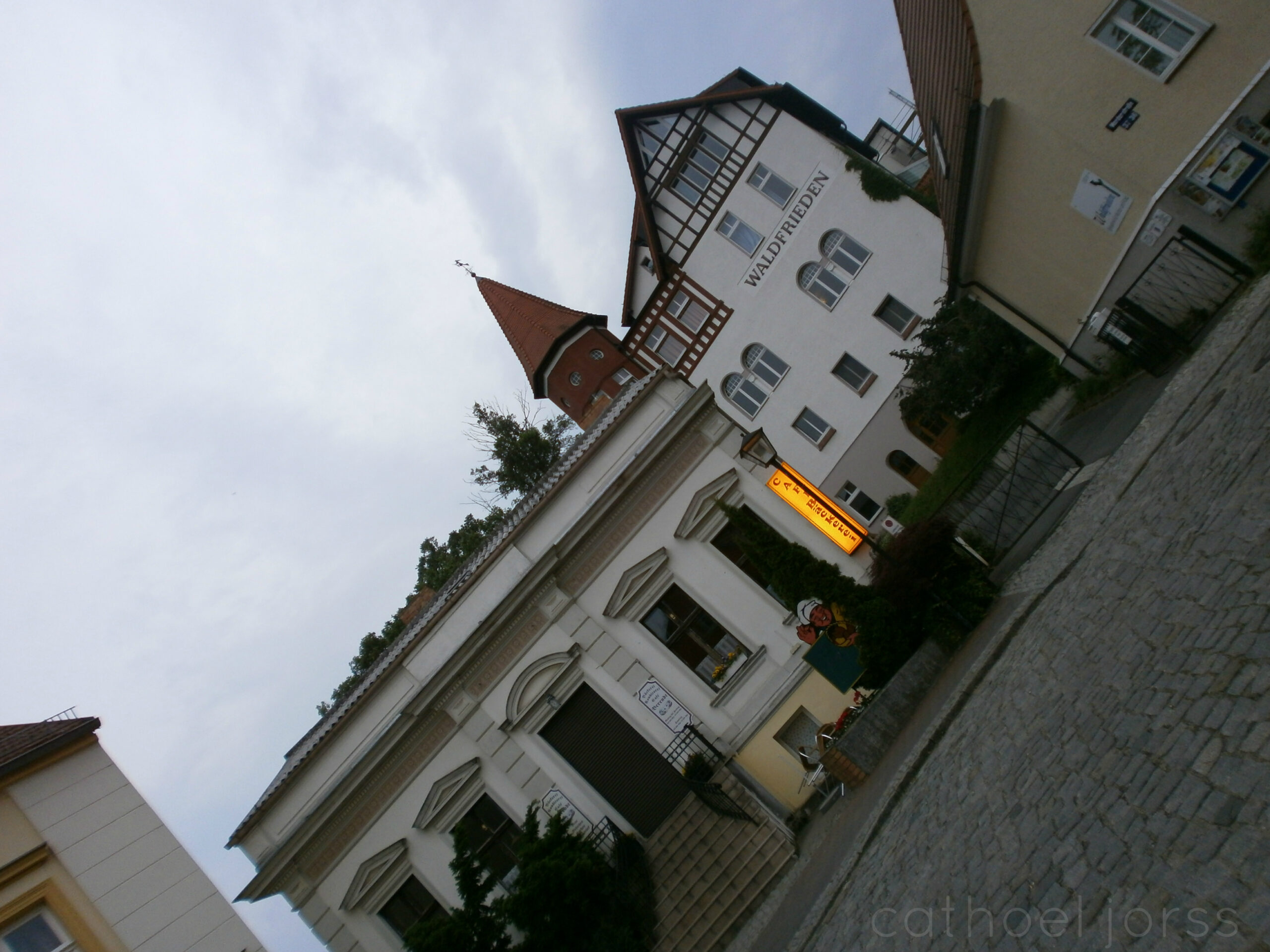
    Today I caught up with them after their river cruise, my friend texted to say We are still climbing, can you come down, the kids want to show you their moves. I remember how passionately I fastened on any Lady produced by my mum’s social life who had qualities I could identify as those I wanted to embody when I was grown. How I longed to tuck my hair behind my ears with bobby pins, like our first-grade teacher. I went down to the climbing centre built round an old watch tower in the grubby club park. My friend’s daughter came and grabbed me. She was leaner and faster than her brother, both climbing astonishingly like insects climbing water, up and over the sloping walls which lean over forbiddingly, studded with holds. It was fantastic to watch. When her mother said it was time to go she put her regular shoes on and took me round to show all the climbs she had executed earlier, each one a higher grade colour of difficulty than the last. “I did those ones, too,” said her brother, “…. but not that other one.” I ruffled her silky hair. She has slanting Finnish eyes, a witching snow princess. “You’re like Tank Girl,” I said, passing on a compliment somebody paid me when I peeled off all the sweating layers of wool at the end of a not so long forest hike yesterday. “No,” she said, her eyes bold and secretive, her bow-legged aristocratic accent reappearing, “Iiiiii… am: a Niiiinja.”

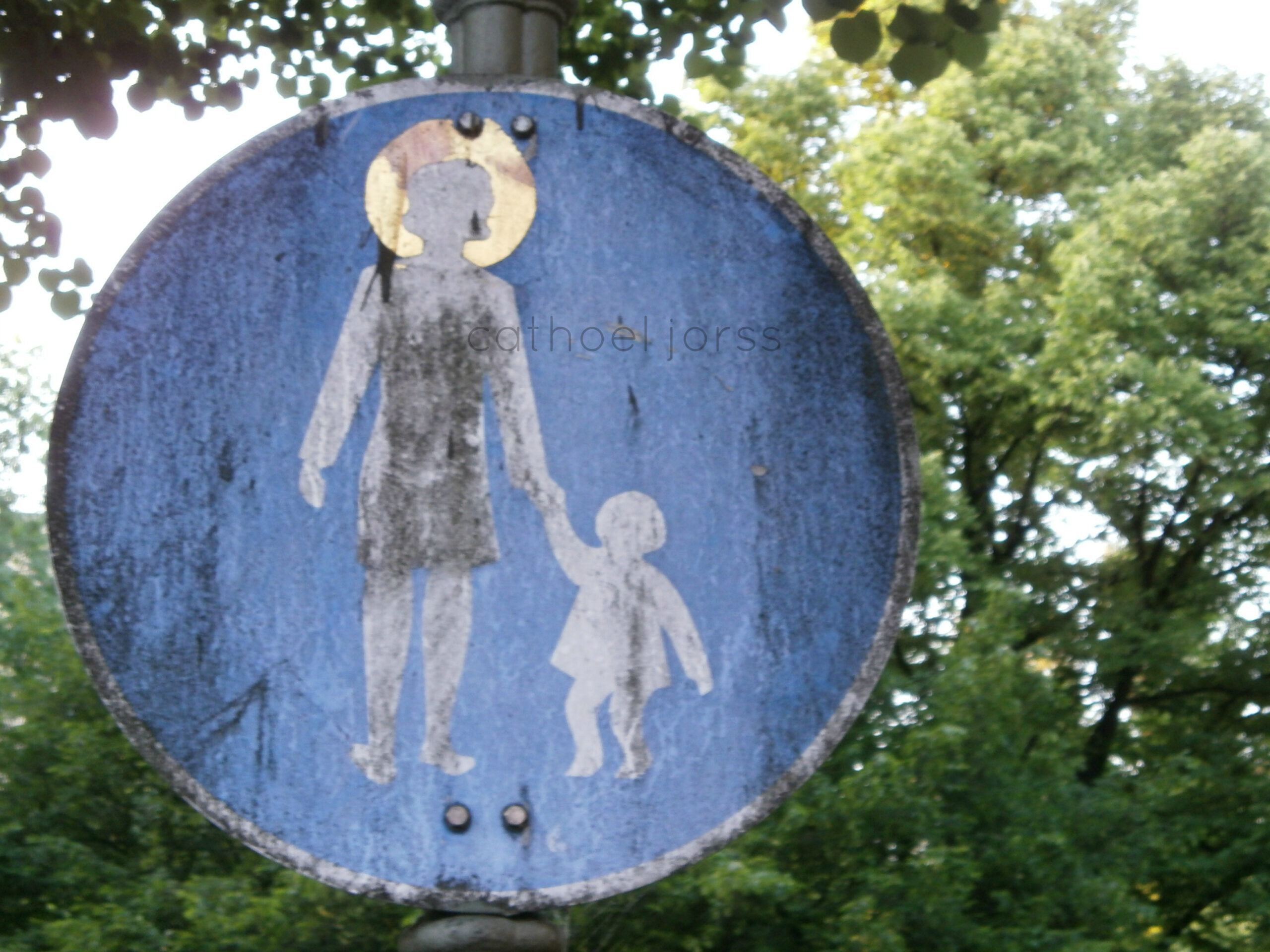
    You are, I said. I see you are. We all walked up the street together, past the two tall punks begging for their Saturday night beer money at the video store, past the guy who sits cross-legged by the bus stop and does not beg at all. The little ninja spurled her spiels about each local artefact that caught her eye: mostly, people, and their behaviour, alongside reminders of the games we had invented walking two days ago and that had sunk into her imagination. The green signal man in the traffic light who is so busy, so so so busy, who appears to only have one arm and whom we had mimicked, hurrying so-busily over the crossing with our bodies bent forward. The red signal man with his arms spread wide who appears to be blessing the waters. They decided they would eat at a restaurant my friend had noticed. When it became clear I was not planning to join them, my little friend drooped, everything about her sagged. I felt tearful. “Why you not longer?” she said, with her hand on my arm. My eyes met her mother’s. The invitation had been there but wan. Or possibly I was just feeling over-sensitive: very often that’s the explanation. “Because,” I said, “I feel like… this is family time, it seems like you guys have had a big day, a big weekend, and everybody’s tired, maybe people are getting grumpy. Her mother, my friend, did not demur. “I’m not tired!” she said, “I’m not grumpy!” “Oh…” I cast about me, I don’t know why I had to escape. We had our arms around each other by this time and I was crouched so as to enfold her as completely as possible, my little familiar, little kindred spirit, I didn’t want to leave. I told her I would write to her and asked her to write back. Then I came home and phoned a friend and cried about it for a time. “You know how…. some children…. are just so…. special,” thinking how when I was a girl I would have given anything to get to know just one adult who seemed to still have humour without teasing and intrusion, who was like me, who liked me, who had the keys I had myself, given by god or whatever inanimate coincidences take the place of god, the power of noticing and knowing that you cannot know, the feeling that the trees also know you as you know them when you step amongst them on a night when the road seems to lead off right into the sky, the curious power of finding out coded language in the stones and in the curve of the street, I don’t know how to say it and have probably never described this before but I will go to my grave knowing this is what we are for, this is who we truly are, this is what we’re waiting for, the world of moon that is waiting for us despite flags and currency, despite gossip and news, despite additives, work choices, busyness, boredom, underneath and in spite of and above everything, and in it too.

  • hitting the child

    Today on the markets I saw a man hit his child. He and his wife were standing among the racks of a bright clothing stall, I did not see what the boy had done but I noticed a woman sitting at her sock & beanie stall knitting had stilled her two needles and taken up watch. He said to his son, We are sick of you today. You must stop this. Look: people are staring. The child looked unhappy. He was maybe 7 or 8. Maybe he had done something monstrous, we were bystanders. I exchanged glances with the sock lady and her mouth tightened. Walking towards the little family I saw that the boy had flung himself on his father, wrapping his body around the man’s leg, his arms tightly clasped round the thigh and his face buried in the fabric of his father’s jeans. The father was speaking to his wife about clothes. I went up close to him. I dropped my hand quietly on his shoulder. “Let him say sorry,” I coaxed.

    “Eh?” He looked up. I repeated, “He wants to say sorry. Let him say sorry.” My hand came up to cup the back of the boy’s small, silky head. “Yeah, yeah,” said the father, dismissively, “we will.” But his own hand crept up into the boy’s hair. Because I think, whether we are parent and child or two adults, by instinct we follow each other’s example. Later I wondered how had I got away with it. Why had the father not slapped me, as well. I think because I had no sense of righteousness, I didn’t feel entitled, I felt irresistibly moved. I felt back to my voice, my tone, and felt its gentleness. I felt the way my eyes were burning with love in my head. You know how you can feel them in their sockets, fires in the skull, your soul on fire inside them, like a pair of windows opening out instead of in.

  • find your kind

    Heart-curdling rage in the city today. I was in a crowded shopping street when a man began to roar at his son. He was bantam-weight, wiry, blond, apoplectic: the boy looked six or seven at most. His little sister, used to keeping out of it, hung her head and looked away. Around them hundreds of people turned their heads – it was loud, roaring, full-bore, insanity’s volume. Shopping bags rustled, buskers busked. I stopped. A teenaged boy on a bicycle stopped too. I laid my hands flat on the air in front of my stomach, a placatory gesture. “Please,” I said. “Calm yourself. Your children are frightened.”

    He didn’t hear, didn’t answer, knew in that instant no one but themselves and his own swollen, massive entitlement to rage. He roared and roared, putting his face close to the child. The boy was bent double, both his arms rigid, pulling back and curving his body away from the danger as far as he could. The man held him by both hands in one large fist, the other hand making big threats in the air. I exchanged glances with the boy on the bicycle. I put one hand on each little dark head, smoothed and cupped them. Their soft hair, their stiff little faces. “There’s no need to shout like that. He can hear you. We can all hear you. You’re frightening him.”

    Giving me a vile look he dragged the child away. The girl followed willingly, willlessly I suppose. The man was blond and Nordic, red in the face; the little children looked to be Moroccan maybe or Egyptian. To my shame I was wondering how did this blond man get hold of these two small, dark children. Perhaps he was married to their mother. Perhaps they were his by blood, though none the more his to abuse and to frighten. Perhaps they were adopted. Maybe, stolen. I walked round the corner where they had gone, fretting and wondering, my heart a drum. The teenaged man on his bicycle came behind and I saw him swoop past the man and call out something. The man shouted back. My ears were filled with an army of blood. Making a determined effort I crossed the narrow laneway and caught up with them. “Sir,” I said, “sir, do you speak English? Please stop. Let me talk to you.”

    He turned and snarled, he raised his fist and planted it two feet from my face. “You’re not from here,” he sneered, “you know nothing.” I said, “Listen. You don’t need to frighten your children. Look at them: they’re terrified of you. Be gentle. Be kind. Find your kindness. Please!”

    He made a feint at me, not meaning it, just wanting to put me off. “Fuck you,” he shouted. “Fuck off!” I cupped my hand round the little boy’s nape. Probably he spoke no English at all. “Are you alright, little boy? Are you ok?”

    The poor darling. His father, the monster, dragged him away, gesturing curtly for the girl to follow. He was still detailing to the child in coarse roaring snorts how the boy was at fault, was faulty, would amount to nothing. I hope for the boy’s sake he saw that of those six hundred people who didn’t know what to do, there were two who could not accept he be treated that way. It’s not ok, you are someone, you exist and we can see you. Maybe that is a candle that keeps him alight until he can run away into the world. I did nothing, I made it worse, it’s not about me. Despairing I bellowed after the man, a last effort: “Be a real man and protect the children!”

    A girl came out of a shop, wondering. I showed her what had happened – the boy dragged around the corner, disappearing now, hanging back as hard as he could. She said, “Oh, my god. How could he.” We stared into each other’s gentle, sane eyes. “If he’s that loud, in public,” I said, slowly, “if he feels that entitled to shout and scream in the middle of a Saturday afternoon right here – imagine what he’s like at home.”
     

  • watching over you

    watching over you

    I saw a boy cross the road with his little sister. At the curb he made her stop and made her take his hand. I guess she was three; I guess he was four. He looked both ways. A car approaching slowly from two intersections north made him wait, and hold her back. His caution and sense of responsibility glimmered on him like sunlight. They waited and waited. The little girl sagged her head and dreamed, her brother stood alert and concentrating fiercely. The car went past, he lifted his foot, a second car poked its nose around from a side street. He waited again. I stood as casually as possible a few paces away, three times the size of the little steward, not wanting to injure his pride by letting him know I was waiting for them to be safe. I imagined the parent who had sent them on this errand perhaps watching from an upper window too. The corner shop stood up three stone steps on the opposite corner, its plastic flystrips beckoning. At last when the street was empty and still it was safe, according to the big brother’s judgement; they set out.


  • I am god.

    I am god.

    A friend of mine driving her nephew and niece said, they were arguing in the back. One of them had a goldfish that had died. Girl, 3, asked, But why do we die? She kept asking. And if we die, why do we live?

    Finally her brother (4) said, exasperated, Joanna don’t you geddit? We’re all just trying to become god. (There was a pause. Then my friend said he said): And I already am.

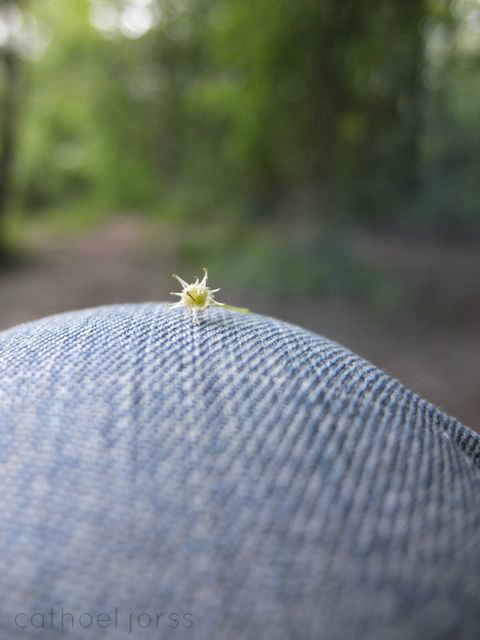
    H2O HoL knee with tiny fleur

  • a-biscuit, a-basket

    a-biscuit, a-basket

    O, the sweetest! Boy pedalling through the old part of town with his girlfriend in a wheeled box fixed to the front of the bike. It’s intended for children. He is wearing jeans and a stripey shirt and a little pork pie hat. Her blonde hair spills over the back of the box, she is tucked up in a blanket and eating a biscuit. At the traffic lights he slides forward off his seat and onto the ground, bends to give her a kiss in the small of her neck.

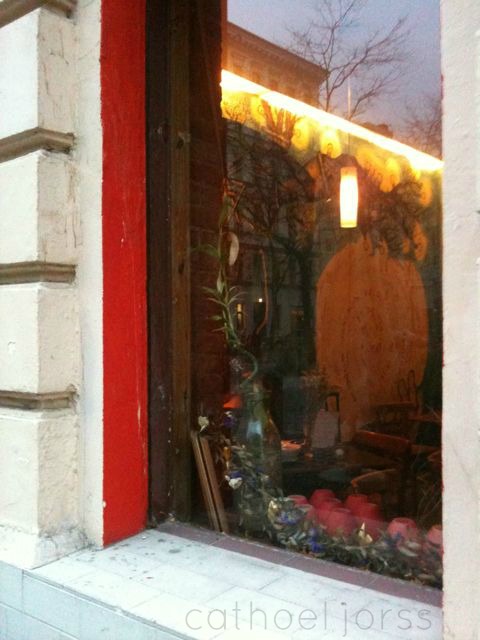
    H2O HoL golden window aslant

  • you sneak up, & I’ll sneak

    you sneak up, & I’ll sneak

    Years before I had driven from Adelaide to Melbourne with my then partner. We towed behind us the tower of terror: all of our possessions lashed to a homemade trailer. His possessions were mostly tools and mine were mostly books.

    In a seaside town we stopped with his best friend and her husband. They had a four-year-old boy and he and I fell in love. The grown-ups strolled on ahead down the wickety dunes, talking and idly watching the seagulls wheel overhead, and the two of us scampered and bolted, climbed under and hid. We found things in the sand which have no name. We found soft glass and seagrapes, rusted and tasting salty.

    We burst back onto the roadside with its sparse traffic, three heads disappearing far out in front. In a rush of inspiration he turned to me: “I know! How about, you sneak up on your daddy, and I’ll sneak up on my daddy!”

    I remember the feeling of protective love that washed me in that weird warm moment. I was so frightened of seeing the hope and ambition, the trickery, fade from his eyes and their expression subdue and dim. I was frightened he might suddenly realize: Ach no! You’re one of Them! But we did it. He sneaked up on his daddy. And I sneaked up on mine. Ambush!