Tag: Copenhagen

  • why am I having to go through this??

    The last time I was at the airport I watched a band of six merry hipsters in beards (boys) and ballet flats (girls) and narrow cuffed jeans stop at the boarding gate to take a picture of themselves. One volunteered to be not in the picture and the rest fell instantly into a Tommy Hilfiger pose, falling comfortably against each other, one shoulder sliding up and another down, all of them availed of a facial expression they could hold for many seconds without distress or strain. We went through the glass gate one by one holding our passports and our passes. The sixth and final hipster made an unhappy discovery: unlike his five friends, he had not paid extra for “speedy boarding” and was compelled to turn right where they all turned left and wait in the longer queue with all of us schlubbs. His face fell apart. It was wonderful to watch. He was tall and broad-shouldered and carrying a dense brown beard. His shirt resembled a lumberjack’s jacket. His voice came out whiny and high and aggrieved. He went all the way round behind the counter to reason with the airline crew member, waving his boarding pass: But you don’t understand! We’re all travelling together! Her expression was priceless. She tried a couple of times to explain the airline’s policy, too polite to point out that he and his friends were probably seated together and would all be reunited after fifty metres of tarmac in another four or five minutes. He looked as though he was going to cry. The woman rolled her eyes and let him pass. On the tarmac I saw two people kneeling in front of their carry-on suitcases, called out of the queue, stuffing in the extra handbags they’d thought they alone would be allowed to bring onboard. The tickets had cost around 70 Euros each and the airline’s posters at Schoenefeld Airport said, showing a man in a wheelchair, Travel Is Everyone’s Right. It seems to me equality and access are everyone’s right but jet travel is a fast-ending luxury. When we got on the bus at the other end of our short flight a beautiful milky-skinned red-headed girl was just in front of me. She showed the driver her pass and explained in careful German where it was she wanted to get to. He told her she would have to buy an extra ticket, her Eurail or whatever it was didn’t cover that. “But…” she said. She showed it to him again. With great courtesy he explained that this airport was outside the metropolitan zone, therefore: fresh ticket. She threw her head back and wailed. In English: “Why am I having to go through this?”

    At the Turkish place round the corner from my street the guy rolled out a long streak of dough and made me a Turkish pizza from scratch, although rain was falling outside and it was five minutes to closing. I carried it home warming my hand, walking through the soft rain, watching how the illustrated stickers of snowy revellers in the windows of the Apotheke blared colourful contrast to the black sticky wastes of nighttime in December in Berlin. A small woman on the subway train had made a speech about how she is “im Moment Obdachlos”, homeless right now, and because she cannot live on “Luft und Liebe” alone, on air and love, she would be grateful for any small donation anyone could spare. Then she walked the length of the carriage stopping to ask everybody, and thanking with her musical voice anyone who put their hand in their pocket and gave her a small part of the passport to the travel that is everyone’s right.
  • doesn’t that seem unusual?

    doesn’t that seem unusual?

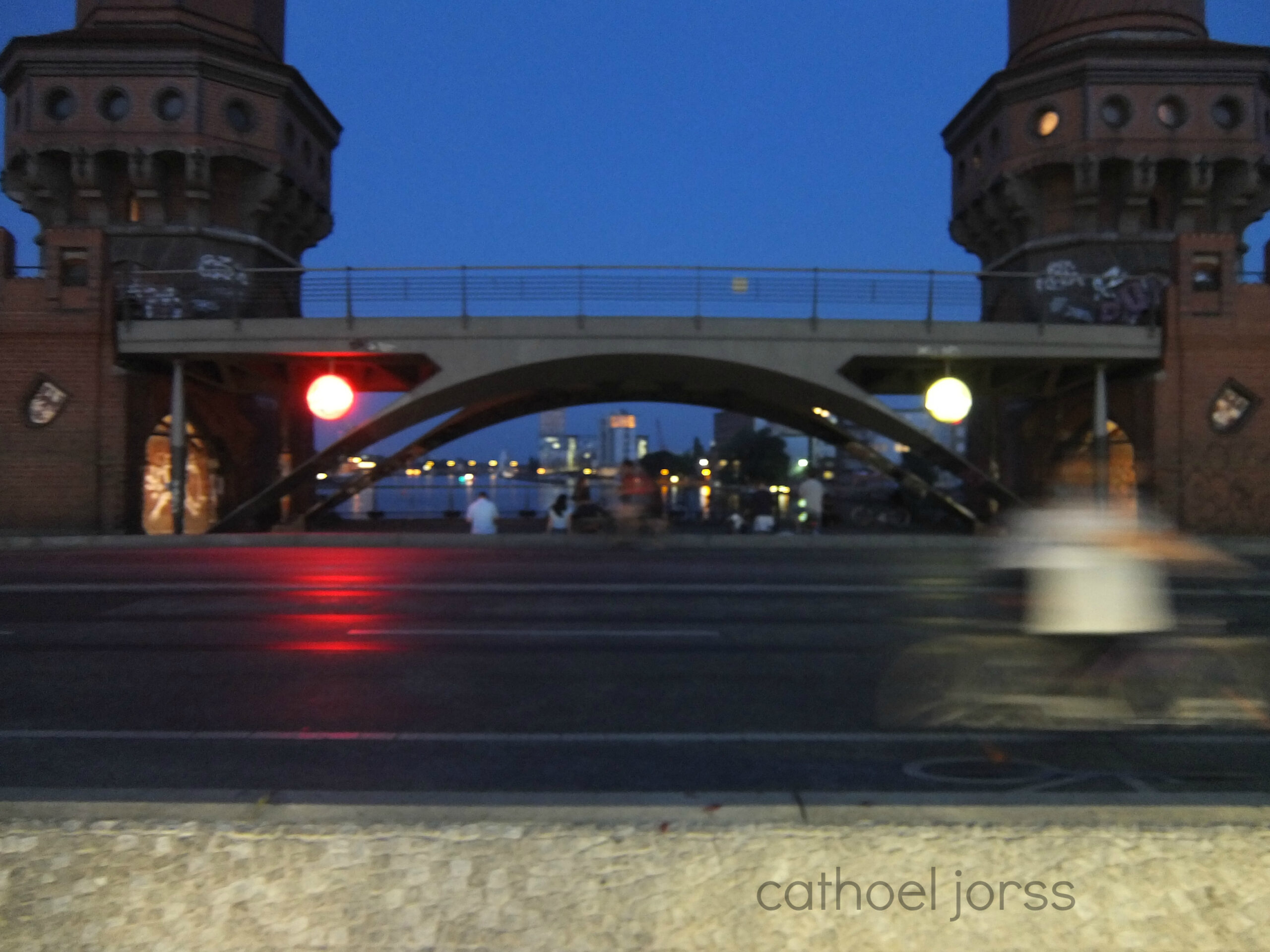
    Berlin, Berlin, I cannot but love you. Unbelievable, unmistakeable. The contrast to Copenhagen is immediate. At the airport nothing works. Every toilet is barred with tape and the man in the kiosk is grumpy but funny. He raises his eyebrows and shrugs. We are laughing. The train smells faintly of old urine. When we get out to change trains at Ostkreuz, for a moment I’m wondering can we have stumbled into a party? A party on the train platform, doesn’t that seem unusual? But it’s just a bunch of Sunday night revellers, standing about talking loudly and all of them wearing various casual, scraped-together outfits, some in funky, messy costumes, a girl with her afro pared into a kind of wave and bleached orange is crouching earnestly over her bags, sorting methodically a magical melee of things from one gaping leather satchel to another. She has on a short pair of shorts and some kind of shearling vest cut high around the ears. The moon drifts high, high, high above the scene, it does look like a scene, grubby and fitted out like a film set built by many hands. The train fills with the noise of someone’s ghetto blaster and the smell of stale alcohol. People are drunk. By the smell of it, some have been drunk for several days: a smell not of spilled beer or Red Bull breath but of old booze leaking from people’s pores. Three ladies with their suitcases ask my friend directions, he answers confidently and then grows confused for a moment when pointing out the outermost stations on the map above the door. The boy opposite catches my eye over his girlfriend’s head and we both laugh, laugh for a while, one setting the other off with a glance when the other stops gasping. The three pretty girls with demure frocks and curly hair are smiling tolerantly. The newly-arrived ladies wave when we get off. “Have a great time in Berlin,” my friend says. The love. The moon. The insanity. The mess. The three drunken Polish guys who ask for money, shoving a filthy coffee cup under my nose and rattling it. “Für beer und weed?” The gasp that leaps out of me when we reach street level and a low tide of litter has buried, like old snow, the bottom of all the tyres on all the bicycles locked to the railway station railing.


  • a bitten grin

    a bitten grin

    Wonderful, wonderful Copenhagen. I just love it here. Invited by some new friends, in fact someone I’d met once, to spend ten days roosting in the writing cabin in their garden. We got talking at the airport last time I was here. We liked each other so much. I was shy about coming to stay, off one meeting so many months ago. The plane got in late and we drove through the long unfamiliar softlit suburbs, speaking in English and my three words of Danish, lapsing into silence with a sense of relief. “This is my desk,” she said, “I’ve cleared it off, feel free.” Her husband is a drummer, with quiet, gentle eyes. At the top of a steep pine ladder in the little attic room I fell into a deep, long sleep. An advertising sign at the Schoenefeld airport said, To travel is everyone’s right, but to me, travel is exhausting, it’s a piercing privilege. It takes me days for my soul to arrive. Over breakfast our host sliced an onion into large rings, a raw onion, built a layer ~ a layer of raw onion ~ onto his dark bread and pickled fish and curried egg. He saw my expression. “Even by Danish standards,” he confessed, “this breakfast is rather…” “Rather punk?” Today we took the train and explored the old city, with all day that happy, blessed feeling this place always gives me. I just love being here so much, I love it, and always have a sense of wellbeing. It makes me feel I must indeed be Danish, in part. Our surname, which we pronounce jerz, comes from Lübeck but sounds to me more Danish than German, even if ineptly or creatively Anglicized. So floating on sunshine like two leaves on water we wandered about all the livelong day long today. The old town is a maze of quiet stories. People sat in cafes by the narrow canals and disported themselves on cobbled squares. Summer is short and wears a scarf. The temperature gauge on the side of a building goes up to 27, then stops. We came out under the church tower past the high prancing fountain. Under the low arched bridge a shadow moved. Slowly the nose of a broad canal boat came into view, low on the water and brimming with motionless tourist folk. They looked half asleep. The boat was about three feet narrower than the stone arch, being steered by a young skipper with immense concentration. Behind him people lounged, a few couples chatted, one lady stood up as she came free of the low bridge and began filming a long round sweep on her phone. We watched, awestruck. He had to nose the boat almost into the stones of the opposite wall before he cleared space behind him to start to turn. With inches to spare he cleared the curve. A beautiful piece of piloting, wonderful to watch. I could feel the warm railing against my ribs. When the boat finally started to turn cleanly past the narrow bend in this ancient, odd passage of water I began to clap. “Woohoo!” I said. People on the boat looked up, woke up, and amazingly a burst of twenty or thirty up front also bloomed into smatterling applause. The sense of joy spreading was almost palpable, you know that feeling. The skipper bit his grin. Two men also leaning over the railing gave me sideways, wry, prideful smiles. For a moment we were all alight with each other. In aircraft a difficult landing in rough conditions will be greeted by decorous applause from the cabin, like an audience in a concert hall encoring a solo. It feels like the habit of an earlier age. “That felt good,” I said to my darling friend. We walked away under the walls of the museum. “Maybe,” I said, hopefully, “next time those people see something wonderful they might think, how lovely this is.” How sweet that I am here to see it. How skilfully that person plays. How dear and rich. My friend gave me a tolerant, affectionate glance that flooded warm water through my heart. I feel lucky.

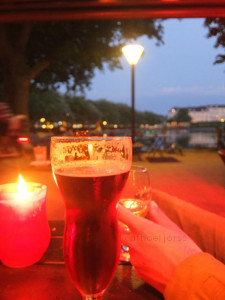
    H2O HoL red beers

  • the human scenery

    the human scenery

    On my last day in Berlin I visited at last the Museuminsel, Island of Museums. It feels strange to ride an arched bridge onto an island on your bike. The island being castled with stately buildings filled with treasures only makes it the stranger. My favourite was the first, which holds treasures rescued or stolen from ancient cultures around the world, many of them excavated and painstakingly reconstructed by Berlin historians. Bits are still missing. You walk into a temple rebuilt under a soaring roof and begin to feature on a hundred fellow tourists’ documentary records. So few people were examining the faulted relief work with their eyes. They carried screens, like bashful eighteenth-century ladies shading their virtue with fans.

    I was wearing a comical and very old beanie bought in a bead shop in Copenhagen. The lady who sold it to me bought it in Cameroon: she wanted a good price, saying, I am too old now to go back there and find more of them. “Kings wear them,” she told me, and showed me a photo of several kings standing about splendidly wearing hats like mine – it is woven out of navy and soiled cream yarn, and has all over little inch-long prongs sticking out like a fully occupied pincushion, a sea anemone. I went back to the shop three times and every time I put it on my head I felt a warmth and powerful groundedness rise down in me. In the third chamber of the museum a vast and mighty gate became the most beautiful thing I’d ever seen. It was clad in tiles in marine blue, sea green, round white daisies plopped one by one along the base of each wall. So beautiful, so moving, when my companion who had been reading the signs sidled up to me and whispered, Babylon, all at once I understood and my eyes filled with hot tears. I stood in front of the giant gate with my head tilted back, lost in that world, feeling some shard or fragment of how it might feel to live in a city of Babylon. I could feel the song in my blood, you know the song you have as a child and that revisits at odd occasions. Like lying face down in the hot sun watching the insects burrow among grass-stalk forests. Like half-waking, half-sleeping. Like sliding into a lake. When I turned there was a scampering behind me as a small tableau dissolved. Three Japanese ladies, elbow-height to me, were posed less than two feet from me as their friend, holding a camera and shooing them together like school children, took their picture using me, the giant with sprouting head, as colourful blue background.

    Sure, we all do it. At least, I do. But I try not to hurt or molest or offend people. I either ask permission with a lift of the brows or if discovered, make a laughing confession out of it and offer to show the picture. Sometimes if I happen to take a beautiful photo that has someone in it, a stranger, I’ll go up to them with it and ask if they’d like me to send them a copy. These women’s refusal to meet my eye was irritating and unnerving. I spoke to them, gently enough: Excuse me. It’s not very comfortable for you to use me as human scenery. They put their heads down and scurried away, whispering to each other as though an animal had spoken. I wanted to be heard, to be human. I went over to the lady who was packing up her camera. “Excuse me, do you speak any English? I really wish you wouldn’t use me for your pictures without acknowledgement. It’s unkind.” She too ducked her head and backed, holding up both hands and waving them flat to ward me off, an invisible windshield. I could imagine the stories accompanying this picture in the slide show: And then ~ she attacked us~! I saw a security guard look up and went over to him, feeling assailed and dismissed, wanting to talk to someone. “I just had a kind of upsetting experience,” I told him, in German, “those ladies used me as human scenery in their photos and then when I spoke to them, they wouldn’t answer me.”

    The expression on his face changed minimally. “Lord,” I said, “this must happen to you, like, 57 times a minute!” He said, “I hide in the corner there sometimes to get away from it. They look past me like I’m not even there.” “How awful!” I said. We were smiled by now, we kind of loved each other. “And don’t you feel… it’s as if, if I photograph everything instead of seeing it directly… am I really actually here?”

    Leaving the museum hours later I waved to the guard and he waved back. “Danke!” On the way in his colleague who’d collected our tickets had said, pointing at my head, “Tolle Mütze!” “Danke!” I said. The old man who snatched a photograph when he thought I couldn’t see him I followed around the corner til he stopped, then raised my own camera and took his picture, expressionless. That felt better. But mostly my bones and my blood were immersed in the sacred, cool atmosphere of the place, a whiff of many places, the ‘first megacity’ Uruk which was one of the seats of writing. They had small clay tablets like gingerbreads propped on clear plastic feet and telling how many fish had been provided for the workers, how to repel the evil left behind by an expected eclipse of the moon. Afterwards we walked to the Bodenmuseum where people had carved marble into lace. Many many Marys and many small Christs, the repetition struck me as humidity does when you return home to a tropical climate. “I finally get it!” I whispered to my friend, on tiptoe (he is 6’8″). “The Mary worship – it’s about motherhood!” “Yes,” he said, shrugging, raised on the stories. “Mother and son. And the son becomes king. And is murdered for love.” I think that’s what he said, I was in a daze with the old, perfect works, the high wooden ceilings, the light lapping over them when you tilt your head back reflected from the green canal lying outside the Museum’s windows. At the top of the Bodenmuseum is a tea rooms with lovely long windows and not, when we visited, a single customer to absorb and be blessed by its splendid, gently-urging, lace-stitching music.

  • tufty

    tufty

    Under the trees I saw two people riding side by side, holding hands between the bicycles. Not far away a duck plunged earnestly beak-first into the water, its tufted tail and downy bum held upright by the twin prongs of its feet on the scummy surface.

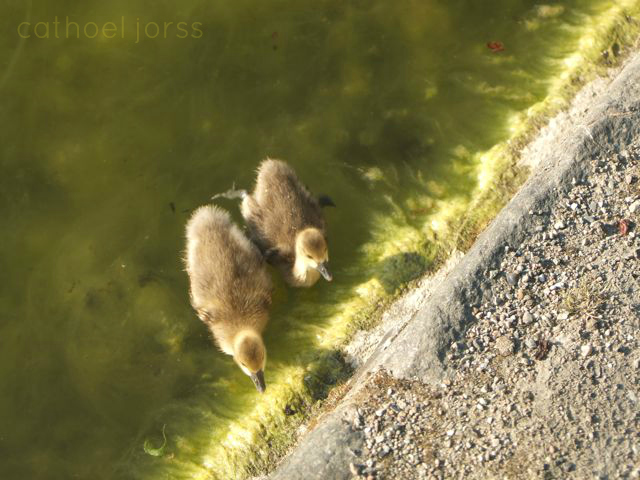
    H2O HoL ducklings

  • rodney the radish

    rodney the radish

    I found a radish! Just sitting in the middle of the road all by itself. It looked a little bruised and chipped. Poor little radish.

    H2O HoL pinecone caspar

  • crisp & pale

    Today I’m having ale and potato chips for lunch. Last night, ice cream for dinner. I was planning a little ice-cream-shop crawl but the first (pistachio with hazelnuts) was so rich and creamy it did me in. In between there were pancakes for breakfast. A snack ‘n’ dessert weekend.

    I love how the real ale movement has been belatedly followed by an awakening in the handmade chips guild: Oi! We can’t be doing with that! Those beers deserve better bowlsful!


  • find your kind

    Heart-curdling rage in the city today. I was in a crowded shopping street when a man began to roar at his son. He was bantam-weight, wiry, blond, apoplectic: the boy looked six or seven at most. His little sister, used to keeping out of it, hung her head and looked away. Around them hundreds of people turned their heads – it was loud, roaring, full-bore, insanity’s volume. Shopping bags rustled, buskers busked. I stopped. A teenaged boy on a bicycle stopped too. I laid my hands flat on the air in front of my stomach, a placatory gesture. “Please,” I said. “Calm yourself. Your children are frightened.”

    He didn’t hear, didn’t answer, knew in that instant no one but themselves and his own swollen, massive entitlement to rage. He roared and roared, putting his face close to the child. The boy was bent double, both his arms rigid, pulling back and curving his body away from the danger as far as he could. The man held him by both hands in one large fist, the other hand making big threats in the air. I exchanged glances with the boy on the bicycle. I put one hand on each little dark head, smoothed and cupped them. Their soft hair, their stiff little faces. “There’s no need to shout like that. He can hear you. We can all hear you. You’re frightening him.”

    Giving me a vile look he dragged the child away. The girl followed willingly, willlessly I suppose. The man was blond and Nordic, red in the face; the little children looked to be Moroccan maybe or Egyptian. To my shame I was wondering how did this blond man get hold of these two small, dark children. Perhaps he was married to their mother. Perhaps they were his by blood, though none the more his to abuse and to frighten. Perhaps they were adopted. Maybe, stolen. I walked round the corner where they had gone, fretting and wondering, my heart a drum. The teenaged man on his bicycle came behind and I saw him swoop past the man and call out something. The man shouted back. My ears were filled with an army of blood. Making a determined effort I crossed the narrow laneway and caught up with them. “Sir,” I said, “sir, do you speak English? Please stop. Let me talk to you.”

    He turned and snarled, he raised his fist and planted it two feet from my face. “You’re not from here,” he sneered, “you know nothing.” I said, “Listen. You don’t need to frighten your children. Look at them: they’re terrified of you. Be gentle. Be kind. Find your kindness. Please!”

    He made a feint at me, not meaning it, just wanting to put me off. “Fuck you,” he shouted. “Fuck off!” I cupped my hand round the little boy’s nape. Probably he spoke no English at all. “Are you alright, little boy? Are you ok?”

    The poor darling. His father, the monster, dragged him away, gesturing curtly for the girl to follow. He was still detailing to the child in coarse roaring snorts how the boy was at fault, was faulty, would amount to nothing. I hope for the boy’s sake he saw that of those six hundred people who didn’t know what to do, there were two who could not accept he be treated that way. It’s not ok, you are someone, you exist and we can see you. Maybe that is a candle that keeps him alight until he can run away into the world. I did nothing, I made it worse, it’s not about me. Despairing I bellowed after the man, a last effort: “Be a real man and protect the children!”

    A girl came out of a shop, wondering. I showed her what had happened – the boy dragged around the corner, disappearing now, hanging back as hard as he could. She said, “Oh, my god. How could he.” We stared into each other’s gentle, sane eyes. “If he’s that loud, in public,” I said, slowly, “if he feels that entitled to shout and scream in the middle of a Saturday afternoon right here – imagine what he’s like at home.”


  • watching over you

    watching over you

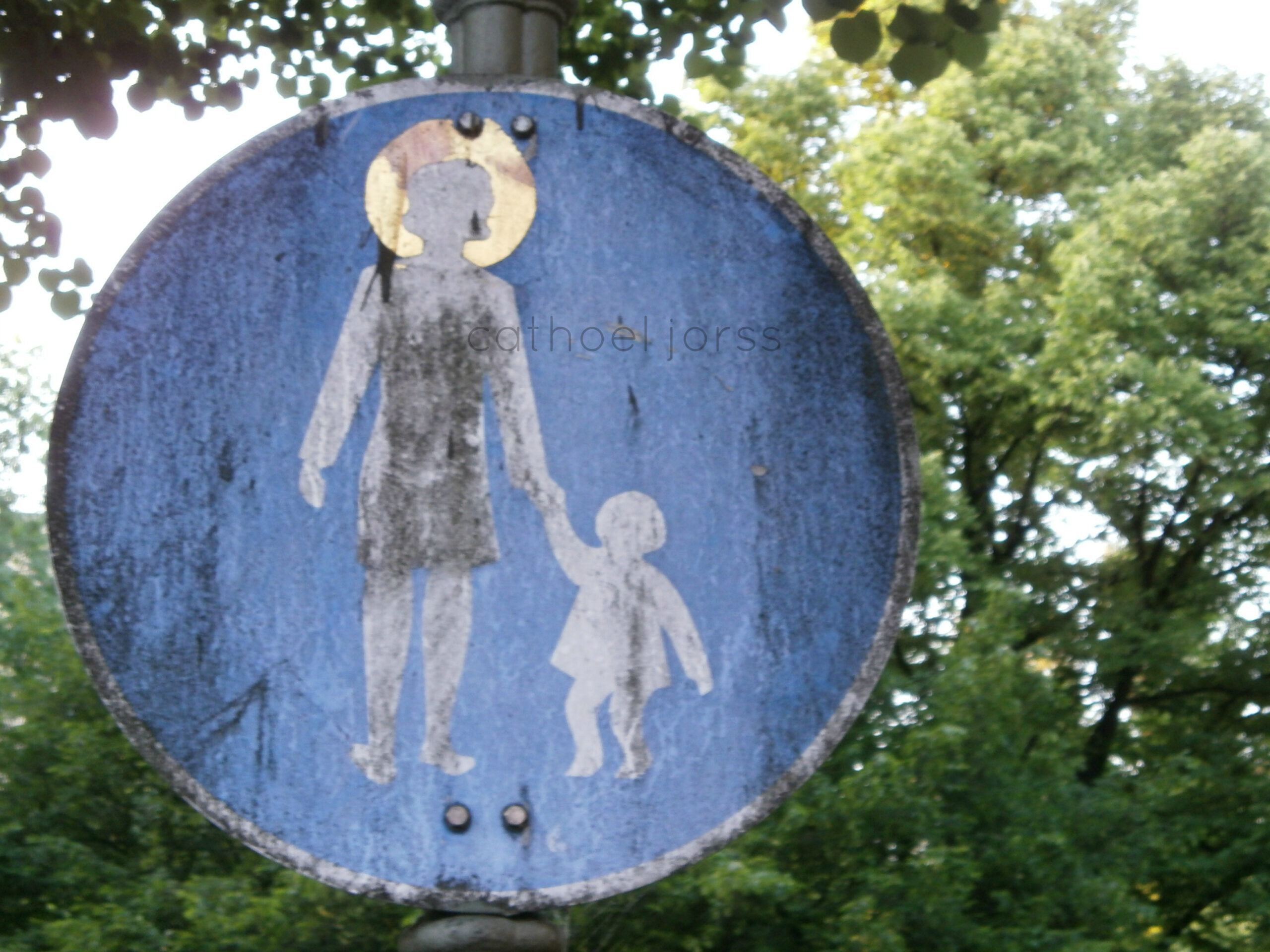
    I saw a boy cross the road with his little sister. At the curb he made her stop and made her take his hand. I guess she was three; I guess he was four. He looked both ways. A car approaching slowly from two intersections north made him wait, and hold her back. His caution and sense of responsibility glimmered on him like sunlight. They waited and waited. The little girl sagged her head and dreamed, her brother stood alert and concentrating fiercely. The car went past, he lifted his foot, a second car poked its nose around from a side street. He waited again. I stood as casually as possible a few paces away, three times the size of the little steward, not wanting to injure his pride by letting him know I was waiting for them to be safe. I imagined the parent who had sent them on this errand perhaps watching from an upper window too. The corner shop stood up three stone steps on the opposite corner, its plastic flystrips beckoning. At last when the street was empty and still it was safe, according to the big brother’s judgement; they set out.


  • in the dark

    in the dark

    Things you can do in silence, in the dark. Cycling alone under trees, flicker, flicker. Watching petals fall in flakes of tiny silver alight on the black liquid wind. Swinging on a swing someone’s fixed to a low bough overhanging the water, the wind rushing gently and softly as cat’s paws past your ears.