Tag: culture shock

  • meatbags

    meatbags

    It’s Monday afternoon and we are eating meatbags for lunch. This is because we are in Brisbane and have a German visitor. This German visitor has only been in Australia once before, in Melbourne for two weeks last year, during which visit I made him eat a meat pie from the local 7-11. Bad move. He got their name mixed up and months later, when I was marveling at the disgustingness of a German breakfast staple known as ‘builders’ marmelade’ (raw mince and chopped onions eaten on a bread roll), he burst out, “But what about those disgusting Australian meatbags?” Today it was time to reconstitute our culinary reputation, much as oranges will be reconstituted to make what we call fresh orange juice. We went to the local bakery. Standing in front was a line of people who amply illustrated what a lifetime of bakery products will do to your body. They were all having long, yarning conversations with the girls behind the counter, it was evident they all queue there every week. We got our pies and sat down to eat them in the shady courtyard. Afterwards my German visitor said, I feel like drinking a cacao. I said, a chocolate milk? Excellent notion, it will degrease our gullets. We took our chocolate milks across the parking lot and started towards home. Then my mother and father turned up. They too had decided it was time for a meatbag lunch for everyone and in addition they were hunting down a copy of the Sydney Morning Herald so that their sensitive liberal visitors would not have to suffer through The Australian every morning. For some reason the German visitor could not be persuaded to eat a second meatbag. “Maybe he’s full,” said Mum.


  • brandy barter

    brandy barter

    I must have lived in Berlin too long because it’s screeching hot on a Sunday afternoon, I am exhausted, and somehow the idea has crept into my head that I would like to drink a martini. It won’t dislodge. Opening my parents’ liquor cabinet is a dispiriting experience. It is a small, oval, glass-panelled thing on turned legs and inside, it resembles a brown mouth half-filled with decayed molars. An uneven semi-circle of discoloured flasks: these are the bottles of something your old workmates gave you for Christmas and that no one enjoys enough to actually drink. Plus a bottle of cheap brandy from which I made the pudding butter five days ago. Outside, Brisbane sprawls on all sides, as far as the sea and the hills, suburban and stupefied by shimmering heat. I cannot accept that there isn’t some strange punk bar or pirate bar within a block’s walk, opening late and staying open even later, candles on the tables, dogs under them, where a charmingly incompetent twenty-five-year-old bartender will make me a martini that begins with him holding up a Cinzano bottle that is actually labelled ‘Martini’ and showing me, “It’s empty.” After that I will explain that you don’t need a bottle marked ‘Martini,’ you need gin. I wish I could buy a vile martini for three euros, or a sublime martini for four, and have the bartender bring his black leather wallet to my table afterwards and have to remember that when you pay, it is customary to tip, but advisable not to say “Danke” when you hand over a twenty-euro note: this means, in the German sense, “Nein, danke,” which means “keep the change,” and it took me almost all of an eighteen-month stint there to learn this.

    On Christmas Day I met for the first time in three years my uncle, with whom I had been having a feud. He lives across the road and is stubborn, a unhelpful family trait shared by us all. Our feud arose because three years ago I was staying with my folks a few months before moving to Melbourne. During that time I had set up a writing room in their dining room and pinned out the manuscript for my poetry book along the tongue and groove walls. It was a quiet, dim, and sacred space. The first song in my album was recorded there, on a single microphone propped by the couch. But for now it was just me in there every day, working, working. The walls were lined with shelves and high up above the rows of books lay three ugly old clocks, stained wood, with various pieces missing. I made a joke, apparently: we should sell these on Ebay. My uncle, who spent his childhood immersed in the story of these clocks, one of which had belonged to a great-uncle who died in the Great War, took me seriously. It had not occurred to me that such hideous objects might be of value to anyone. I was at my desk one afternoon when the door opened without a knock and my uncle strode in. He is a train driver. He was wearing hubcap shorts and a huge pair of dusty boots. Without a word he climbed onto my desk and started reaching down the clocks. I was milling at his feet, wringing my hands, saying Please get off my desk! Don’t stand on my stuff! That’s my work! If you want the clocks I will get them for you! My uncle took all three clocks in his arms and climbed down, grunting. He set off down the hall with the clocks anchored under his chin and me beside him being flicked aside like a fly. He confiscated the clocks and later told Mum it was in order to protect family heirlooms from being sold online. The idea that I could live in my parents’ house whilst secretly selling family treasures online was disgusting to me. I marched over to his house to demand he apologize. I could not accept that anyone could know me all my life and believe me capable of such selfishness. We had been mates since I was three or four – how could he not know that hey, she’s a royal pain but at least she is painfully, irritatingly honest? The feud simmered slowly for all the years I was away. No one had been sure whether to invite this lonely uncle to Christmas lunch or whether to leave well enough alone. Christmas morning everybody cooked. My sister-out-law made a magnificent salmon and wrapped it in foil, my brother cut up foothills of potatoes, we worked out that we had almost one whole joint of meat or fish for every adult at the table. I made a pavlova and a Christmas pudding and followed the most labour-intensive recipe for custard I had ever seen. It required the milk to be slowly heated to a simmer and then allowed to cool. Halfway through it said, “Now transfer custard to a clean saucepan.” I made the brandy butter. Then I went to the phone. I rang my uncle. “It’s Cathoel. Are you coming over soon? Because I have a problem and I need your help.

    “My problem is that I made the brandy butter and it’s got so much brandy in it that it literally won’t absorb any more. There’s actually a puddle of brandy sitting in the top of the butter. Everyone’s telling me I’ve wrecked it and I need you because you are the only person in the world who can come over and tell me ‘this needs more brandy.’” My uncle said, “You need back-up.” “Exactly,” I said. “I’ll need to make myself beautiful,” he said. “I’ll need to have a bath.” I said, “Don’t get too beautiful. The rest of us have settled for only moderately attractive, so don’t be too long.” When he came in the door half an hour later he handed me a drinking straw. “Is this for slurping up the excess brandy off the top?” I asked. “Yes,” he said. Then he took a spoonful of my brandy butter and said, wonderfully, “It’s perfect.”
     

  • peeling

    I’m peeling. Last time this happened I was about 14. Went for a long long walk and it was early in the morning and I just forgot about the sun. ‘Hey there, zombie girl,’ says my favourite person. He doesn’t, to his credit, reach out to tug shreds of skin off my nose. The lozenge of bright red skin at the base of my neck resembles the neckline of some elegant 1940s bathing costume. I’m just sure it does.

  • brisbylvania

    brisbylvania

    Brisbane screams and Berlin roars. Can that be what it is. I ask what do you notice and he says, It’s noisy. Brisbane is noisy and Berlin is loud. My anxiety for formulations. Can there be two towns more unlike. We can hear the freight trains on the opposite hill, buildings are no barrier. Everything is liquid, the hills, my heart, the air, my fears. So many new buildings on the way home from the airport. The tender awfulness of long haul travel, the heart that stays a leg behind. The Inuit woman who said to my writer friend at a first nations’ conference in Canada, Stand on the tarmac and holler out your name so that your soul can find you. The sense that my soul cannot find me. The walk in the dark at eight a.m., which is midnight, down along the river between high screaming trees. The frantic squealing purr of fruit bats. They are huge. The slinky broad river in no hurry to get anywhere. The long roads of hideous Eighties buildings, the tradition of tearing things down. And the empty lonely streets. The lava of cars. The shimmering stench of fuel. The yowling thin cat who purrs as soon as I put my hand on her but keeps her neck high and her ears laid back. The overgrown undergrowth. Of nature and of business. The ruthless wretched finds. The mud and mangrove flats, the sense of things nesting and hidden. The screaming air. The shaft of sun through 6a.m.’s window that is too strong and heats me unbearably, heats into me, the stickiness of me from sleep, I have to shelter from myself in the walls.

    The flimsiness of buildings, walls are no shelter at all.

    “What do you notice?” “It’s so alive.” Not for me. Ghosts of everything, everywhere I look. Ants on the jar of ironbark honey unopened. Everything is teeming with the sense that life is brief, unasked for, lacks deliberation, rots from birth. The blood under the river. The lingering spirits in the trees. The desire to climb and to recline, the rough bark on my dry-skinned face. The passport officer who says, “Thanks, guys.” Peaceable, welcoming, stolen, so laid back. Noisy, rampant, tangling up towards the money. Mining town, rainforest trading camp three days’ journey up the river, flimsy stadium, boat. Leaking boat. Oyster shell. Sharp, sour, over-sweet, festering growth spurt. The few people, who don’t respond when I greet them. Pedestrian place of real estate dreams. This awful, deep, disorienting fatigue. Lost world of flowers, big, as scentless as fabric. Put up adventure and find some shade. Where is art. I mean the sap extruding from the living blood. Not what the anxious local government says is art. The money and the festivals, arranged rather than brewed. The thrumming art of things, the compost heat of ever regeneration, the shelter of the water, the tireless tides. Down among the mudflats. The 1950s. Motor city.

  • unter den berlinden

    unter den berlinden

    When I leave I will miss the magical wildness of Berlin, that is already being built out for apartments and hotels; the overgrown factories with railway lines running through them; the fact that on every sunny spot, a railway bridge, a low brick wall over the river, people will bring out their paperbacks and their beers, arrange themselves quietly, spend an afternoon, publicly lolling. I’ll miss the laundromat round the corner from me which is also a pub and has a pool table and couches. Old punks, living in squalor in huge squats but running them as businesses now – showing open-air movies, collecting beer bottles for their glass deposit. “Was your father a glassmaker?” my dad used to say to me, when I was a kid and would sit hunched too close to the screen blocking his view of the TV. I set my TV out on the nature strip seven or eight years ago, I do not miss it, but in Berlin my whole of life is like a child’s, sitting too close up against the screen – everything in colour, everything sharp and growing and broken, everything wailing and wrecked. On the medieval bridge I pass five buskers, all with their CDs out. The bricks smell of piss. This besieged city, surrounded by untouched ancient villages which were, until a few years back, clammy East Germany. The Wall runs like a cold seasnake through the town, you can look down at your sneakers and gasp, it has grasped you, the double line of bricks that show us: here is where we once were two. Isn’t it strange how a city itself can hold our patience and attention, an affectionate contract – the unending tolerance one will bring to one’s surroundings: like Melbourne, like New York, though perishing of loneliness some afternoons I’m in love with the stinking vile city as a whole. I love its dogs, haunting and purposeful and striking out each alone on some adventure of perception, one by one, differently spotted and scarred and with or without a collar, muscled or fat. Berlin, its train rides, the foul breath of the underground, I love its filthy pavements and its skies, almost invisible now that it’s autumn but breaking out late in the day with a luscious deep Fabergé blue that brings cameras up from chests and phones out of back pockets. I specially love its bicycles, spindle traffic of a woven city. I know nothing I experience or say here or see can make sense, not ever ever, I could grow old here (oh! a year, give me a couple of years yet) but I still would never know the deep dark nature of our violence, the way we entertain each other like guests on the front porch, the beeriness, the weary wary tolerance and mighty longing that like an oily octopus deep in the works drives this city and all who sail on her: show me the way to the next itch to scratch. “Berlin”, the name has become a spell, to me. I’m bound, bonded, blinded. In Berlin a spell.

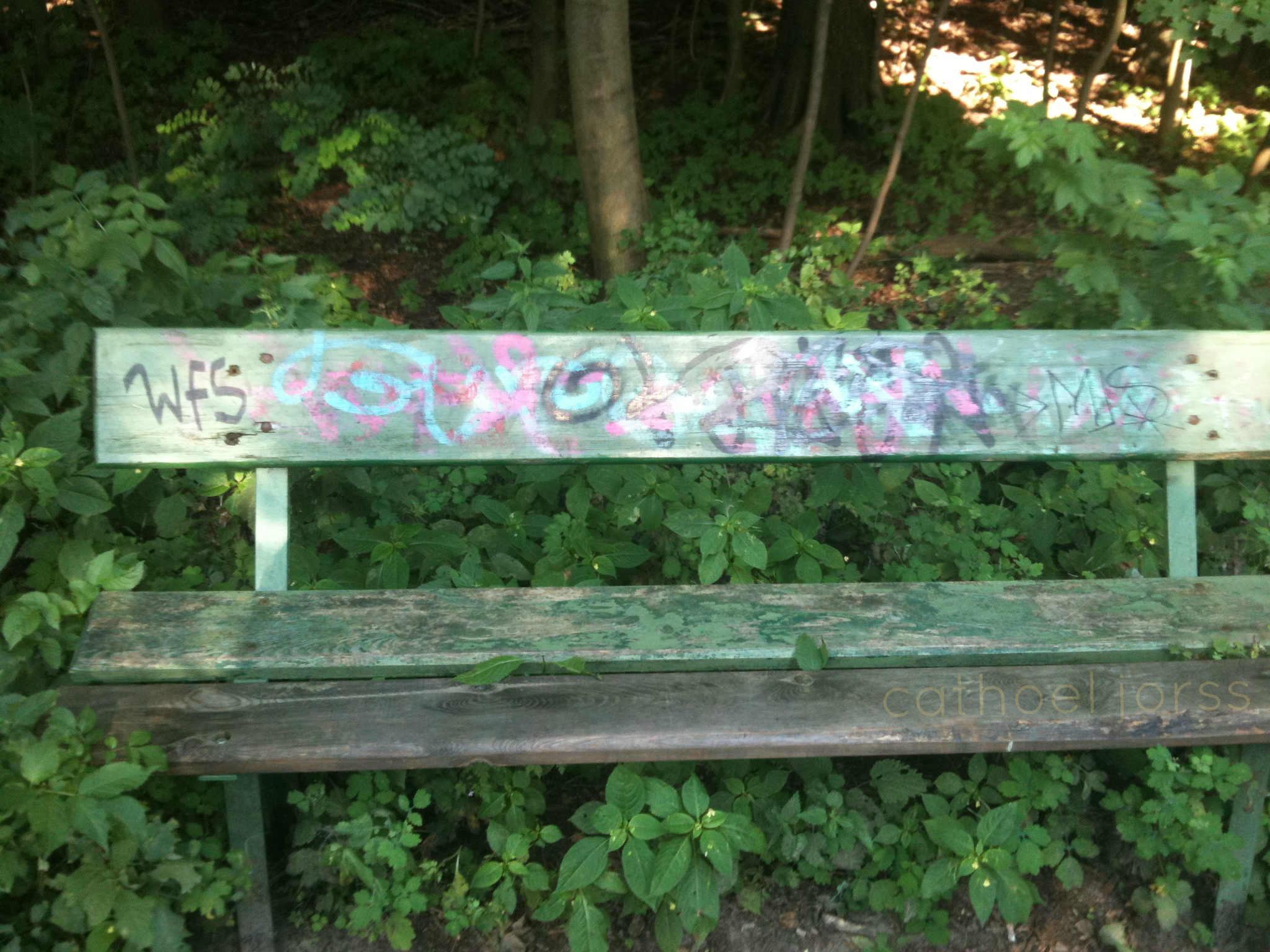
    H2O HoL greened bench

  • with tweezers

    with tweezers

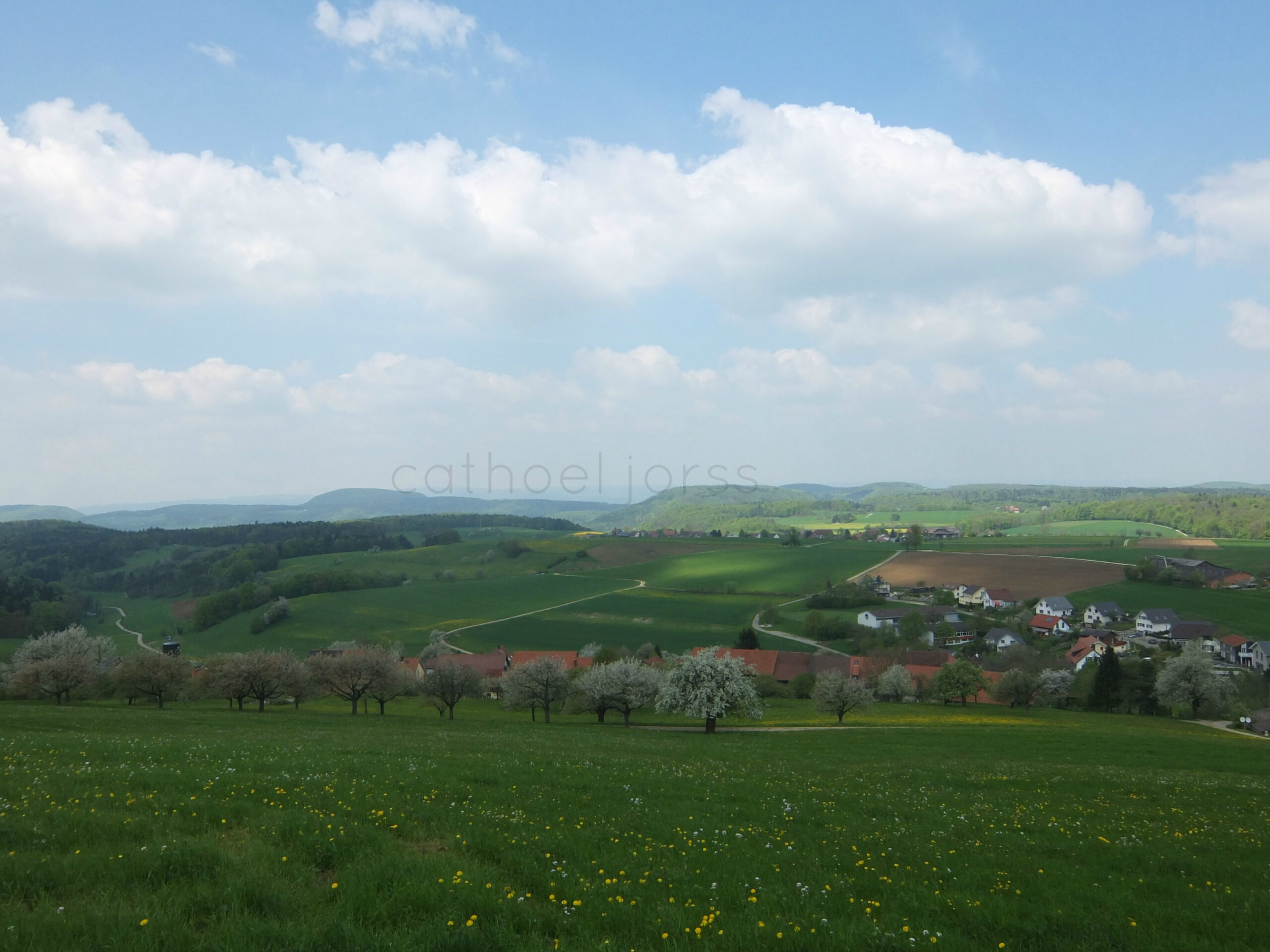
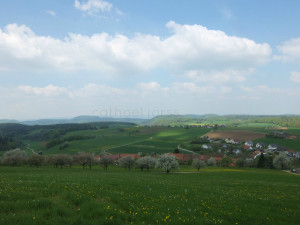
    Last time I was in Switzerland I said to my host, It’s so pretty! It’s like an endless reel of picture postcards, seamlessly unrolling.

    Yes, she said. And if I’m not on my knees in the garden on a Sunday morning, pulling up daisies with a pair of tweezers: my neighbours won’t speak to me.

    H2O HoL swiss countryside for tweezers