Tag: death

  • all for you

    Alone in the house for the first time in days I feel a sadness descend and take me in its wings. I’m sad for Dad. It has come from pottering and tidying, I washed up a bowl and set it upside down on the board to drain, I folded a pair of his old pyjamas I had laundered and hung out on the little rickety rack which I found folded in the street one day. These pyjamas have a gayer, tartan pattern in reds and blues and I find them so pretty and cheering; but compared with the bigger, saggier, more worn out pair I’ve been wearing while writing at home they’re almost crunchy. I guess they’re newer and were bought towards the end of his life. Just a usual daytime fabric, not that special soft-flannel ear-fur homey plainness old flannelette pyjamas wear into.

    I find I am wishing he had had more pairs of the ultra soft old worn ones, against his skin when he grew frail.

    He had to be lifted in and out of bed. He could only swallow very soft foods. He had a little suction cup that attached to him to catch the urine. It led in a narrow flexing pipe over the edge of the hired hospital bed and down onto a flat pack on the floor which somehow reminded me of one of those foot-pumps for inflating a bed, or a half-deflated water bed itself, or sometimes the bladder out of a cask of wine which the two old men who lived in our old street used to let lie like a dog on the brick wall between them, companionably sharing as the afternoon passed away.

    The euphemisms we use for death have enraged me since my father died. The sentimental poem chosen for the service while I was on a plane made me angry and sad:

    Do not stand at my grave and weep
    I am not there.
    I do not sleep.

    This fatuous deceit is bearable only if we take it literally. He is nowhere. Not in the vase of ashes. Not sleeping, waiting. He is gone, dead and gone. This person whom I loved no longer exists.

    But the pyjamas. I folded them to take to Morocco. We are escaping family life, into our love. We are escaping turgid Christianity into the fire and nobility of ancient Islam, which sang to me from every all but corner of our house, throughout childhood, on Java where we lived between three mosques, and I can still sing by heart and by body the peeling keening mesmerising tunes which rang out seven times a day.

    The funeral poem, written on the back of a brown paper bag by someone inspired by her landlady’s loss, in the War, of her son, ended badly – or worse. “I did not die” it lied, unsuccessfully. Well, yeah, I thought: yeah, you did. That is why we’re all standing here with these sharp lumps in our throats all the time. That is why we are holding this service, so formal, so inevitably pompous and off-putting. Because you died and are dead now, and will be dead forever. You died and that is why I booked a ticket late one night, near midnight, and left for the airport at four the next morning. Don’t lie to us, poetry/You dishonour yourself.

    I wanted to go to Marrakech, just so that on Christmas morning we could wish each other a Marrakechmas. The pun took hold of my heart. But we chose Fez, because it is the most intact medieval Islamic city anywhere; it is the old world, the New City was added outside the walled medina in the early twelve hundreds. I folded my pyjamas to wear in our room there at night. Compared to the pyjamas I had just taken off, after a drowsy day writing by lamplight, they weren’t particularly tender under my palm as I stroked them smooth and lay them on top of the suitcase I’ll pack tomorrow. And I thought: if only Dad had had these soft pyjamas to wear every day. I wish he had not died with a chronic headache. I’m glad he died at home. I’m more than glad I was able through my family’s generosity to get home to their house to be with him, for six weeks because every week Dad would say, “Can’t you just stay another week,” and I hadn’t the heart to turn him down, to turn away, to just board the plane and go back to my Berlin life and let him die there alone – or without me – I needed to be there, to see him, and the headache came from an incident that happened while I was standing by his bed – his hospital bed at home – my mother only told me about it after he had died. We didn’t have the money for me to get back a second time. We’d decided I would see him while he was still living. But now he was gone I felt an ache and like a satellite whose rope was cut, I was just floating in cold featureless space, in endless space, miles from any world I knew, and I had to go home, and be among my terrible people, and hope we would be good to one another.

    So I obeyed the overpowering instinct that said find the money, get home, they are my family, after everything: be with them. The brother who would have preferred I stayed away gave up enough of his frequent flyer points that a ticket could be booked. I flew, awake the whole way, and landed in a dinner party of twenty people and afterwards slept for fifteen hours. Then I spent a month keeping Mum company as she took up her skirts and stepped down into the river of widowhood. That was how it seemed to me, what I was doing.

    The four weeks turned to three because one night my mother frightened me so much with her anger that I ran out of the house, my heart pounding, crouching in my car outside a cafe ringing a friend, to say can I come stay with you, can I come right now.

    In the last months of his life Dad had a carer who lived with them, and she loved him and he also loved her. Her husband would come home from work every evening and climb the stairs to shake Dad’s hand solemnly. Meanwhile the rest of the world talked over him. Every few days a nurse, or sometimes two nurses, came to give the carer time off after she’d been woken every night til four by Dad’s raging thirst and Mum’s call through the baby monitor: Tiiina. Tiiina.

    These supplement nurses from a palliative care service run by the state were sometimes lovely. Two of them turned up at Dad’s funeral and one of these came up to me almost unrecognisable with grief, her face contorting, saying what a lovely man he had been, what a loss it was. Yes – often. True. He could be lovely, and had a fundamental sweetness that everybody saw, especially in his last years after the stroke. But some of the temporary nurses were careless and callous and half-awake. One I had to reprimand after she sat scrolling her phone until her hours were done, only rousing when he asked for something in particular. Find something to do, I said: the household’s overloaded. I had just arrived, then, from Berlin and it was really none of my business. But I saw all their systems and workloads from the outside and brought my fresh energy. One day two of these hearty nurses hauled him too fast up the bed from where he sank every day into a coil crushing his sore feet against the railed foot of the bed. The gas-lift bed. The single. And so they wrenched him higher onto his pillows and smashed his eggshell head against the headboard. I felt the shock go through me. I cried out Careful! He’s very frail! Take care!

    My mother, trapped behind a lifetime’s politeness with strangers and staff, laughed with them. They said, Oops! and they actually laughed. But I said, it’s serious! It’s very serious! He is so fragile, can’t you see how frail he is. He’s so unwell. Be respectful. Don’t at least cause him any more pain than what he –

    The cancer was eating him now almost visibly, from the inside as if he ought to grow more transparent. He died one night very slowly, and when my mother rang me after midnight our time she said my name and I knew. I heard the groping for self-conscious courage infecting her voice, the terrible curse of self-consciousness that makes life more death-like. Within a few days, in the tropics, I was there and we began our vigilant grief. When he’d been dead three weeks and burned away to ash, I mentioned the nurses one day and she said, yes: he always complained, after that, of headaches. Well, she said, he rarely complained. He was so sweet-natured. But he had – my heart swelled and my eyes blurred and stung – he had a headache for all the paltry rest of his life. Because of those women. Oh, Dad. The golden surfer boy, the strong man who stood on the steps in his grey suit at some University function and one woman, who came up at the wake to tell me this, had seen him there for the first time, she said, “I said to my girlfriend – who’s that? And she said, That’s Peter Jorss. Isn’t he delicious.”

    He was. He had a pettable sweetness, a roguish painful humour, a terrifying temper. Dad. I don’t have a pet name sweet enough for a loved one frail and approaching death, approaching it shyly, unable to speak of it. He died in pain. He lived in pain. He ‘often complained of a headache,’ she said, as though it said something only about the slackness of the nurses and nothing about his overwhelming experience.

    My mother can’t bear and sometimes torments herself with the fact that he could never get close enough – to her – they were in separate beds now side by side, and there was a gap which she with her recently replaced hip could not tolerate, they were both in such pain and she berates herself that she can never get close to him now, and all he wanted to was to be by her, and I tell her each time about the time he managed to get right up next to her and how his thin hand disappeared under the belly of her shirt, and he tucked himself into her like a koala or possum baby and was making tiny humming sounds of suckling satisfaction and good cheer. Dad. I wish I could have worked out that you needed softer clothing. I wish I had been able to prevent the injury to your skull, almost exposed still after the chemo that (it sometimes seemed) was really what killed him, what killed him and ate him. I wish I could be by you now, just be by you and be gentle with you, offer you something soft off a small spoon, be patient as you gathered your concentration, heroically to tackle another pulpy mouthful that took you three minutes of revolving. Just to sit with you, as far too few times I did, just watching and being there. So that when occasionally you opened sleepy blue eyes, “so blue!” my mother always said, and now consumed by fire, your lashes burned, your hands, your speckled skin, but when you saw me sitting there your loving and beatific smile overspread your face, every time, in a moment, though in repose it fell into suffering’s creases, and I smiled back, each time, and we both said, “Hello,” and maybe you said, sometimes, “Hello, darling,” or, “Hello, pet,” in your voice which is now not a sound in the world, in this far too crowded world from which some people are missing, we just smiled at each other, I wish we could, I wish you were.
  • of our elders

    I’m at my parents’ place spending some time with my dying father. He is frail as a leaf. This morning two Blue Care nurses turned up, funded by Australians’ taxes, and hauled him up the bed so hard they bashed his head against the headboard. When he is sleeping, which is much of the time, they sit with their hands folded. But today they tipped over from the useless to the dangerous.

    Two days back on July 11th we passed what would have been the 100th birthday of former Prime Minister Gough Whitlam, who died in 2014. As Tanya Plibersek put it, he was a warrior for fairness. I was saddened to learn when he died that this elder statesman had spent the last months of his life living alone in a tiny room in an aged care facility, separated from his wife of nearly seventy years, Margaret. That even such respected and influential people are not allowed to live together once they are old and infirm shows us how urgently we need more compassion and common sense in this field of endeavour. Why is aged care so brutal and so lonely when it ought to be tender, humorous, concerted, and peopled with small children and teenagers, kittens and dogs? Elders, children, Indigenous communities, people with disabilities, and asylum seekers all have deep sources of insight the middle ground of our society has lost. You would think we would cherish them kindly out of sheer self interest, if we genuinely can’t muster the compassion to care about their wellbeing.

  • to meet my father

    I’m going into the difficult embrace of family life to say goodbye to my father. Our family relationships have been fraught with miscommunications, outbreaks of insanity, and violence. Now it’s all coming to an end and we will have to, I hope, focus on our common humanity.

    My mother says, you’ll find him much changed.

    I’ve barely spoken to Dad since his cancer swelled and got into his bones. It has taken him over only slowly. The oncologist gives him so and so many months still to live. Meanwhile the effects of the stroke a decade ago slow his walking and, sometimes, his concentration and that makes it harder for his body to cope with the disease. What will kill him, it seems, is one in the string of pneumonias and influenzas that have infested him since he’s been in and out of hospital. An iatrogenic death: caused by the healer.

    Dad is so generous and has faithfully tried to be a good father to us. In recent years he has taught himself, probably at my brother’s prompting, to say, awkwardly, “I’m very proud of you.” On the rare occasions when I speak to him over the phone he says, every time, “I love you, pet.” He never used to say this. If I said, “I love you,” he would say, “I love me, too.”

    I find these feats of compassion to be particularly moving as his own father leapt from a bridge when Dad was only twelve. His brother was ten and their baby brother three weeks old. Sometimes people’s opportunities to learn parenting skills are so cruelly limited.

    On Saturday I will fly out to Frankfurt, and then to Bangkok. This was an innovation we cooked up because I need to turn up healthy and strong and not be one more member of an unwell household ailing and needing care. When I first flew to Berlin the thirty hours’ travel left me trembling and unable to rest, I was swimming uphill, underwater, and though I was sick with hunger trying to eat made me vomit.

    The thought of leaving Berlin as the hot weather finally unfolds, and of flying in to Brisbane where winter arrives in inverted commas, fatigues me more than I can say. I have just gotten settled and it’s taken me 18 months. I’m so slow to adapt. Parts of me stay behind, or perhaps travel by the old seaways. I have looked up the forecast for Brisbane and it’s planning to be blue, beautiful one day, perfect the next. Mum says, “There’s a cold front coming, in Tenterfield they’re predicting snow.” The weather channels show rows of cheerful whole suns, and temperatures similar to Berlin in the Spring. So I guess I’ll be wearing the same clobber I’ve been wearing these last sweeter months.

    In Berlin now Spanish tourists are beginning to cycle past in the street bare-chested. Girls come out in their fluttering dresses, like pennants; there’s a fashion for unpleasant prints. All the tattoos are on display and we’ve seen the first way too stoned person of the season, sitting on a bench under an invisible sack of cement, their eyes so round and so sore it looked as though someone had drawn in cartoon rings.

    My father’s muscle tone is so deteriorated he finds it difficult to swallow. He has to eat sitting forward, with supervision and great care. So I have chosen out for him all the disgusting comestibles he loves, in the softest forms possible: raw meats, and potted intimate organs, all the indelible edibles with which shelves in a German deli seem to me literally to groan. I’m going to make him builders’ marmalade for breakfast, which is Metz – raw pig mince – mashed with raw onion and served on bread. I’m going to tempt him with Sülze, a kind of jelly quivering with the flesh of a pig’s head and sundry choppings of gherkin and carrot.

    As well as the pulverised raw meats in glass I have a light jumper, four fresh new blank notebooks and a jar of ink, six books to read, and my sunglasses for crying in public places. I have all my old familiar fears and they’re heavier than anything. I have visions of our plane catching fire in the engine and plummeting out of the sky, extinguishing in the giant ocean, coming to rest in the plastic-loamed sand. I pray that an accident won’t happen. I pray Dad will be there when I get to the house, for there is no one now well enough to come pick me up, and I’m planning to call him and tell him so. It’s hard to say goodbye but it would feel even worse never to say it at all. To say: fare thee well and thank you. I will honour your name. I will never waste the kindness you showed. I have loved all the love.

  • for you, now that you no longer need it

    My friend has died. She was very courageous and had cancer. She was a photographer, a maker of exquisite works. She was Dutch and chose euthanasia when the pain she was suffering became, after months, too unbearable. Now her partner is left alone to garden.

    She was wise and quiet in her mind, an insightful, shrewd, kind, passionate person. I just adored her. The world since I’ve known her has felt illuminated by her presence. The sense of her presence among us: you know, those so rare people.

    Tonight we are making a chicken curry very slowly and brewing up a panful of chai masala and my kitchen, where my friend and her partner once sat with me, smells of spices. My throat aches for her. I am crossing to the machinery in the next room to play Gurrumul Yunupingu’s song Bapa four times over; finally my companion without a word gets up and sets it to continuous loop. Thinking of the songwriter, who also could have died this week. Thinking on his experience in the Royal Darwin Hospital and of my friend, can she really be gone utterly, and of how we treat each other, can she really just – be gone, thinking of the Aboriginal belief that our soul goes into the soil, into the stones and trees, into the earth where we got born. Sometimes a mother rubs her newborn child in the red dirt, or in the ashes from the fire, to teach its soul – I think – where to come home to. It seems to me a woman who lived all her life in the one civil, intelligently run, beautiful city might be a beneficiary of this cool, loving, compassionate, scientifically realistic and empathic prophecy.

    The dead. Now we outnumber them for the first time it seems to me we must be particularly tender and respectful of the world they have left us, which their bodies have built, which their bones and blood constitute. I miss you, I miss you, I am crying out over the sink for you and you’re gone now and I miss you, I miss your company, your voice and your eyes, your dear creatureliness.

  • Dad and Ian

    Dad’s number is 0412 195 957. Mum’s number, obtained in a different year and from a different phone company, is separated from his by only two digits. For years their numbers were almost the same and then Mum put Dad’s mobile through the wash and now Dad has cancer in his blood. The doctor’s stopped the chemotherapy because it wasn’t working, but not before it turned their home life medieval. He had radiation, hormone treatment, then the magic pill. He will be dead before I ever get home.

    Dad has a close friend from childhood called Ian, not the Ian in this picture. They were lifesavers together on the Gold Coast. Tonight I heard that Ian has inoperable cancer in his lungs. My brother sent me a photo of Ian coming out of the water at Little Burleigh looking hale and strong: he sent a photo of the four dozen young men lined up in their wrestle suits. This is how men were built in those days, I thought: before McDonalds. As I lay down and closed my eyes a strange calming image flooded me. I was thinking about the two friends who now have known each other longer than they’ve either of them known anybody else, just about; so many people have died. Their generation is at the wall. Their bodies are crumbling. I knew Ian was in town for a while to spend time with his children, our playmates on the long summer holidays at the beach, and I thought: what if someone could bring the two of them together, if they both wanted; and then discreetly disappear; so they could have a beer or a cup of tea with no one fussing around them and being social; and face the horizon as it approaches. Dad told me once years ago how when they were lifesavers they were both out on their boards beyond the breakers, where the water is green and tilts; a huge shark went cruising past his feet. He said he wasn’t scared. It was just a part of being in the water.

    I always thought once you step into the ocean, you are in their territory. They know the places we cannot map and can eat the things we are. They have no mercy, so far as we can understand it. They maybe don’t even have fear. But once you leave the sloping beach and paddle out past the breakers you are out of the reach of land and you have stepped into the wild.

    .

    My father was born during World War Two. It’s hard to imagine he minds being deprived of his mobile phone, the constant connectivity that keeps us bobbing on the surface of our minds like so much trash.

    For the first time now the living outnumber the dead, things will only get worse; it is a strange and insecure world we have made, top heavy and crumbling fast, like a breaker. We are a web on the surface of a world we have ruined and let ebb, and filled its clear salt waters with our junk and emptied them of all life using nets the size of dead cities. We are a glinting and reflecting shifting roof of plastic bottles for the endless ocean which needs no roof.

    When I went to buy a futon in 1996, my father had the only mobile phone I’d ever seen. He lent it to me, so that he could call me later to come and pick up his car. I shoved the phone in my bag and forgot it was there.

    The futon I chose was so comfortable after I lay down on it I fell into a sound sleep. A strange blaring noise woke me, repeated and insistent like a tiny tugboat. People around the shop were stirring and saying to one another, I think your mobile phone is ringing. That’s what we called them in those days, two words. I said when asked, loftily, Oh noI don’t have a mobile phone. Then, mortified, recollected that I had, and this was my father, ringing me on it. His phone and his car were in my custody.

    I bought this week a German sim card, after a year and three months here without one. I am wary of giving anyone the number. I think of the life I had, once I had slipped its leash, as like telling the household I’m just going out for a walk. Unless you take your phone along – no one can know where you are. No one can call to say Stop for milk or You are late, and so you can browse and forage and glean and sift through your thoughts like hot sand that sparkles neverendingly and forever through your fingers which are dry and brown. It makes me sad that my father doesn’t have a phone now and that it seems hardly worth replacing it. It makes me proud for him, and happy, to think of him slipping the leash, gazing at the sky, listening to the birds.

    On his verandah with his afternoons all to himself he can see the horizon from his long cane chair which curves like a Malibu board. But the chair is so low and Dad struggles to get out of it. He cannot make it to the landline in time if I call him from my strange time zone in another season; efforts to reach him seem futile. From his supine position the verandah rail is his horizon. It has snuck closer in his sleep.

    On the far side of the world where the water is cold I stare and stare towards the south but it’s slipped round the curve. I hear nothing, and I see nothing, and I get these occasional emails. My father who then was the love of my life with his fearless innovations and his steady carpenter’s hand has stepped off the coastal shelf now, he is out for a walk and he may be some time, he is going where we none of us can follow and I don’t believe he will ever meet us there; he’ll be gone; he has stepped into the wild.

  • angel Bowie

    Two hipsters compete in a Berlin bookshop, the day of David Bowie’s death

    Hipster One: I know, I mean I was like twelve when I heard ‘Changes’ for the first time.

    Hipster Two: I know, it’s like, I just… it’s like I had a personal connection. You know? Like I…

    Hipster One, abruptly: Yeah, everybody seems to be saying that.

    Hipster Two, hastily: I mean, not that I felt it, I mean like, this morning I was kind of like, Wow… But ~

    Hipster One: But now ~

    Hipster Two: I mean it hasn’t ruined my day or anything.

    I am standing in the window alcove with a volume I saw from the street and have lifted out of the display. This conversation, with its switches from having to care most to having to care least, seems to me exhausting. I think about the beautiful and dignified Iman, Bowie’s wife, whose day the news presumably has ruined. Hipster One, who owns the bookshop, calls across the room.

    Hipster One: Kann ich helfen?

    Me: O nein – danke, ich kann es selber lesen.

    Thank you, no… I can read it for myself. I smile at her lest she think I am being less playful than rude. I am reading a journal called Elsewhere, about place. It is a first volume, compiled by a bunch of homesick expatriates and published locally in English. To get here I walked past a stream of graffiti saying if you want to talk English, go to New York – Berlin hates you. Variations included Not for yuppies and the more melancholy anti-gentrification slogan Wir bleiben alle, written on a building which is about to be mass-evicted and made over for higher-paying expatriates. It occurs to me that Bowie himself was one of the pioneers of this gentrification.

    My companion, who made the signage for this shop, comes in and the shop owner realises belatedly why I look half-familiar. She switches from the formal Sie to the friendly du and cozies up, saying: Habt ihr einen guten Rutsch gehabt?

    And did you both have a good slip? a good slide? This is how Germans picture their entry into the New Year. After Christmas they start wishing each other einen guten Rutsch, as though all the nation held its breath ready to lurch down wildly careening into the new frontier, meatier, balder, bolder, breathlessly. We’ve arrived!

    I buy the journal. We walk on. My companion guides me round a brownish squelch coiled on the stones. I look closer. “That – is just a big fat brown hair scrunchie.” He laughs. “And yet…”

    I am pushing my bicycle, I don’t want to risk a bad slip, a bad slide. I tell him about the dog mess I found on my first visit to New York, wrapped in a flattened red singlet bag and shaped exactly like the drawing of a heart. I wrote about it online: I dog poo New York. On the river a circle of ice has formed round the perfect hole where someone threw a chair, a microwave, a bicycle, and the hole has frozen over. Bottles stand drunkenly frozen in place where they bobbed, and a few Christmas trees. Where the water has dissolved into liquid are a dozen ducks cosily chatting on the curving edge of remaining ice, which resembles a beach. It is so cold the tops of the buildings disappear but my breath makes shapes on the air. We are all smokers today. Or maybe, dragons. Breathing ice.

  • til the day I die

    This morning carrying coffee I walked past the hostel where an old Aboriginal man, gold-chocolate skinned and with a round white beard, sometimes sits in a folding chair under the trees waking up slowly. He and I like each other and we often say g’day. “Might get some rain,” he said, and I said, “Feels like it, doesn’t it?” Above our heads the murky trees were cacophonous with bird squabble. These are the rainbow lorikeets who yesterday dumped a couple twigs on my head when I passed them by underneath. “Those birds’ve got something to say about it, too,” I said. Later in the day I was crying in the car, having had some unexpected news. It’s ok. The radio was spurling some country song I had never heard before, the lyrics masculine and earnest. That’s because I listen to Murri Country, 4AAA. Every time they replay their station tag, “Murri Country,” meaning, Aboriginal, Indigenous Country, I think: yeah, a good thing, too. I think of it like a drip drip on the stone that slowly might wear a hole. So the blood can come out, the more justice and kindness. The singer said something that made me laugh, a kind of watery giggle. “I’m not going to stop loving you,” he sang, “until the day I die.” Immediately I saw him in his death bed, primly folded in the neatly pressed hospital sheets, flapping his hand to get rid of the wife who has not realised this means, “but, girl – on that day you are on your own.” “You,” he says calmly, “get lost.” She says, “But we had a contract! You promised! You were gunna love me until the day…” He says, his voice gravelier now but the same voice still, “Yeah, love – actually you misread that.”

  • the Dolly Lama

    the Dolly Lama

    Hearing an old song on the radio this morning, the earwormly Islands in the Stream, it suddenly pierced me how sad I will be when Dolly Parton dies. I hope she’s happy and I hope it’s not for a long, long time. Some people remember what the world was like and they remind us how we can be human, I think.

    To Dolly. Who even on the surface was beautiful long before it ‘took a lot of money to look this sheep.’

    H2o HoL dewlit boutique

  • I am god.

    I am god.

    A friend of mine driving her nephew and niece said, they were arguing in the back. One of them had a goldfish that had died. Girl, 3, asked, But why do we die? She kept asking. And if we die, why do we live?

    Finally her brother (4) said, exasperated, Joanna don’t you geddit? We’re all just trying to become god. (There was a pause. Then my friend said he said): And I already am.

    H2O HoL knee with tiny fleur

  • riverside grave

    riverside grave

    A melancholy day. We visited the grave of my friend’s husband. The room where I am sleeping is filled with his things, fishing trophies he won and a fearsomely engraved pewter hard hat with his name on it and, from underneath as I gaze up at the glass shelf, a space where his mind once was.

    The graveyard is peaceful and small. It’s by the river. Big gates are closed but not locked. I asked did she want to be alone but no, this was a maintenance visit. Side by side we crouched down and plucked all the dead heads off the hyacinths growing over him. In another part of the graveyard an elderly man was drifting, carrying a candle in his hands. My friend looked surprised when he greeted her and told me afterwards, he had grown so thin she wouldn’t have known him.

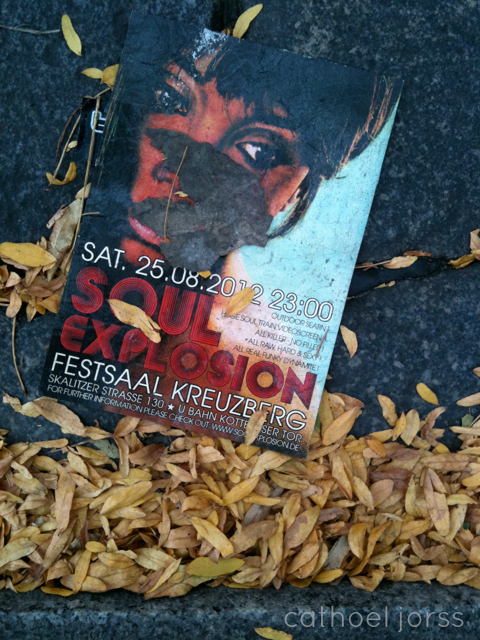
    H2O HoL soul explosion gutter girl