Tag: first world problems

  • opportunista

    In the supermarket I was queuing in front of a woman with a lot of groceries. Her arms were laden and I stepped aside to offer her the space to put her stuff down on the conveyor. Germans are possessive about their conveyor space and it remains the only country where I have ever had someone not only install one of the little dividers between my groceries and his, but then lean across me to reinstate the missing divider between mine and the person’s in front of me; then rock back on his heels and give a satisfied nod, saying to himself almost sweetly, “Hmmphf.”

    The woman spilled her goods onto the belt and said, “Ich hab’ gerade ‘was vergessen. Kannst du…” She had forgotten something, she darted away into the aisles and disappeared. I said hello to the guy with all the piercings who works the register. He scanned my bunches of vegetables one at a time. The woman slipped back into her place in the queue and put one of those toilet ducks on the belt beside her things. She smiled at me. Her smile, and the fact that she’d used du rather than Sie earlier, gave me a slender opportunity and I made the most of it.

    “Kannst du bitte – das nächste Mal – vielleicht daran denken, etwas ein kleines bisschen umweltgesunder zu probieren?” Couldn’t you please, next time, perhaps think of trying something a bit environmentally healthy? I tipped the plastic duck-beaked bottle to show her. “This stuff is complete poison. It goes down the drain and comes back out the tap, goes into our rivers. There is a brand called – Frog, I think they sell it here, you might try it.” I strove to sound as casual and off-handed as I could. This is perhaps the five hundredth such conversation I have had in a grocery store with a stranger and I’ve got skills. “Have you ever thought about trying the recycled paper toilet tissue?” I’ll ask, sidling up like a flasher in the aisle. “Ah, no,” they might say, looking startled. Often they confide they have sensitive skin and it’s supposed to be much scratchier. Oh, good god. Around us in the shadows rainforests fall to bulldozers and orangutans limp away from palm oil plantations so that we can eat our corn chips and make our soap. “Actually, it’s softer,” I always say. I’m smiling. “I mean – it’s been pulped twice.”
  • crop of the air

    I got up in the middle of the night and went over to the window. It wasn’t the middle of the night, it was half-past five in the afternoon, I had slept from nine til five because right now sleep is my job. You can’t tell because it’s dark already, but not quite. It never gets quite dark, there is always as I noticed in England years before this the glow on the horizon of the next town; the lights infect the dark and it feels like it’s mutual, in wintertime it never gets quite fully light, really, either.

    Half-awake I scrabbled at the curtains a bit. He said: What are you doing? I fell back. I said: I thought I should get up and close these curtains properly, I thought, in the morning a bright shaft of light is going to come through that gap and wake me up. But I realised I was wrong. Mm, he said, it won’t get light til late, maybe 8 o’clock. And, I said, it’s not going to get bright at all. No, he said ruefully, and we went back down into the chambers of sleep, the lost city of all those who are dead to the world.

    A lit sign at Abu Dhabi airport said, Last Chance to Buy. To me this had a kind of ectopian ring, if ectopia can be the reverse of utopian. Beside the sign were many golden products ranked in serried rows. Bottles of perfume, bottles of booze. Last year when I was there they had an aqua-coloured lightbox showing the wistful face of a child gazing out of her window and the text said, At any one moment there are 450,000 people in the air. That image of the city of souls who have left the earth yet plan to return, and the image jetlag plants in me of half the world sleeping in their bed-tombs under the water, as the sun splashes its giant curves up and down the round walls of Earth and drags them on, made me think again about how air travel feels like being away at sea. I guess it doesn’t last as long. But the feeling of being returned safely to dry ground is just as dull and amazing, just as blessed. The dangers are the same: you could fall overboard and be eaten, you are out of your element, you could drown. I suppose you really wouldn’t get eaten in midair but you could drown in the air, gasping for ground like a fish drawn against its fire of will onto the deck, you would fall and keep falling and take many miles to die.

  • storm

    I just cycled home through the spattering rain, with thunder rolling heavy overneath, and as I swept down the hill riding on my brakes I passed a cluster of dark-clad people raising their umbrellas, phones to their ears, released from their desks for the day and not happy. They were large but looked not so much fat as spilled, a kind of liquid inactivity none of us had two decades back and now even swimsuit models can’t avoid. They looked as though the world had offered them poor options and their lives were dragged by addiction and stimulants and their day jobs were dull and dispiriting. Flowers of colour in the form of bright umbrellas struck me as indications of courage. And I thought about how with all our beautiful ingenuity we have failed ourselves, and how we’ve birthed the first generation of babies in human history who are likely to live shorter lives than their parents. Along the backs of the houses and light industrial sheds the river, muddy and sludgy and odorous between the prickling mangroves, lazed brimming with its greenish life and drawing down to the sea and back again all its clean secrets. I need a better life. I need more time on my feet. I want to live in a happier world. I want to get away from my screen and all the screens in waiting rooms and bus stations and fuel stops and public spaces and gather all the home going commuters for a game of touch footy in the sweeping black rain.

  • shop where they sell bottles

    I went into the bottleshop and found the most approachable face. A guy from Canada. I told him, I only drink red. Ordinarily it’s cheap. But I want to spend maybe four dollars more and buy a wine that’s gonna make me go: That is why people spend money on wine.

    His eyes lit up. An enthusiast. He asked me what we were eating tonight and what kinds of wines I liked. He guided me down to the back of the shop. Underneath the shelves of botrytis they had an opened box. This, he said, this you will like. It totally over delivers.

    At the counter I got talking with his colleagues about how I was trying to educate my palate. The blonde girl shook her head. That’s a great idea, she said, except… You were happier before? I guessed. She said, brushing his arm, We were just talking about this. How learning to appreciate French champagne ruins your palate for ~

    I interrupted. Ruins your life? Yes! she said, nodding emphatically. Or, I suggested: short bursts of happiness interlarded with long eras of works you don’t want to… Yes, she said, that too.

    Outside the shop the night had ripened like a blue-veined cheese. I passed a heavily-muscled man who wasn’t short but looked it, because of his thickened build. I was dressed in a long wool skirt over my pajama pants and he was wearing gym shorts. As we came towards each other we both tipped our heads back to see the sky, its golden flukes, its beckoning well of pale blue. Its sense of light being backed by the dark, like a painting on velvet.

  • Mothers Day

    Want to know why I dislike Mothers Day? We were in a cafe, crowded against the wall by a spreading table of one family, all hunched over in their chairs: grandfather, husband, brother, wife, and two small blonde girl children. Mother sat between her two children. Their demand on her attention was constant. “Oh, that’s lovely, now why don’t you draw me a great big house where all those people can live?” The men talked amongst themselves, playing a game of cards.

    Mother was not engaged with the card game, she was busy mothering.

    Lunch arrived. A plate was set down before each adult: big breakfast, steak and chips, eggs benedict, big breakfast. The mother divided her breakfast in three. Clean white plates were set either side of her for the girls and she had to ask the smaller daughter to keep her fingers out of the eggs as she parsed and divided a great mound of bacon. Her enormously fat husband and groovy dad and quiet, spare-spoken brother tucked in. Just as the mother had finished dividing her breakfast the littler girl wanted the toilet. All three females got up and headed out back.

    We had finished our coffees. We got up to go. At the doorway I doubled back. Three men, oblivious, satisfied, stuffing their faces. “Guys,” I said, spreading my hands, striving for humour. “How come Mum is doing all the parenting – even on Mothers Day?”

    They crouched into chuckles. A knowing guffaw from the husband, who looked up and said, “Aw, but…. she had two hours lying in bed this morning, the kids brought her a cuppa tea.” I lit my fury with the fat of his land. He just looked so pleased with himself, so well-fed. His wife had stayed slender and groomed herself, even as she produced offspring for his lineage. “Oho!” I said. “Two whole hours! Out of 365 days! You’re right, you’re not sexist at all. But hey, better watch out she doesn’t get used to that, right.”

    He smirked. He knows the world tilts his way. I put my hand on his plump shoulder. “Take care of your lovely lady, dude.” To no avail, no doubt. I wish I had spoken to the mother instead. I wish I didn’t live in a consuming culture where we can just buy things to make up for all we don’t do, make room for, allow, feed, feel. Mothers Day – like Earth Day – if you’re serious, why not make it every day.

  • so little, so long

    We say, they have so little, yet they complain so little. They have so much suffering and stress, yet they smile so much. Secretly we think, I think, That’s because they feel things less. Otherwise the difference would rub intolerably. Secretly we must think, the smiles mean they need less: we deserve all this.

    Imagine someone living in a long row of tents between two countries. Imagine them imagining a mansion, overspilling with one unhappy person who is home alone, with the maid, the cleaner, can’t count it all, a lottery winner to whom a lot means but a little. Imagine that lonely pioneer of loneliness is on the moon, left behind, shut out of the endlessly imagined Gatsby parties, a liner of communion which steams by while they are on their fur-lined raft. Once again they go to the fridge, open the two doors on the rows of shoes, can’t count and don’t count, roaming their overfilled unfulfilled life like a coin in a bloated cow’s belly. Or so we might imagine.

    Isn’t it amazing how bright the children smile? They have a sack filled with rags and are kicking it. Children are easy to love, like foetuses. The first tenet in an advice column “how to tell if your children are spoilt” was: do they find it difficult to enjoy themselves? Does nothing seem to make them happy?


  • so much spoilt

    It’s very nice to “take time every day to think through your day and see if there’s anything you can be genuinely grateful for”. But such advice also makes me a little sick. Why don’t our social-media lists of “today I am grateful for…” start with breathable air (thank you, Shanghai), clean running water (thank you, Sahara), and supermarkets overflowing with foodstuffs? How numb do you have to be before it requires a deliberate hunt through your day to see “if there’s anything” you can be glad of? If there’s anything? Anything? How slowly and creakingly does this process have to run before it will effect an actual change in our over-consuming, greedy, wasteful, polluting and entitled habits? We are wrecking our globe. Very fast. Not just for us but also for the people who have no clean running water and for the children of the children who work in toxic factories making our iPhones. There is no point blaming ourselves for the lassitude and ennui, the misery of depression and anxiety that too much meaningless abundance and a dearth of social connection and life’s meaning inevitably creates. I get that reminding ourselves to be grateful is a huge improvement on whinging and complaining, like the woman on the home renovations TV show who wailed when her house was passed in at auction This Is the Worst Thing That’s Ever Happened In My Entire Life!!! But I want us to change faster and wake up more thoroughly. And glib phrasings like this one on Upworthy “Add #365Grateful to your Instagram photos and instantly be part of the gratitude movement!” make me feel ashamed. How bleak would that sentence feel to a hungry person, a person without land or a roof, someone who’s living out their adulthood in an endless refugee camp that stretches in tents as far as the sandy horizon. How they must wish that people who have enough disposable income to give each other cards and presents on so many occasions annually that two weeks from Christmas we are already complaining about Valentines and Easter merchandise in the shops ~ ~ ~ would be more than grateful.

  • why am I having to go through this??

    The last time I was at the airport I watched a band of six merry hipsters in beards (boys) and ballet flats (girls) and narrow cuffed jeans stop at the boarding gate to take a picture of themselves. One volunteered to be not in the picture and the rest fell instantly into a Tommy Hilfiger pose, falling comfortably against each other, one shoulder sliding up and another down, all of them availed of a facial expression they could hold for many seconds without distress or strain. We went through the glass gate one by one holding our passports and our passes. The sixth and final hipster made an unhappy discovery: unlike his five friends, he had not paid extra for “speedy boarding” and was compelled to turn right where they all turned left and wait in the longer queue with all of us schlubbs. His face fell apart. It was wonderful to watch. He was tall and broad-shouldered and carrying a dense brown beard. His shirt resembled a lumberjack’s jacket. His voice came out whiny and high and aggrieved. He went all the way round behind the counter to reason with the airline crew member, waving his boarding pass: But you don’t understand! We’re all travelling together! Her expression was priceless. She tried a couple of times to explain the airline’s policy, too polite to point out that he and his friends were probably seated together and would all be reunited after fifty metres of tarmac in another four or five minutes. He looked as though he was going to cry. The woman rolled her eyes and let him pass. On the tarmac I saw two people kneeling in front of their carry-on suitcases, called out of the queue, stuffing in the extra handbags they’d thought they alone would be allowed to bring onboard. The tickets had cost around 70 Euros each and the airline’s posters at Schoenefeld Airport said, showing a man in a wheelchair, Travel Is Everyone’s Right. It seems to me equality and access are everyone’s right but jet travel is a fast-ending luxury. When we got on the bus at the other end of our short flight a beautiful milky-skinned red-headed girl was just in front of me. She showed the driver her pass and explained in careful German where it was she wanted to get to. He told her she would have to buy an extra ticket, her Eurail or whatever it was didn’t cover that. “But…” she said. She showed it to him again. With great courtesy he explained that this airport was outside the metropolitan zone, therefore: fresh ticket. She threw her head back and wailed. In English: “Why am I having to go through this?”

    At the Turkish place round the corner from my street the guy rolled out a long streak of dough and made me a Turkish pizza from scratch, although rain was falling outside and it was five minutes to closing. I carried it home warming my hand, walking through the soft rain, watching how the illustrated stickers of snowy revellers in the windows of the Apotheke blared colourful contrast to the black sticky wastes of nighttime in December in Berlin. A small woman on the subway train had made a speech about how she is “im Moment Obdachlos”, homeless right now, and because she cannot live on “Luft und Liebe” alone, on air and love, she would be grateful for any small donation anyone could spare. Then she walked the length of the carriage stopping to ask everybody, and thanking with her musical voice anyone who put their hand in their pocket and gave her a small part of the passport to the travel that is everyone’s right.

  • hot pink banners

    hot pink banners

    Tomorrow I take the train back to Berlin, traversing again this ancestral landscape. What a beautiful week it’s been, I’m so thankful. A girl in a sunstruck cafe told me that Denmark is the happiest nation on earth. “Our third year running!” Every time I remember our conversation I mishear it as “friendliest” and have to correct myself. We got to talking because as I was falling into drowses in the afternoon sun through the window a buoyant demonstration flowed past, stopping and starting in laughing clots. It resembled a dance party or flash mob. Lots of young people dressed in black & carrying hot pink banners. What were they so, uh, angry about? She looked wry. She almost sneered. “Well, they are students – like me – only I live in an apartment and pay my own rent – these guys live with their parents and the money is so good, unbelievably good – the government’s cutting it back – we are so lucky – the world is in recession.” I studied her, she was very beautiful. What are you studying? “Law,” she said. I thought of all the Aboriginal students in outback Queensland who would love to go to university or even high school. The little girls in Afghanistan who are barred from owning books. Malala. Those of us who have this spilling, squandering, golden good fortune ~ let’s be kind with it. It may not last and it’s really not rightfully ours. Let’s keep handing it on, like coin. Hand to hand.

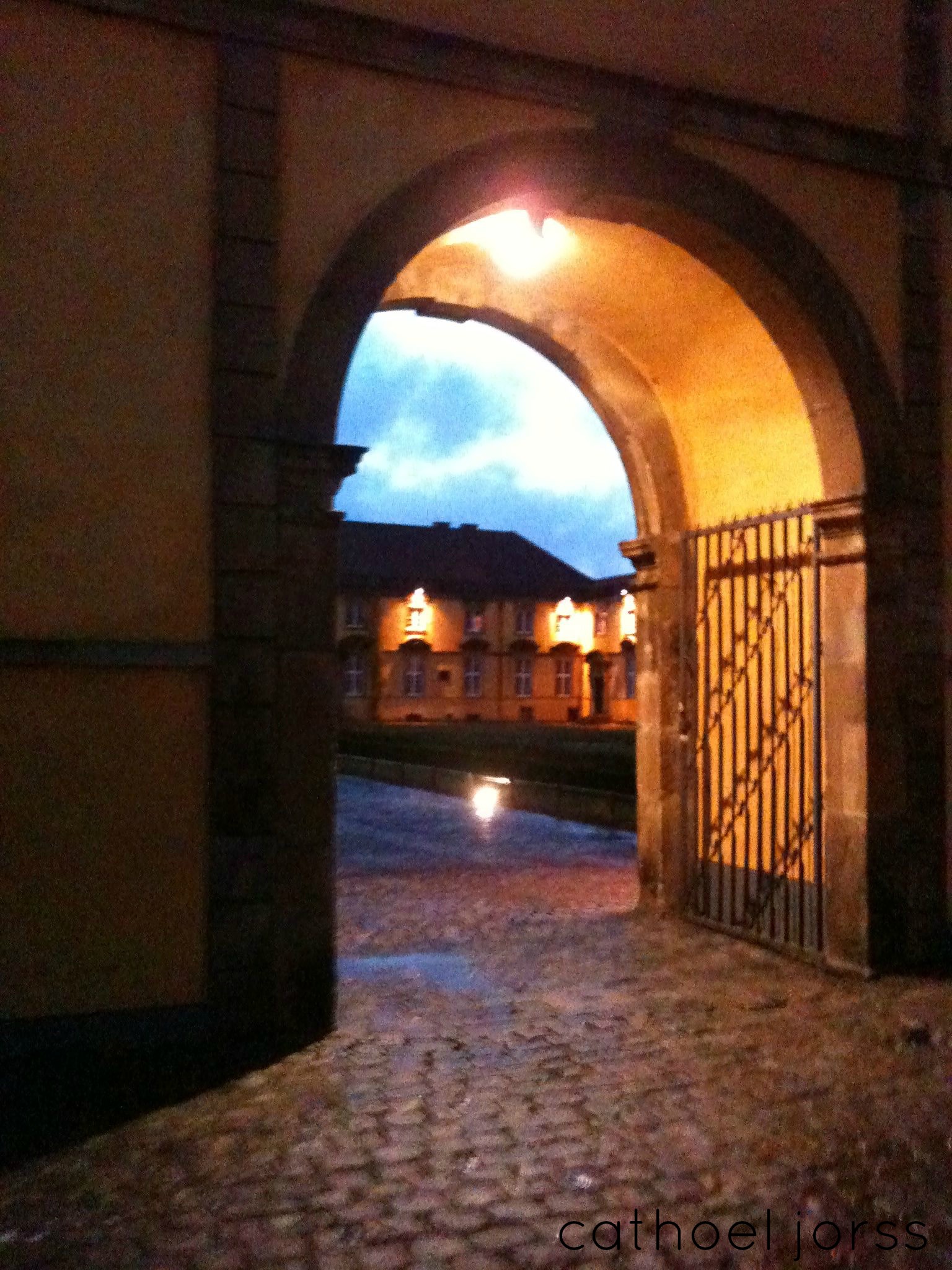
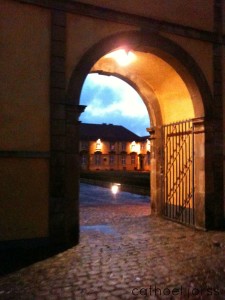
    H2O HoL archway to the castle

  • tom-tom cruise

    tom-tom cruise

    Why such strong reactions to this week’s cruise ship melodrama? Could be because as spoilt Western people with our five-planet lifestyle we resent other spoilt Western people exposing the scam? I am tasting an element of that in my own responses. I feel like: these Americans have finally experienced a thin glimpse of what it feels like for the majority of folk alive right now, who have no running water, no ‘staff’ to remove their bags of poo, etc. But I am aware I am not super keen to give up the luxurious amenities of space, privacy, and a home in order that the rest of the world can share more equally in the goodies we’ve colonized, stolen, enslaved and mined. Far easier to blame those richer or more obviously pampered than ourselves.

    H2O inside a golden boat, slant h2o lit square askew