Tag: love song

  • Hazzard lights

    This morning I woke late and slowly and heavy and smiling, blindly at everything, the sun and the distant trains, heavy with the discovery unflowering in me: my heart is full of love. Heavy with love, impersonal love that is personal, dripping from me, in me, and through. Love is like honey through a window, as the great songwriter once said. Out of bed I took up my book, working slowly, carefully through the last pages of Shirley Hazzard’s impeccable novel The Transit of Venus. I’ve read it twice before and only now realise why, early in the second chapter, it forewarns us with such a light confidence:

    “In fact Edmund Tice would take his own life before attaining the peak of his achievement. But that would occur in a northern city, and not for many years.”

    I always wondered, why would he kill himself? When he has devoted his life to this one woman and finally, by the end, she realises him. Thinking about the delicacy and quiet triumph in the description of their long, dry, separated love I glance across my desk with its starburst of opened notebooks. A prong of a specific tree given to me for meaning lies dying inaudibly in its glass vessel. It shades a shallow basket filled with candles and pens. I go back to the book, pick it up in my hands like an album carried from a wreckage in a world now lost and gone, by fire, by water, by the toil of time which places everything behind us like a mirror. Her work is so perfect. “‘I work. I think of you. These are not alternating propositions – I think of you always. Since writing you last, I’ve been to a show of drawings by Leonardo, a one-man industrial revolution.’”

    Irreplaceable Shirley Hazzard, alone in her room, writing from a kind of understanding few can be bothered to share. I hear the ardour of her disciplined quietude beating behind the pages: “She would be better off in a home. Christian said this to Caro, who replied, ‘She has a home. You mean an institution.’” Like Jane Austen’s I ration her few novels, unable but afraid to wear them thin. Getting up out of the sunshine I say almost inaudibly to my companion, spilling the steaming cup of tea, If I could write like this I would never do anything else. Thinking of writing about her work I am “A big woman in violet [who] leaned against the mantel, empurpling the view.” These thoughts pass through me like tiny fishes, transparent in sunlight, as deep in love the echoed longing might come. If I could be beautiful like you, it wouldn’t matter, I read – or imagine. Turning the last page to the end I suddenly realise with a hot shock: she is about to die, the main character actually dies on the final page.

    I paid insufficient attention to the last two or three lines. Beforehand as he is watching her go there are people grappling for their status and their airbearable possessions. And “The passengers passed through the disembodied doorway, one by one. There was a woman in pink linen: ‘Does this machine spoil pearls?’” They are “claiming, clutching, harbouring.” The man who tried to make her see, an ophthalmologist, climbs aboard without recognising her. His death has also been foretold. Everything deep, light, ironic and sweet. The love that is wisdom, the wisdom of love comes and takes a seat quietly, far back in the aircraft. Then:

    “The roar could be seen, reverberating on blue overalls, surging into the spruces. Within the cabin, nothing could be heard. Only, as the plane rose from the ground, a long hiss of air – like the intake of humanity’s breath when a work of ages shrivels in an instant; or the great gasp of hull and ocean as a ship goes down.”
  • all the accidental musics wrung

    Sometimes a song I’ve been listening to intently for ages suddenly rolls past in a different setting, the studio rather than the live performance, or another performance of it at some other gig somewhere in some other dive across town… and I all of a sudden realise, unwelcomely, that favourite line I so exquisitely cherished is in fact a simpler, balder statement or plea than what I had heard… and what I’ve been singing all of this time. Whenever this happens I wish I could take it back, unhear it I mean but also take it deep into myself, have that line – which in a kind of unintentional way, perhaps I wrote, or cowrote – for my own and smuggle it into some other song, illuminating some other life. I guess you could do this (I could, I mean) if you acknowledged the spurring accident… as in a piece of poetry or a painting made in response to something made by someone else, a work that brings to conscious light an insight some artist you are not has already articulated. Maybe then.

  • light and shade

    light and shade

    Today was a sad and complicated day and I couldn’t get myself off the couch. Life seemed at once too little and too much and I lay coiled under a faded rug that I love, cat curled on top of me, reading one trashy novel after another. Just now with the afternoon sun streaming in I went out to admire the work my incorrigible companion has been making: he is determined to transform the weedy, shaded wasteland out back into a luscious lawn, “so,” he said, “in the summer you can lie down on the grass and read your book.” He went to the hardware store and bought boxes of light-and-shade lawn seed and some kind of strewable powdered fertiliser. He yanked out all the flowering weeds and raked up dried twigs thrown down from the large camphor laurel that spreads its branches over our tiny yard, into a furry, untidy pile in one corner. He made a proper compost pile. The old man who lives next door and spends his days sitting either end of a splendid gold-figured couch in a little garden shed with his best friend struggled over on his stick to see what went on. He is Italian and speaks so little English and in so husky and broken a tone it was almost impossible for us to understand each other. He said, “No rain.” The grass would not grow. “I know,” I said, rolling my eyes and pointing – “Optimist.” “No sun,” he said, indicating the tree with its complication of fine branches. “Yes,” I said. “Maybe we are lucky,” said the man scattering fertiliser. Our neighbour gazed across the yard. He pointed to the huge shaggy mango tree two doors down. “I plant that.” He was immaculately dressed, a feat which in an older person living alone fills my throat with painful tears. He told us his grandchildren used to play in this yard and that is why he’s put the plastic netting up, to protect the lady (Mrs Something, I couldn’t decipher her name) who sold this house to our landlord from having to rescue their balls all day long. He told me his wife died, five years ago, and when I said, “I’m so sorry,” his face was consumed with sadness fresh and undigested. Mrs Something has died too. Now he rents out the top floor of his house to the man who two days ago knocked on our door with five rooting sprigs of Roman basil tenderly wrapped in dampened “Aussie! Aussie! Aussie! Oi! Oi! Oi!” paper towel and then kept moist with a layer of cling wrap. He had attached with string a little label written in cursive, “Roman Basil. Very good for eating.” This tenant has filled the Italian man’s concreted yard with pots of herbs and vegetables and sometimes glances out his top window to wave to us on our shaded verandah. It’s a long time since I’ve had such wonderful neighbours. The Italian man rested on his stick, watching. He explained, or I think he did, that he is waiting for his sister who calls every morning from Venice. Talking about the death of his wife and the death of Mrs Something from this house he patted his chest with a knotted hand. “I too, soon.” “Me too,” I said, “eventually. Happen to us all.” “No,” he said, shaking his head, smiling: “92! 92!” It astonishes me how some people can be so self-centred and cruel and others light their eyes on the world like birds resting on a beautiful branch: the fire in their belly is a generous flame, lighting everything around it with compassion and love; were it not for those people I would not know how to make a home of this strange and wonderful, terrible world.

  • Orion’s belt

    Lying on my back on the sharp grass I saw the stars, some of them, saw Orion’s Belt, or some of him, he is who the Greeks once saw they say only instead of Orion arching his back I saw a giant dragonfly plummet like a biplane doomed in the direction of the distant soil, dragonfly ploughing through Orion’s chest, a kind of shield ingrown, gone awful. I have left it there and come inside.

  • campfire of the vanities

    campfire of the vanities

    To me facebook is like a cocktail party, a clubhouse, a series of treehouses strung out among browsing forested hills. It resembles a cache, a sparkling wet beach, a web. It feels like the old bone fires built on hilltop after hilltop where signals could be carried by the night itself, all along the coast from one community to another. It’s our love letter to one another, to the earth, after decades of exploitation and greed. It’s our way of waking up, not our only way. Corals under the water, refreshed by the deep stream. It’s a village of lighthouses.

  • decanticle

    decanticle

    I’m alone in the house and my heart feels filled with love. It’s a feeling like glass-slippered waves coming in over your feet on the sparkling, rough sand, so shallow you barely get wet but the softness of the water is inexpressible. Like water from stars, I mean light, I mean starlight, the salt water travels a long way to get to us. Maybe all of the love in my heart is from long-extinct volcanoes burning in other skies. I love the sounds of other people’s lives around me, I love the roaring restaurants that spill out along the street. I loved the girl dourly smoking Gauloises as her lover nuzzled into her neck. The little Thai restaurant, the bar on the corner with a waiter whose beautiful shoulders and tiny pigtail sprouting from the crown of his shaven head were so irresistible to watch. I love the sandpit at the playground with its no smoking sign. I love the little purling hair growing out of this soft mole on my cheek, its familiarity, its curve. I love the way the sky sets off immediately where the ground ends and goes, as far as we know, forever and ever and never ceases to be. Asking nothing and accepting everything. I love the blackness and the blue. The flowers that close up at night, like awnings. The irregular army of bottle-collectors, and people with spray cans and brooms.

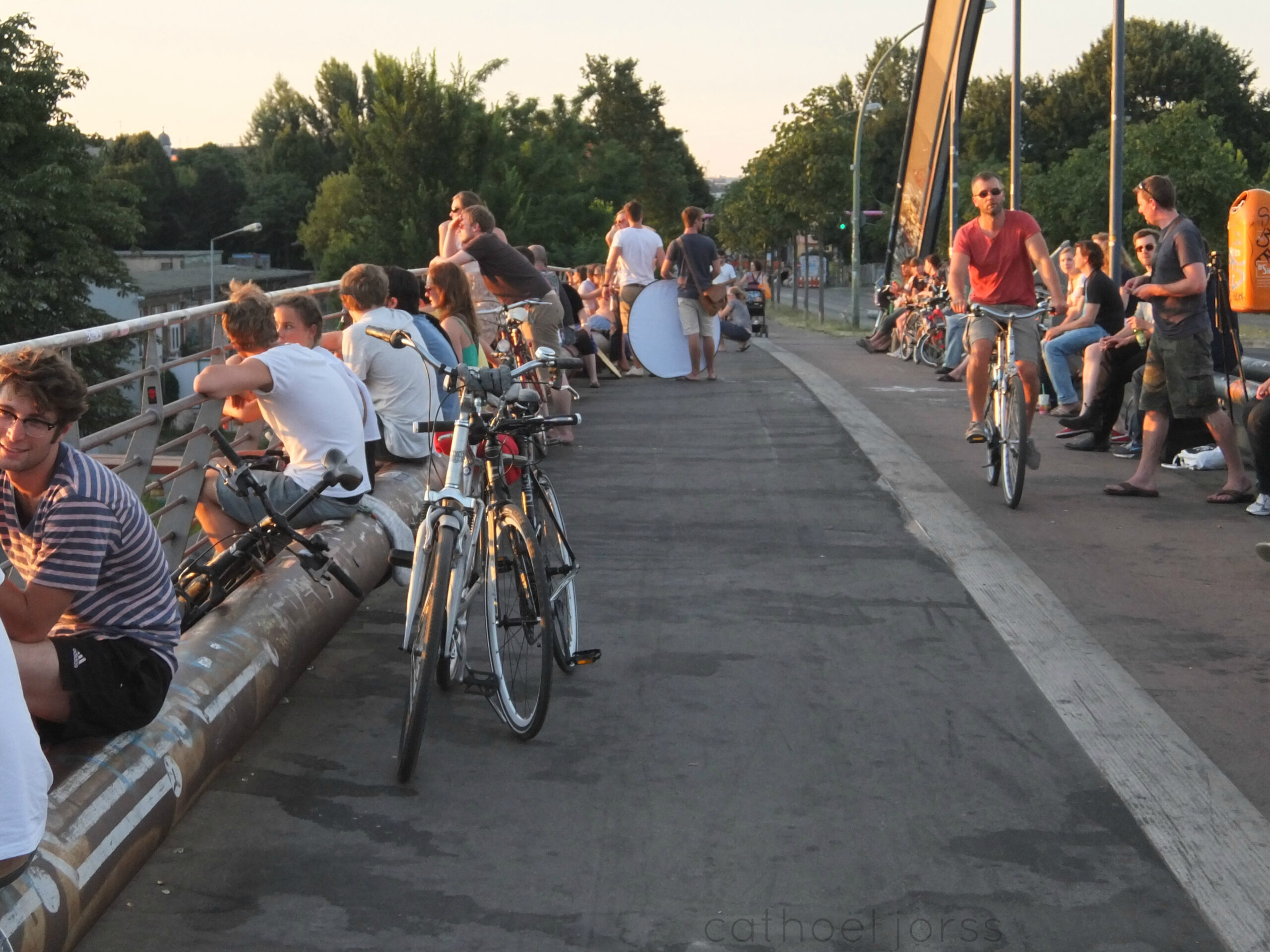
    H2O HoL berlin popular bridge 2

  • hole in a glacier

    Climbed a mountain today in a steep mist. We had to cross a lake to get to it, this was from Lucerne, shared a table on board with a godfather and grandfather and their little charge, who had unbelievably long eyelashes. After his biscuit and orange juice he grew sleepy, the godfather pointed, showing me, “See? his pupils get smaller,” and when they handed him his favourite thing, a green handkerchief called Noushy, he made a point of the corner of it and prodded himself thoughtfully in the ear with that. Then he brought it to his opposite palm and touched himself gently, thoughtfully several times in the middle of his little pink palm with the handkerchief point; then back to the ear; to the hand.

    All four of us were laughing at him in the gentlest possible way. They said, he always does this: Handkerchief in the ear, handerchief in the hand. The little boy’s nickname was Noushy, too. What a solemn little fellow.

    At the far side of the long and complicated lake that covers it seems several counties, and incorporates a steep-sided volcanic-island-looking outcrop that appears as if it would house a villain from James Bond in an eyrie reached only by helicopter, we reached a tiny town like a picture. Having late lunch there after our descent we saw a freshly married couple get off the same boat and start up the hill towards the only hotel, wheeling one small suitcase. She was still carrying her bouquet but had changed into a chic red frock matched with hot pink spike-heeled shoes. The bell of her hair swung forward every time she looked down at her flowers. At the souvenier shop they paused to talk to an elderly lady and then the bride tucked her hand under the groom’s arm and they climbed upward again.

    Upward, upward; windward, snowward. Most of our climbing was done by train and part of it was done on foot. The train is scarlet and shiny, groaning and steep. A series of steel teeth run up the centre of the line to prevent the loaded car from sliding backwards. We got out and walked into a mist that raced down the sides of the mountain exactly as cold air snakes out of a fridge. In the mist we passed a large group of botanists standing with heads bowed as they listened to their group leader, who had crawled under the fence to grab a flower, describing something green and rare. Or something common and brown, I couldn’t tell which, to me Swiss German is an impenetrable dialect. Higher up we passed a woman in sturdy walking boots but dressed in immaculate white pants and a spotless white shirt. We passed many couples on alpenstocks, the cleated walking sticks you use on steep hills, wearing serious but also immaculate hiking gear. So many cows crowded round the dairy that was shaped like an after-ski chalet their bells clattered like a Tibetan or Bulgarian choir. My friend said, the farmer knows the sound, he can tell if one bell is not sounding. On our way back down from the sightless summit, where we had sat for an hour watching mist spurl round the base of the huge communications tower, one of those farmers left his house and picking up a sagging rucksack lying in the open doorway went striding down the hill, looking well-fed and cheerful. He lept the electric fence. We were both wishing we’d brought extra jumpers but this mountain man was dressed in surfer shorts and a dark blue t-shirt. In the tunnel into the summit that leads, mysteriously and lightedly, to a great double-doored lift that brings you up inside the giant restaurant and hotel, it was so cold I wanted to suck on my fingertips. I remembered touching the icy wet wall as we walked into a hole cut in a glacier when I was ten. It wasn’t so cold as that but the chill of forboding forbad me to wander any farther into the leaden heart of this mountain, I had to turn back towards the light.

    On the restaurant terrace I watched a woman who looked like Yootha Joyce smoke a cigarette after her meal. Her husband didn’t smoke and it was pretty evident from the way she took in the smoke that this was the love of her life. Her lips pursed on the orange cork-patterned filter sucked and fondled at it so slowly, so intently, I almost felt had she not had a hold of it with her long fingers the entire cigarette would have flown into her windpipe. It was like she was finally breathing. “Please fit your own mask before helping others.” The movement of her cheek muscles, langorous and strong, made me think of the little boy Noushy who had fallen asleep on the ferry.

    After the ride back down and our lunch we walked around the pretty foreshore. The Rigi, the mountain we had been on, is called by the Swiss “queen of mountains” and is where in 1903 I think the surveying process began. They built a marker there and from it measured to another mountaintop, and then a third, and then they triangulated. Now they have mapped out all of the surrounding peaks and beautiful etched steel landscapes showed what we would have seen had we been able to see anything. A sign cut into a steel plate fixed on the ground said, Sydney 16520km, with an arrow.

    The train down was filled with elderly people, many of them German. The town at the bottom is like a clam growing at the base of a mighty pier. Evidently people honeymoon there. The red and white striped awnings and terraced cafe feel so 1950s I kept fantasizing Sophia Loren was about to saunter around the corner, or maybe Frank Sinatra. It felt like Monaco. In the foreshore park a semi-circle of chairs faced a three-walled corrugated iron shed. A trio was playing, tiredly, dispiritedly, and on the concrete apron in front was an overdressed lady slowly spinning her plump son, chivvying in a sing-song voice, as though making a bear dance. The music was awful. Saccharine and slowed. As we walked past I said to my friend, It’s like the world’s dreariest private function. Writing that, now, I add in my head: I don’t mean all of Switzerland.


  • following a stick

    following a stick

    My arms are full of scratches from traveling among the trees along the river. It’s interesting how so much of what we see is due to attention. A woman passed behind me as I was crouched in a mossy hollow this morning, poking the water with a stick, and until she was almost on top of me I did not see or hear her, though I could hear in her voice she’d seen me. A dozen stick-lengths away, on the water, passed a long pointed boat filled with army recruits. They were wearing bright orange life jackets and looked like ducklings. By remaining quiet and focussing on my bent stick, dragged by the green current, I stayed hidden though my white t-shirt and dirty orange sneakers must have been in plain view. I used to think of mindfulness as awareness of everything. Now it seems more like acceptance, and focus. There will often be a train clattering over the high arched bridge. There will often be an opal drake, steering absently in the water as though floating on his back. And presumably every leaf, every petal of the shower of gold blossoms overhanging the narrow path has its own sensation of the feeble sunlight trickling through the branches.

  • the Dolly Lama

    the Dolly Lama

    Hearing an old song on the radio this morning, the earwormly Islands in the Stream, it suddenly pierced me how sad I will be when Dolly Parton dies. I hope she’s happy and I hope it’s not for a long, long time. Some people remember what the world was like and they remind us how we can be human, I think.

    To Dolly. Who even on the surface was beautiful long before it ‘took a lot of money to look this sheep.’

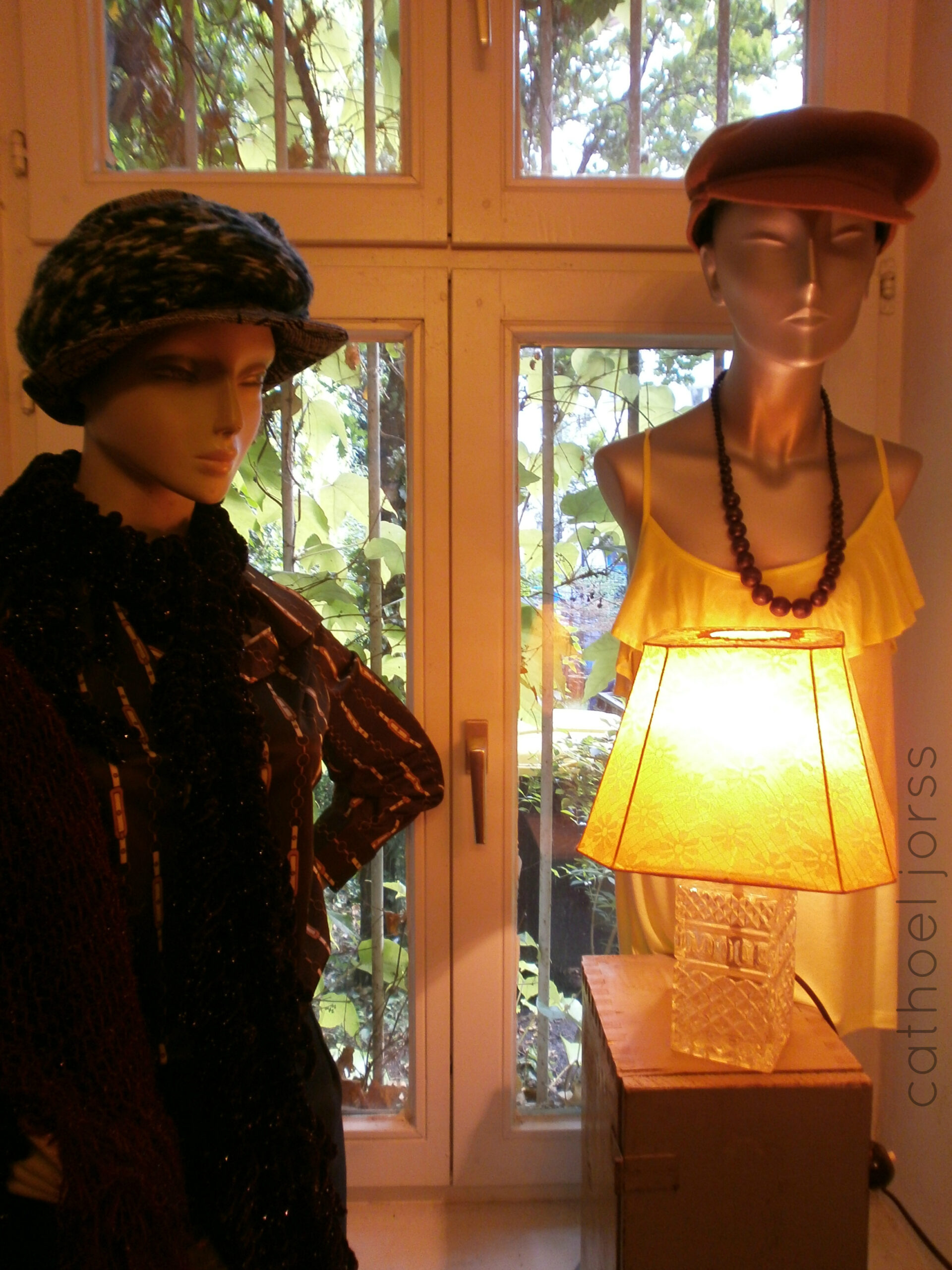
    H2o HoL dewlit boutique

  • punk snot green

    Punker dog in Berlin, his hair matted and scrufflish, his gait insouciant. He has a green streak in his fur, top of the head between the ears, that matches the green quiff on his master. The thought of this dude dyeing his own hair like an old lady in a salon and then tenderly saying, Ok now we do yours, has undone me.

    H2O HoL grey graffiti muse