Tag: reading

  • autumbled

    Autumn in Berlin and the grimy guy begging outside our supermarket is absorbed in a book. When I come home he’s set it down to thank a woman who dropped some coins into his smashed paper cup. It is Sylvia Plath.

    I prefer him to the punker dude who spreads himself with a large dog either side right in front of the sliding doors, then leans far across the pavement to make elaborate drawings in chalk which people then have to step around. His begging seems to me a form of veiled aggression. It is a set-up that forces compliance on every passerby, lest we tread on his art.

    The two months I was away I compared the daily forecasts and found Brisbane, in its winter, was invariably a degree or two warmer than here. Summer has been short and late. Just last week on the canalside two boys in the late sun were playing chess. These are the last days, and it will be so cold til June next year we will see nothing of each other but our faces.

  • don’t you feel like reading books any more?

    I was in a bookshop yesterday with my friend just arrived from Copenhagen. It is around the corner from the bookshop where he and I first met. We met because he was standing gazing at the books in the English-speaking section when I visited to see how the ones I’d left were doing, and I went up to him and said, You should buy this one! I wrote it! And he did and then later I visited him at his own bookshop near the cold Danish lakes which has one wall of records and two walls of books and a tiny espresso machine.

    The bookshop yesterday has a cafe attached, it’s built under a railway line in a series of old-fashioned orange brick arches and you can hear trains screaming overhead while you drink your coffee. Adjacent to the cafe part are the shelves of books in two rooms, and the two sections of literature reach each other by means of a narrow passage, all too brief, papered entirely with the titles published by a German house which uses bold whole colours. So you walk into a rainbow of literature: I catch my breath. On the other side I peeled off to go visit poetry and my friend went visiting novels. The man who staffs the back section (English and French, philosophy, poetry) came sailing through from the just-closed cafe holding a small plate high on one hand. A fork stuck out of it, upright like a sail. Hard on his heels were two sad-eyed beagle-like dogs who weren’t beagles, who gathered themselves at his feet as he reached the stool and gazed imploringly at the underside of his plate. “Two very firm friends!” I remarked. “With clearly no agenda whatsoever.” “Tcha,” he said, spearing a wedge of cake. “Or maybe two very firm friends of the strawberry cake.”

    I began turning over the hardcover books, looking to see how people had solved the design problem I am wrestling with: how do you answer, on the back cover, the one powerful almost abstract image on the front? Do you just have a plain colour? If you put another photo, does it end up looking 90s, like a boulevard magazine? The combination, I find, of ambitious ideas of beauty with design inexperience makes independent publishing hard. My friend showed me a novel marked The greatest book you’ve never read. Neither of us had read it, either. He was looking for WG Sebald. “Have you read Proust?” “Oh, yes. But I can’t remember any of it. It took me months.”

    As he turned away I remembered what my novelist friend had said, at the time: You should put that on your gravestone. “She read Proust.” The man on the stool dropped two chunks of cake for his patient friends. I thought how the poetry section was in the dimmest corner but a good slice of strawberry cake brings dogs to your heels. I turned back to the hardcovers, none the wiser, nonetheless. Another book lover walked in, an older man in a beautiful wool coat. One of the dogs had climbed into the leather armchair at the entrance to my rainbow and was sitting there looking rather tired and sad. “Na?” he said, stooping to greet her. ‘Na’ is hard to translate but means, I think, approximately: so? how are you, person whom I feel attached to and fond of, or whom I like on sight. The dog gazed back at him plaintively. Clearly he had brought no strawberry cake. He tickled her under her chin. “Und?” he asked her. “Hast du keine Lust mehr, Bücher zu lesen?” Don’t you feel like reading books anymore? How Germans speak to dogs – courteously, seriously, with familiarity – makes me truly love them.

    You’ll see some raddled punker and some lady in expensive trainers, their two dogs tangle in a sniffing wreath along the river path and they both stand there smiling tolerantly, as if to say: Tcha…. That’s just the way dogs are. I had seen this that same morning, in a seamier part of town. In other news, we saw an otter swimming along the canal, and followed it for half a mile under the trees. Periodically it dived, making a ring of bright water and then emerging further along up the bank. Turns out otters swim at about a walking pace. In all my life I’ve never seen one before, I’d have taken it for a beaver except that I asked a man standing with his arms folded and he told me, doubtlessly, “That – is an otter.” Another man in his blue kayak was sorting things on the bank, readying himself for a sunny day’s rowing. On the other side two trumpeters stood side by side and played some mournful tune into the quiet water’s ears.

  • the great book explosion of 2015

    Imagine we were all living in a world where almost everyone was carrying a book in their pocket. And was intently engaged in its consumption. And pulled it out of their pocket to read more at every interval and sometimes stood stock still in the middle of the grocery aisle because they had become so lost in reading their great book.

  • desperate for literature

    At ten o’clock at night I went out walking round the curve of the road under bright green trees lit from the lamps, everything beautiful, hot and radiant. A bookshop was open, or so I thought. When I pushed on the door two guys came running out from the rush-bottomed chairs where they’d been chatting. “Oh, sorry,” I said, “you look as if you’ve just closed, actually.” “No, no, come in, come in.” The books were in English down one wall and Spanish on the other, stacked on shelves which started out polished and neat and then wound up built from raw old wood and bricks. A beautiful woman came out from some back room and told me, “The books up the back are just as good as the books up the front here, keep looking.” They sat down and continued their chat. “What was the name of the girl in To Kill a Mockingbird? Cass?” “Was it Cass?”

    I said, “I know people in Hollywood have named babies after her, so if we could just think of the right baby…” “Scout!” said the man with the beard who had Google in his hand. We talked for a moment about the new novel and how there is some concern Harper Lee may have been… persuaded into finally publishing it. “It’s about Scout’s life as an adult,” said the other guy, an American. A small crowd of people came in at the narrow front door. One said, I think, this reminded him of Shakespeare and Co in Paris, and the English man said pointing to his partner, whose name was Charlotte, “That’s where we worked! Up until three days ago!” Two hours earlier he and Charlotte had taken over this tiny store, which is called Desperate Literature, from their American friend, whose name is Cory. “So we’ve met!” said Charlotte, a gorgeous woman who acts as though being beautiful gives her no special status. The little man who had mentioned Shakespeare and Co gave a cry. “We’ve met! So you’ve patted my book!” “I’ve patted your book!” she said. “Wait – what book was it.” Without hesitation he named the book everybody buys when they visit Shakespeare and Co in Paris. “The Autobiography of Alice B Toklas.” “That was you!” she cried. I was out the back laughing. The timing was so wonderful, the sense of willing group improvisation that is true conversation, as at the loveliest dinner parties. Charlotte was jubilant that they’d sold a copy of Wisława Szymborska (to me) on their first night and her partner Terry introduced himself and told me, as he had told the Paris customers, “We are having a big party here on Thursday night, come by.” He looked around the tiny, crowded rooms. “Well – a little party.”


  • grappapa

    I found a bar lit solely by candles. To get there I had to pass twenty-five Christmas trees, laid out to die on the stones. A wax-stick notice scribbled in the window of a nearby cafe said, Be at least epic. I found a bar I liked and it took me two passes to work up the courage to go in. The barman was Spanish and wearing a beautiful waistcoat. He brought me a clean glass of water, a fresh white napkin, a glass bowl of pretzels, and an ashtray. He folded his hands and said, Was darf’s sein?

    I said, I’ve had a fight with my boyfriend and we’re living in one room, I’ve got nowhere to go so I came here. No, actually, I said: have you got some kind of grappa, or something? Sure, he said, and poured me a large measure. He swung the bottle between his middlemost fingers, to show me it now rung empty. “That would be it,” he said. Some more Spanish guys came in and the world was lost in embracing. I saw them pull out their tobacco pouches and grabbed my drink and took it right up the back. Couches. Little spindly tables. Candles.

    There was a note written on a napkin framed on the wall. I translated it for myself. Dear Sebastian. Once again we have to find ourselves another bar. This sucks. This is the 85th time! Please let us know when you are opening once more. Next to it a sampler stitched in cursive said, Liquor. I got out my notebook and started to analyse. Last night was his fault, and he’s apologized. This one was probably more to do with me. I guess I overreacted. We neither of us do well with sharing the one room: us and the dog. Two individualists sharing four walls. Baby, I was born to run.

    Last night a quarrel blew up over dinner, a civilized affair involving a bottle of red wine from Spain I’d fetched and some luscious spaghetti he had made. I couldn’t stand it, simply just couldn’t stand it. “What is the matter with you?” I asked him. He went out to drink a beer with his friend, a darling man whose snarling cat has just died. I mean, just in the last week. “Tell him from me I’m sorry, very sorry about the little one. Don’t let anyone tell him it’s only a cat, or he should get another one. Love hurts.” “Ok, I’ll tell him.” When he got back I had just finished my book – Robinson Crusoe – and was disposed to complain. “It starts out so adventuresome then it ends in a ten-page account of his tax debts and financial affairs. Ducat by ducat.” He said, “Didn’t anything exciting happen?” “O yes,” I said, shrugging, “I suppose – he and 12 other people got set upon by 300 wolves in the Pyrenees. But it somehow made dry reading.” He sat down beside me and stroked my hair. I said, “I can’t believe he went into all that detail about his monetary decisions and didn’t mention one word about how it felt when he left his island, where he had lived alone for almost 28 years!” He swung his long legs up beside me and opened his own book with one elegant finger. “I wish I could read you some of this,” he said. “But I think you’ve already read it.” I lay my book on his chest so that it slid into his lap. “Read me some of this,” I said, wheedlingly. I felt so baffled by Berlin. I felt homesick but hardly knew for where. The point of the city began only gradually to seep back into me as I strolled this late evening, my fury settling, looking in the windows of bars. I felt transplanted, my roots snapped and shrivelled. That tiny village of a few hundred souls where we had made our home – unexpectedly, unplanned, sleepily – since just before Christmas was gone. I needed to be held.

    So he took up the book I had offered, a novel from Mills and Boon. Gravely he read me the title and author and all of the details on the inside sleeve page. “Towards the Dawn, by Jane Arbor. First published 1956. This edition 1969.” I curled into his belly and listened there to the secondary rumble of his voice. The soft hesitancy of his European accent that executes perfectly the French towns and train stations and hesitates over words like “battleaxe” (pronounced “battle eggs”). A few pages in the girl alights at an unknown French provincial station. It is late and dark, the station sign almost seems to swing overhead. We had ourselves just recently alighted from a long European rail journey, all the way back to Berlin through the night from his family to our tiny apartment. As she looks blankly round the empty platform, a shadow looms. “‘Mademoiselle finds herself in difficulties?’ he asked.” He stopped reading and we both indulged a romantic shiver. “He….!” he said, just as I said, “He!” I confided, “I can tell you how to tell if this is the hero. If he’s charming and frank with her, he is just an obstacle the hero will remove. But if he is grumpy and has no patience with her, if they strike sparks off one another… that means he’s definitely the one.” “I see,” he said, nodding as if wisely, taking up the little book and slicking back its page. I coiled into the doona and listened and he picked his way over the words written long, long, long before my parents were courting. Another world. Reminder of the true world we’re in. The book has yellowed stiff pages and its cover is printed dark pink. I took up one of my heavy bedtime plaits and dropped it over my eye so that the bed light wouldn’t disturb me. I started falling asleep. As I fell I remembered another gentle man I had loved in the past who once when I could not sleep at all drew barely a sigh when I woke him for the dozenth time, saying patiently, “Alright listen. I’ll roll over and you cling onto me and off we’ll go into sleep together. You ready? Hold on tight! You hangin’ on?”
  • between the fingers of Fidel Castro

    between the fingers of Fidel Castro

    I know an eighty-year-old cafe where the day passes smooth and coiling as molasses poured out of a dented tin. I sit in the smokers’ room, not because I smoke but because of the candlelight and conversation. Today I stopped at an antiquarian bookshop that has trestle tables out front. A recent conversation reminded me I had never yet read Machiavelli’s The Prince. The bookseller had two copies, an Everyman and a Penguin; two different translators; a quick skim decided me I would buy both, and I carried them to my favourite table and curled up there, thinking if I read these two versions both at once, maybe I’ll be able to triangulate.

    I read very slowly, laying each book face down at the end of a chapter and taking up its companion. Three tall, lanky, and very good-looking men came through in waterproof jackets, carrying boxes and boxes of lettuce and potatoes. Afterwards they sat down at a small table under the pastel portrait of Fidel Castro (cigar) and drank coffee and argued for over an hour. I tried something new off the menu: it’s German food, everything is new. Fidel Castro’s fingers resembled an abstract of a human hand carved from potato. Everything carved from potato. After the War Berliners relied on an American Rosinenbomber (the “raisin bomber”) dropping boxes of foodstuffs and dug up the forest called Tiergarten in order to sow vegetables. I thought of the various cafes I know in Brisbane and wondered how it will feel to adjust. The temperature has plummeted, and isn’t that a most marvellous word: like a fruit yet unripened on the branch, that finally gives in and plunges to the ground. Last night returning from a long forest hike it was perishing, four degrees. I ate my Weisswurst and Brezel and thought about the differences between reading in a cafe full of other people reading, and the dinner experience of last night, in an unreconstituted jazz and blues pub, where the cute barkeep turned down his infestation of immemorial blues and turned on a large white roped-up screen. Oh, God: Tatort. The awful detective show Germans watch as Sunday religion. Somehow the roomful of unstirring people watching a fourteen-year-old girl’s character get raped – the oldest man put his head into his hand, others watched unmoved – was so blinding and so effing awful, we got up and left. That household full of habitual viewers sharing the dirty hot tub of popular TV had somehow less in common than the people crouched in corners at my newly beloved red checked clothed cafe: reading newspapers or, in three cases, books, we were each of us turned away from our commonality but yet reminded me of swimmers foraging deep in the saltiest water, where the sunshine is sweet, where the strands of warmer and colder waters pass over one’s legs caressingly and there is always something further to be discovered. In only the one ocean, in always the one sea.


  • democracy

    democracy

    Voted! Gosh it feels wonderful. For those few minutes with ballot paper in hand, we are utterly sovereign, entirely free.

    It turned out something of an odyssey to get there: which feels also appropriate and fitting. So many people have died for our right. I got sidetracked, absorbed in some other work I was doing, suddenly looked up and it was late. I rang the Embassy. Yes, they said, just come on in, we’re open for another twenty-five minutes.

    I was twenty minutes away by train. So I jumped on my bike. Me and bike climbed on the wrong train at the right station (U-Bahn, S-Bahn, Strassenbahn… who can tell the difference here?) and as we travelled uncomfortably it occurred to me maybe you’re not supposed to bring your bike onto the Underground. The cars are narrow. It was hard for other people to climb on and get off. But they were very friendly about the inconvenience. Four stations later realizing this line (now travelling through the treetops – it’s confusing) did not connect with the above-ground line I needed, me & my bike jumped off.

    Locked up bike and flagged a cab. “Can you take me to the Australian Embassy?” We got there at three minutes to four. There was a little queue outside, of people clutching passports. “It’s not clear we’ll still get in,” a woman explained. “Ah,” I said. “So maybe the government will be decided by people who are just that little bit more organised. Maybe that’s a good thing!” The guard let us in. I was the last through the doors. We had to give up our bags for screening, the fellow next to me (a songwriter from Melbourne who later told me his life’s summary) seemed to have endless pockets full of coins. He literally made a pile on the security guard’s counter, two handsful. He had travelled from Hamburg.

    The Embassy smelled of Australia, possibly because of the charcoal artworks in the beautiful foyer. It really was beautiful. The staff were casually dressed, like people who have not have time to iron. A woman in trodden-down loafers and white jeans came out with handsful of ballot papers, calling out names. “Rosie? Molly? Hugh?” We stood about like pub patrons at the tiny high tables, bent over our forms. People were chatting as they voted. Democracy, I love you. On the U-Bahn platform on my way back to collect the bike I watched a man in salmon-coloured jeans hitched very high on a black leather belt, so old his skin was reptilian, prance down the platform very slowly whilst carrying what looked at first like an old fashioned suitcase, black and with white corners. Turned out it was an immaculate but disposable carrier bag from a glossy store. He stood waiting and felt round the bottom of his (empty ~ I peeked) huge bag to pull out its contents: a small plastic comb. Nervously he smoothed his hair back one more time.

    Beside us a young girl with glitter round her eyes forged through the pages of the novel she was carrying. She held it right up to her nose, almost literally immersed. If anyone is curious my voting method ran as follows: 1. Greens. Because our environment is a bigger issue than any other. 2. Start putting all of the cruelest people last. Above the belt, below the line. I had to carry my vote into a glass-fronted office where a man said, cheerfully, “All done?” and sealed up the envelope for me with sticky tape. “Such a friendly embassy,” I told him, “thank you.” I love you, Australia.

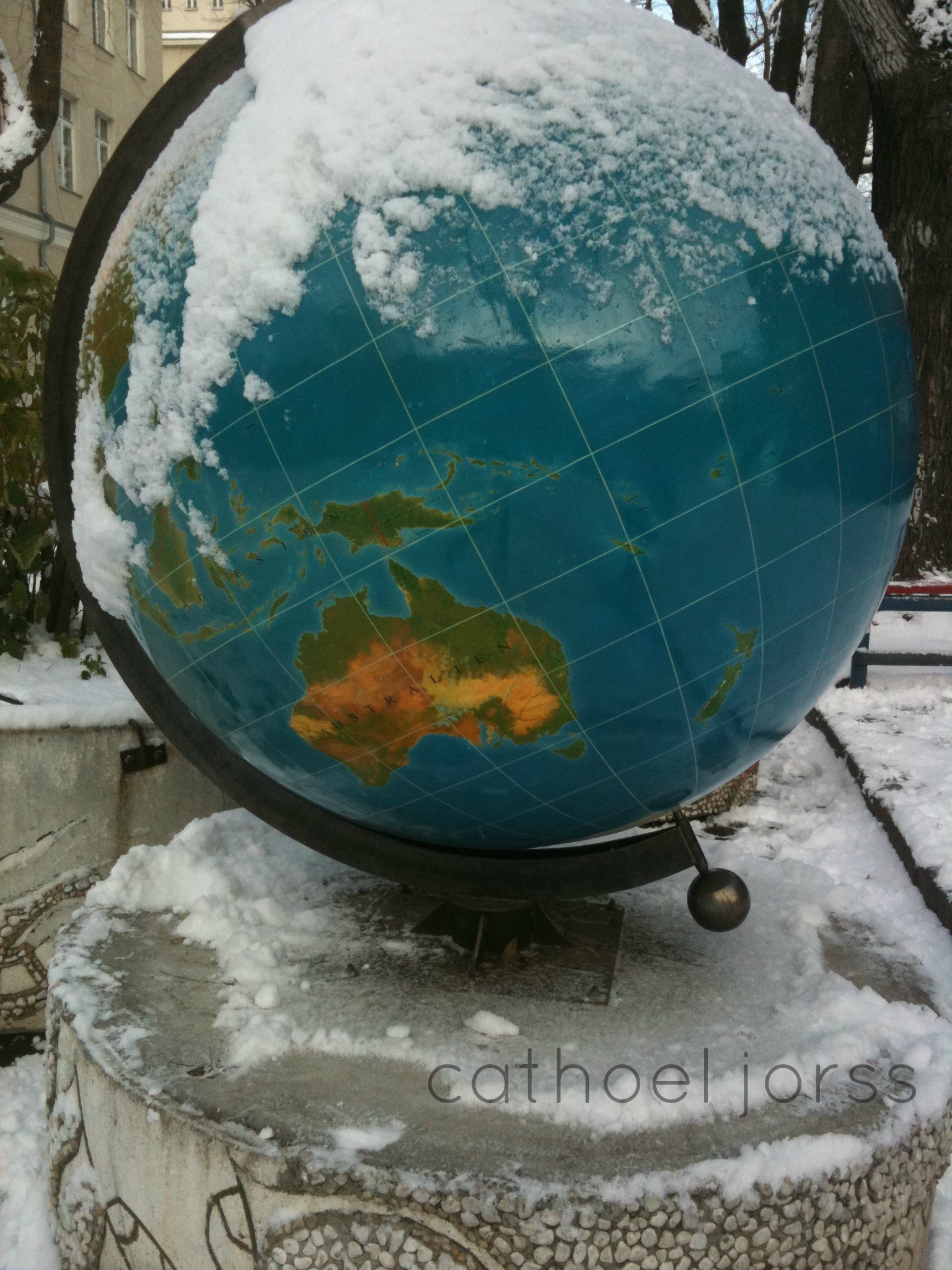
    H2O HoL snowy australia globe


  • a plan for the rest of the year

    a plan for the rest of the year

    It occurred to me today I might read only Sebald and Shirley Hazzard, alternately, for the rest of the year and read deeply rather than widely. This novel is so good I have just sat down and read thirty pages aloud in the afternoon sun, the leaves scratching shadows on the page and the riverwater spiralling past my feet.


  • Master Georgie

    Master Georgie

    To turn the tide of a rainy & dismal afternoon I started reading. Beryl Bainbridge’s elegant eloquence has cheered me up no end… as her characters in this novel might say. This is from Master Georgie:

    “It began to rain before I reached the Washington Hotel. I hadn’t my shawl, but a spot of damp was nothing to me. In winter, when the wind howled up from the river, I huddled in the doorway of the Star Theatre. Once, an actor came by and said I was pretty and why didn’t I come inside to get warm by the Green Room fire. I didn’t go because the rouge on his cheeks made him look more angry than kindly. Besides, I knew he was buttering me, the line of my mouth being too determined for prettiness and my eyes too deeply set, which lends me a melancholy look. Another time, in December, my feet turned quite blue and Mrs O’Gorman had to rub them with goose-fat to restore the circulation. What did I care! I’d freeze stiff for Master Georgie.

    “In summer, my favourite place was on the granite steps at the entrance to the railway station in Lime Street. From there I could see down the slope to where the hotel stood within its square of garden, the red roses bobbing tall in the wind. On clear days, beneath high blue heavens, the humps of the Welsh hills rode the horizon. Now, the grey river met the grey sky, and a low white sun, sliced by the masts of ships, sailed through a splash of scarlet petals.”

    H2O HoL dashboard pinediamonds

  • antaquarium

    When I went to Copenhagen on my own it was cold and windy and there were times I felt very lost and alone. When I felt lost and alone I would take refuge in one of two places: the library, which has free wifi and a cafe and people clustered around low tables on Eames chairs, earnestly chatting; or this antiquarian bookshop I found, labyrinthine and lined to the ceiling in leather books, which has been made over into a student caff. There are little tables tucked under the shelves and in corners. They make a very rich hot chocolate and they serve cheap food. I loved to sit in there out of the wind and just gaze and gaze, letting people’s conversations filter through me, feeling how the venerable books stand shoulder to shoulder, a phalanx of minds, and how their massed presence like the presence of noble clouds grounded and rooted me with a kind of magic spell. I grew sleepy and the world seemed much kinder. My ears blurred. I sat for hours as though underwater.