Tag: religion

  • bible full of prostitutes

    Prostitution: my wife doesn’t understand me (by providing herself as a slave to my sexual needs)

    Terrorism: the world doesn’t provide me with slaves to my sexual needs. All the pretty girls in high school never looked at me. I will martyr myself and be attended to by virgins.

    Hollywood: a girl catches my eye. She is an element of the undifferentiated landscape which God (also a Lone Male Hero) has provided for my glorification and use. She resists me. I overcome her resistance via manly perseverance, knowing what she wants better than she knows herself, and stalking.

    Bible > US Constitution: I have the right to own slaves, including willing women slaves, and to stalk the landscape stroking my gun. I will use enslaved peoples to bring the natural world into submission and use my much-stroked gun to force the rebellious world to heel.

    World economy: see US Constitution.

  • pedalling home

    Pedalling home along a tree-lined street which is set aside for bicycles, I heard a crash. A man reaching up to put his brown wine bottle in the brown glass bin had tipped forward and toppled like a tree – at first I thought he must be drunk. There was nobody about, just him and me. I had jammed on my brakes.

    He actually flung his legs up in the fall and took a few tips to settle, like a rocking horse set rocking. “Alles okay?” I leaned my bike and ran over. He was getting up painfully slowly and had that embarrassed expression that usually indicates want of serious injury. “Die Kante…” he explained as I reached him, the curbside had a camber…

    Falls, as we know, can be deadly in the elderly and I remember that Leonard Cohen had a serious fall, as so many older people do, in the days before his death. I remember locking myself in a wardrobe to cover my face and howl, when I heard that he had died, two weeks after Dad’s funeral. Our St Leonard of Koans.

    Shakily restored to his own feet, the man immediately turned to pick up his empty bottle and popped it in the open mouth of the brown bottle sorting station. They have three colours and beer bottles commonly have worn whited shoulders from rubbing companionably up against each other on all those trips back to the brewery and then the store. Och, Germany: you slay me. It’s like a magical land in which everyone behaves the way I’ve always done: we’re all in this together. I had just passed a crossing where another crash heralded a tipping bicycle, whose basket was filled with neatly sorted bottles, possibly heading for this same recycle station. They started to bounce and break all over the cobblestones. Before I could react a dozen people had swooped in to help, propping their own bikes and stooping like long-legged birds.

    I asked the elderly man, “Sind Sie verletzt?” Are you hurt? He passed a hand uncertainly over the crown of his head, showing me where there might be an injury, and in response to this mute plea for mothering I passed my own hand very softly over the tender scalp, as downy as a baby’s but for the sparse, short, grey, bristling old hairs. “How are you getting home?” I asked him, “you’re not driving, are you?” We stood there assuring each other. I told him the skin on his head was not broken. He told me he would be sure to be careful getting home. “Just be tender with yourself,” I told him, as I should rather more often tell myself.

    Nearer home I chatted on the phone for a long while with my dear friend, on a park bench under a stand of trees which were shedding their golden leaves as I watched. The light was just so. I found a stinking dog shit smear on the back of my hand, and made a face and started wiping it off on the grass, still talking. On the far side of the square a street dweller pulled from his breast pocket a little packet of paper handkerchiefs and drew out a fresh one and offered it to me. He bowed. I crossed over there and took it, still talking, thanking him.

    During the phone call I watched two dog owners whose dogs – one large, one small – had woven an enthusiastic wreath running counter-clockwise, passing the leashes over one another’s hands. They kept trying to untangle the beasts but the dogs running clockwise sniffing one another’s butts had passed into a blur. I saw a toddler pitched forward and running on the balls of his feet as he approached the road. There were no cars coming and his mother looked on unworried from a few paces behind but nonetheless a young girl stepping onto the pavement with her friend stopped her body in front of him, forming a kindly barrier. She stood mashing her feet and chatting to him, distracting him and making it a game, then stepped aside without a word when his mother had caught up with him and he was safe.

    This communal parenting moves me to tears. I told my friend and we both laughed with joy. I described to him the two dogs blurring themselves into a wreath on the cobbles, their owners doe-sie-doeing from above. It was dark when I put my phone back in my bag and walked uphill past the man who was still standing by his bench, with his beer, gazing up into the trees. He had on a leather hat with a feather to its brim and standing by him was a trussed wheelbarrow loaded with his things. I had gathered all my groceries in two hands and clutched them to my chest to stop them falling. “Thanks again,” I said, “for the handkerchief,” and the man said, ascending to the familiar or affectionate you, “You’re very welcome,” and I said, matching his informality, “That was love of you,” das war lieb von dir, and he bowed and pressed his hand upon his heart, and I pressed my crowded with bottles hand over my heart which was cluttered with a jar of honey, a bottle of biodegradable cleaning spray and a heavy bottle of milk; the other, free hand was splayed to keep hold of a second jar and a second bottle and I pressed the glass into my heart and we smiled at each other, at the end of an autumn day so beautiful it would make you want to resurrect belief of some kind in some kind of deity.

  • Ghanaity

    Had to change trains twice to get home and I was reading Cranford by Elizabeth Gaskell, great, familiar, female, underrated. On the second train I glanced up when somebody laughed and saw a short, beautiful African man gazing longingly at me.

    It was so startling. I hurried back to Cranford, the village where the old ladies are not nearly so old as they were in Miss Matty’s own youth. At the next station I looked up, focussing between the heads of people sitting back to back all down the left side of the cabin, and saw that he was still looking at me. His eyes were soft and fond as though I were terribly familiar. We smiled. I went back to my book.

    Someone got off, occasioning the usual genteel German shuffling whereby everybody shifts their knees to one side saying, Bitte, Danke, Entschuldigung. All of a sudden the man who had been gazing plumped into the vacated seat opposite, he slung his bag down on the floor and had altogether an air of decision.

    So I looked up and said, How are you? Good, he said, and you? Good, I said. Thank you. Then we all travelled along in a kind of noisy trainside silence for a while.

    What are you learning?

    O, it’s not really study, just rereading a book I have read so many times before. I turned the cover to show him.

    You have a very nice face, I told him, and he smiled. You, too. Thank you, I said. In fact he was beautiful, with a pointed cat like chin and slanting eyes and in the middle of his forehead he had an asterisk-shaped scar as though someone had shattered him with a mallet and then put him back together again.

    The moon, upstairs, was rounding white and only slightly eroded down one side like an aspirin in water. I hadn’t seen it yet but later it led me right home. The man said, My name is Maxwell. And so I stuck out my hand and said, Cathoel. We shook hands and I said, Are you new in Berlin?

    Three months. Ah, I said, welcome. He had lived four years in Italy. So I speak Italian. But no Dutch.

    Ah, I said, again. And then he began talking to me about Jesus. Jesus knows how many hairs you have on your head. He took hold of a lock of his hair and tugged it.

    Well, I said, that must be very comforting. I am getting off here. Good luck in Berlin!

    But as I was standing on the platform he appeared beside me, standing too close. Are you married? No, I said. Why not? It’s not my way. I stepped away a half pace and he stepped up close to me again, in my shadow. Can I ask you a question, I am not a bad man.

    Thanks, I said: I don’t want to marry you.

    Ok, he said. But can I give you my phone number, friends? Friends. I am lonely and it’s good to have a friend in Berlin. Berlin is big.

    The train pulled in and he said, ingeniously, I can get on the train with you. I can always ride back again after I give you my number. Oh, well, I said. Okay then. But I am going to be reading my book.

    We sat opposite a lady with a fiery head of hair and a warm wrinkled smile. She was holding up a magnifying glass on its stalk to read some tiny photostatted text closed printed across an A4 page. She listened to our conversation, smiling at me over the man’s head, and when he got off, as promised, at the next station and I folded his phone number and put it in my pocket I said, in German, He wanted to talk because he is lonely, I think.

    Her smile grew warmer. She reached into her pocket and handed me a card, much creased, printed in black and white. This is a church where people get together, she said, plenty of African people go there, he can make friends.

    It was evident neither of us were native speakers. Oh, I said, then I am glad. I will pass it on. I got out at my own stop and walked up the stairs into the night and the incomplete moon made me gasp. If you are Ghanaian and you come here over Italy, you cannot access refugee services because you have Italian papers. The trees on either side of my road have bloomed and lost their bloom and though the forbidding Germanic cold has now returned still it seemed to me something warmer, something Springlike was afoot, a pussyfoot, an affair of the filigree trees, afar.
  • god bless the adult

    I met a man with shit-stained pants on the subway and we sang together. He had been swaying by his pile of plastic bags for half an hour, offering speeches to the cabin. People ignored him and looked away. Only the Hispanic man behind us covered his face with split fingers and laughed into his hand. When at last a voice spoke, mysteriously, smoothly, over some unseen PA – good afternoon folks, sorry to disturb, I am going to be making a little music for you this evening – it startled us, mildly, and the shit-stained man looked over, eagerly, and we all saw a younger man, also black, beautifully groomed with a high-maintenance beard, bending to the floor to switch on his little blaster which filled the train with some R & B groove.

    He began to sing, effortlessly, like a bird on a branch who is free. He sang about Her, She’s gonna leave me, I know it, I know my heart is hers. Bending to the instrument again he chose a Michael Jackson groove, Rock with You, with that lovely tripping flute that everybody recognises instantly.

    Oh, Michael Jackson. We love you and we were happy to be transported by your music. Your music and the MTA. The shit-stained man left his pole and his pile of bags and ventured up into the cabin, dancing, smoothing his shoulders across the air. He tapped the singer on the shoulder and passed him some coin, “his last dollar” said my friend. Then he instantly, uncrazily, turned away and sashayed back to his post, his literal post, making no demands on the singer and not importuning. The man singing was emboldened to dance around a little. “He’s good,” said the fellow next to me, and I said, “He is! And he’s dancing like that while the train is crazy swaying.” I got up, grabbing a pole, and swung my hips a little, in joy with the music. When the singer came past collecting “anything you have helps, and if you don’t have, I love a smile,” we all dug eagerly into our pockets, you have gave us joy.

    The shit-stained man hollered, “Baby! You’re great! You need to get yourself in the studio!” The singer answered, ruefully, “Man. I am in the studio.” “You need an agent.” The man behind me was laughing anew. Tears fell in splinters from behind his outstretched fingers, he gripped his face and wept with the mercy of it. “Oh yes!” he was saying, helplessly, to himself: “He needs you to be his agent, baby!” New Yorkers are aware, I think, of one another’s ludicrises.

    The singer returned to his portable blaster, the subway doors still open, and he picked it up and called out thank you and left I thought how he could lose all his profit if someone grabbed the music box and ran away with it. The doors slid shut and we began to move. Left alone to his audience the man in stained pants began to declaim in song. He sang, movingly, God Bless the Child, in a cadence and tune of his own. I joined in, a lovely melody we wove and we were glancing at each other, shyly. I said, “You have a lovely voice.” He said, “I’m 71 years old. I begin to sometimes wonder, what is God’s plan for me.” “Ah,” I said: “that I don’t know.” He said, “My mother always told me when I was little. Boy, God has a special plan in mind for you. But I begin to wonder sometimes, what it is.”

    He collected all the crumpled bags at his feet, laboriously, very often missing when he went to grab them by their outstretched necks. At the next station he was gone and another busker came on, young, Mexican, radiant, and silent, a stocky boy wearing a sandwich board with his two stumps of arms held out in front of him, like Jesus on a candle. His sign read, Hi, my name is Felix. I lost both arms in a work accident. God bless you and thank you for any help you can give. The cabin fell silent. All the joy fell away. We are lost in an industrial accident, this fractured world. Soberly people fished in their pockets, to help. Felix’s face was suffused with the grace of joyous living. He came past and I fished shame-faced in my emptied-out purse. “I’m so sorry this happened to you.” “Thank you.” His voice was soft and filled with humour. “I just gave all my money to the busker,” I said, uselessly. He smiled at me, and I smiled at him a smile that turned down at the corners and pressed my hand to my heart where it ached, and at the next station he got off and walked away, inside his sandwich board, a human pyramid only one head high. As I watched him disappearing into the mystery of his own devilishly difficult life and its challenges, his form flickered with metal stripes as the train took off, I realised my hand was still pressed to where my heart lives and that, unlike the man in stains, this younger man trapped in his sandwich board “for life, as it were,” as Washington Square has it, has made, is making decisions; he has formulated a plan; he is not waiting for some unseen God to evidence in his life. God, if you’re there, bless the child that gets his own. Make us less helpless (we say, helplessly). Give us this day each the daily breadth to see where we are in this life, where we can get to in this world, and how we can all help each other. Amen.

  • bursting the bloodied vessel

    bursting the bloodied vessel

    Does god want us to live in a cage? Doesn’t god want us to be good because we’re free?

    A very respected and dear friend of mine just got asked to pull down a photograph she had posted, of the blood vessels and nervous system of the human body. The request came from someone who found the photograph “distasteful and annoying.” My friend’s response, very courteous, was: stop trying to censor science and trying to censor me, and if you find this offensive, just don’t read it.

    Who on earth gave people the idea that to follow god, they had to shame and shroud themselves, cover their faces, cover their minds. Who depicted this terrifying and, frankly, terrified god as a cowering punitive petty scoutmaster, jealous of everybody’s knowing. It is such a sad facsimile of the open exploration, the happy curiosity, the sense of blessed appreciation and wonder that should be our response to this natural world in and of and around ourselves, however we feel it came about.

  • Aunt has found god

    Felt a little jangled this morning after accidentally intercepting a phone call from my Aunt Who Has Found God. The last time we spoke at length was several years back and she told me I was possessed by the devil. Looking for common ground, for neutrality, I asked her had they had any rain up there. My Aunt Who Has Found God said, barely a sprinkle. She said, the churches in Gympie are praying for rain, but the last time they prayed for rain they got floods! Ah, I said, yes it’s important to be specific hey? Oh yes, she said. Your Cousin Who Has Found God was saying to me the other day, Mum I said to The Lord, Lord, I just need to earn $130 a week. She says now I should’ve been more generous! Cos I found a job and guess how much I’m earning!

    I got off the phone. She just talks to him as though he was a person and he’s her only topic of conversation! My companion briskly ripped this thorn out of my paw. God bless him, even if there isn’t a god. I said: Gahhh I feel really weird! My Aunt Who Has Found God kind of freaked me out! And he said: Cathoel, these people are just programming themselves, to cope. Her authority is called ~ God. Yours and my authority, is called ~ Me. The only difference is these are external-authority-craving people, they need god, because they don’t believe in themselves. They don’t think they are higher beings.


  • berserker

    berserker

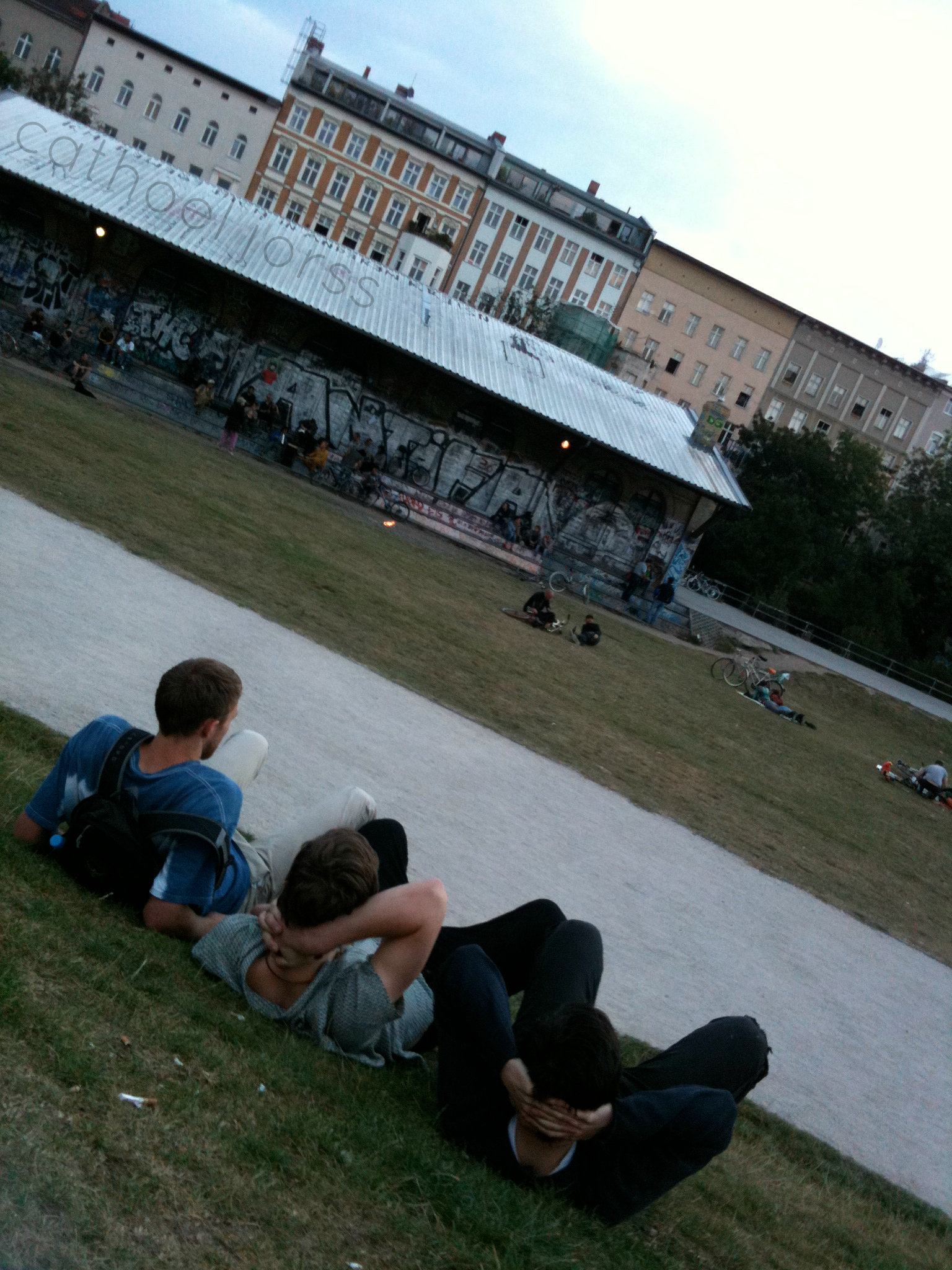
    Yesterday walking down a very Turkish street I saw four groups of boys, one after the other, carrying large, menacing, (plastic) bazookas. One held his fake sub-machine gun to his friend’s head as the friend squirmed and several times tried to bat it away. An eight-year old carrying the Ramadan bread tucked it under his arm and pulling a pistol from his pocket shot his five-year-old brother in the face. Then they both walked on, their pistols bulging in the pockets, carrying the bread of God and guns like it was nothing.

    H2O HoL gorlitzer park boys

  • the human scenery

    the human scenery

    On my last day in Berlin I visited at last the Museuminsel, Island of Museums. It feels strange to ride an arched bridge onto an island on your bike. The island being castled with stately buildings filled with treasures only makes it the stranger. My favourite was the first, which holds treasures rescued or stolen from ancient cultures around the world, many of them excavated and painstakingly reconstructed by Berlin historians. Bits are still missing. You walk into a temple rebuilt under a soaring roof and begin to feature on a hundred fellow tourists’ documentary records. So few people were examining the faulted relief work with their eyes. They carried screens, like bashful eighteenth-century ladies shading their virtue with fans.

    I was wearing a comical and very old beanie bought in a bead shop in Copenhagen. The lady who sold it to me bought it in Cameroon: she wanted a good price, saying, I am too old now to go back there and find more of them. “Kings wear them,” she told me, and showed me a photo of several kings standing about splendidly wearing hats like mine – it is woven out of navy and soiled cream yarn, and has all over little inch-long prongs sticking out like a fully occupied pincushion, a sea anemone. I went back to the shop three times and every time I put it on my head I felt a warmth and powerful groundedness rise down in me. In the third chamber of the museum a vast and mighty gate became the most beautiful thing I’d ever seen. It was clad in tiles in marine blue, sea green, round white daisies plopped one by one along the base of each wall. So beautiful, so moving, when my companion who had been reading the signs sidled up to me and whispered, Babylon, all at once I understood and my eyes filled with hot tears. I stood in front of the giant gate with my head tilted back, lost in that world, feeling some shard or fragment of how it might feel to live in a city of Babylon. I could feel the song in my blood, you know the song you have as a child and that revisits at odd occasions. Like lying face down in the hot sun watching the insects burrow among grass-stalk forests. Like half-waking, half-sleeping. Like sliding into a lake. When I turned there was a scampering behind me as a small tableau dissolved. Three Japanese ladies, elbow-height to me, were posed less than two feet from me as their friend, holding a camera and shooing them together like school children, took their picture using me, the giant with sprouting head, as colourful blue background.

    Sure, we all do it. At least, I do. But I try not to hurt or molest or offend people. I either ask permission with a lift of the brows or if discovered, make a laughing confession out of it and offer to show the picture. Sometimes if I happen to take a beautiful photo that has someone in it, a stranger, I’ll go up to them with it and ask if they’d like me to send them a copy. These women’s refusal to meet my eye was irritating and unnerving. I spoke to them, gently enough: Excuse me. It’s not very comfortable for you to use me as human scenery. They put their heads down and scurried away, whispering to each other as though an animal had spoken. I wanted to be heard, to be human. I went over to the lady who was packing up her camera. “Excuse me, do you speak any English? I really wish you wouldn’t use me for your pictures without acknowledgement. It’s unkind.” She too ducked her head and backed, holding up both hands and waving them flat to ward me off, an invisible windshield. I could imagine the stories accompanying this picture in the slide show: And then ~ she attacked us~! I saw a security guard look up and went over to him, feeling assailed and dismissed, wanting to talk to someone. “I just had a kind of upsetting experience,” I told him, in German, “those ladies used me as human scenery in their photos and then when I spoke to them, they wouldn’t answer me.”

    The expression on his face changed minimally. “Lord,” I said, “this must happen to you, like, 57 times a minute!” He said, “I hide in the corner there sometimes to get away from it. They look past me like I’m not even there.” “How awful!” I said. We were smiled by now, we kind of loved each other. “And don’t you feel… it’s as if, if I photograph everything instead of seeing it directly… am I really actually here?”

    Leaving the museum hours later I waved to the guard and he waved back. “Danke!” On the way in his colleague who’d collected our tickets had said, pointing at my head, “Tolle Mütze!” “Danke!” I said. The old man who snatched a photograph when he thought I couldn’t see him I followed around the corner til he stopped, then raised my own camera and took his picture, expressionless. That felt better. But mostly my bones and my blood were immersed in the sacred, cool atmosphere of the place, a whiff of many places, the ‘first megacity’ Uruk which was one of the seats of writing. They had small clay tablets like gingerbreads propped on clear plastic feet and telling how many fish had been provided for the workers, how to repel the evil left behind by an expected eclipse of the moon. Afterwards we walked to the Bodenmuseum where people had carved marble into lace. Many many Marys and many small Christs, the repetition struck me as humidity does when you return home to a tropical climate. “I finally get it!” I whispered to my friend, on tiptoe (he is 6’8″). “The Mary worship – it’s about motherhood!” “Yes,” he said, shrugging, raised on the stories. “Mother and son. And the son becomes king. And is murdered for love.” I think that’s what he said, I was in a daze with the old, perfect works, the high wooden ceilings, the light lapping over them when you tilt your head back reflected from the green canal lying outside the Museum’s windows. At the top of the Bodenmuseum is a tea rooms with lovely long windows and not, when we visited, a single customer to absorb and be blessed by its splendid, gently-urging, lace-stitching music.

  • bag of bones

    bag of bones

    Bizarre visit to the local physiotherapist today. For one thing, we speak different languages, and the overlap (in creaking German) was slim. It took us a while to understand each other. At the top of his full-length consulting room mirror was a Post-It note with a downward arrow, which said, “This is what a person who is loved by God looks like.” But we didn’t get to talking about God straightaway. First he had to ask, what is the matter. I summarized the very ill-advised dance improv manoeuvre which originally tore my knee. The physio ran away with my first half sentence, making sketches to explain, building rapidly a diagnosis that showed the problem with my ligaments. “It’s not the ligaments,” I said. I finished my sentence and off he raced again. This happened five times before he grasped what was the matter.

    Ok not a good listener, no worries. I told him what I think (after various scans & examinations) is going on and eventually he heard me. “Please take off your jeans.” Then I sat in my t-shirt while he asked me about any previous illnesses, the age of both my parents, was I married, etc. During this time the physiotherapist’s ten-year-old son wandered in and was kissed by his father all over the top of his head. The boy left. I lay down. The physio asked if I would consider giving his son English lessons, “for his pronunciation.” He reached into my knee and began inflicting intense pain, good pain, pain which bore out his relieving theory that there was nothing wrong inside the joint, it is just that the muscle is cramped. “What religion do you have? Are you Catholic?” I blinked. “I don’t have any religion.” He looked grave. “We say, there are two ways to live. The good way. And: the bad way.”

    The bad way, it seems to me, involves ceaseless physical pain. Sometimes it wakes me out of my sleep. It’s a small kind of hell. “How’s the knee?” I asked him, pointedly, to bring him to the task. He had stopped massaging and was leaning on the sore leg, gesticulating. The weird thing is that when he stuck with it, his ministrations were lucid and effective. He worked his way into the joint and eased it, more professionally but in the same way as I have been instinctively doing. When he looked me up and down and said thoughtfully, You’re built like a mannequin, he wasn’t being creepy. “Know what I mean? Like a model? Like… an athlete?” (Yes, I said). “And when you were a teenager, clearly you would have been: Wow! Pretty as a picture!” (He flicked his loose hand as though shaking off water, to convey to me how goodlooking I used to be. Yes, I said. And sighed) ~ When he said all of those things, he wasn’t being grisly. It was said benignly: innocently, almost. A simple observation. Never mind the fact that his fingers were under my kneecap and I was lying there in my underwear.

    I might have forgotten to mention the skeletons. They were the first thing I noticed, apart from the Post-It on the mirror. Just plastic, educational skeletons – but somehow he stores them in an open-weave kind of hammock, suspended directly above the treatment table. I was gazing at them as he concluded his appearance-based theory of diagnosis: “I think you’re just athletic, and you’re fit and strong, and your muscles would naturally cramp up.” (Makes sense. And *of course* it would have happened a lot more – or is it less – when I was prettier.) He asked me to turn on my stomach. He dug his fingers into my shoulder, which has also been sore. I am stoical about pain but, man, this was pain. I did not cry out. I opened my mouth and rolled my eyes at the row of musculature posters. He dug his fingers in further and I gasped. Then he swooped down so that his head was level with mine on the table, and said in my ear, “Jesus said ~”

    Who?! “Jesus said, I am the vine. I am the roots and the trunk. If the branches are cut off from the roots, no grapes can grow.” Finally he let me sit up. The pain in my knee began to ebb, more than it has for months. “You see, Jesus is the only true teacher.”

    Like a traffic cop I put up my hand. “Actually, there have been lots of teachers. Plenty of great teachers. And not all of them men. Some are even alive today. The Dalai Lama for example.”

    He picked up the clipboard with his sketches of my ligaments and sat down beside me to draw the roots, the vine, and the grapes cut off from the source, apparently believing I’d missed the metaphor. “No other teacher rose from the dead,” he told me. “I get it,” I said. “I understand that this is what you believe. But I don’t believe it.” “What do you believe in, then?” I hardly knew what to say. “I believe in people. I believe in nature and people. I believe people’s hearts are full of love and that we want to be good to one another.”

    “If you’re cut off from the vine…” But I stopped him. My knee was throbbing. “Have you not noticed something? All of these teachers say the exact same thing. They say, love. They say, be good to one another, try to understand, treat as you would be treated.” We stood up and he put out his hand to shake mine. “I’m a philosopher at heart,” he said, unexpectedly. Walking me back down the corridor to Reception he asked was the little girl I’d been playing with when he came out to fetch me my daughter. “But you looked so happy together!” He asked about my health insurance and when he worked out I don’t have any, because I am not Swiss, said, “Then give I you this session gratis.” “I think you will find that in a few days,” he said, “all of your pain will have vanished.”

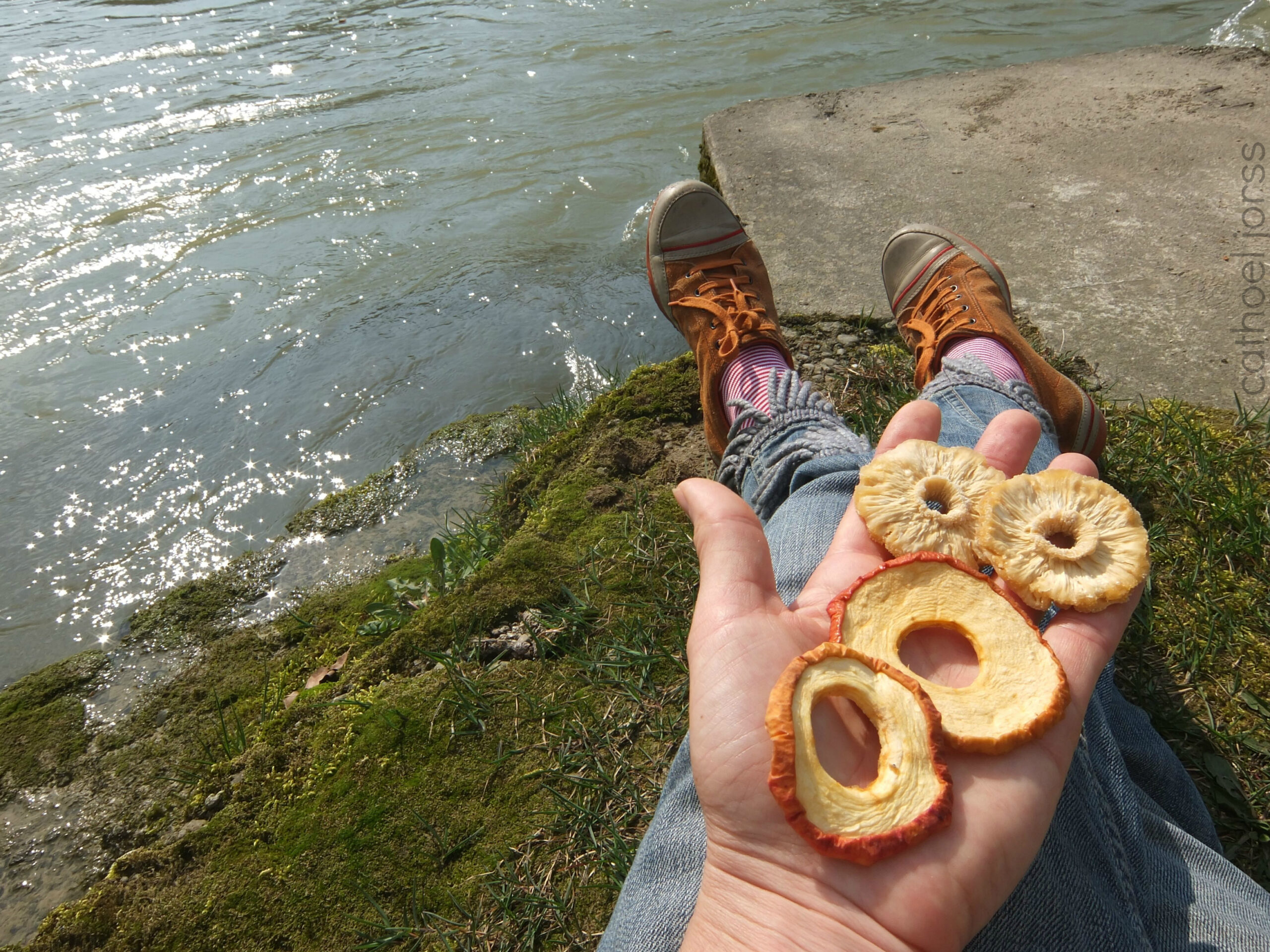
    H2O HoL dried apple bone

  • jazz, godliness…

    jazz, godliness…

    I’ve cycled past this jazz club in town maybe half a dozen times & never had the nerve to go in. Today in the afternoon sunlight both the doors were standing open and, oddly, two tables with bottles of soft drink stood at the entrance guarded by ribbed plastic cups. A handsome-looking man was pouring. I got off my bike. “Is this – open? I mean,” looking at the people in coats milling around inside, “are you… rehearsing?”

    He flashed me with his blinding Amway grin. “It’s a church. You’re very welcome.” I stepped back. Looked up at the sign. “It’s not a… jazz club?” “It is a jazz club, just not today. But we have lots of music!!”

    Who could put their faith in a church that’s willing to use disopsable cups? Looking back, I could have given him many better responses, the least of which might have been, “My only religion is jazz” (a lie). Instead I had that protective feeling one has around people who seem to look out wistfully from inside their own club and wonder why more don’t join. “Jazz,” I said, “godliness…. they’re related.” And we waved each other off, a pair of heathens, neither one willing to convert.

    H2O HoL eau-de-nil tiles