Tag: tourism

  • Spanish nights

    Oh, Spain! Is so filled with amazing events! Walking home just now I saw a man busking with his telescope. It was pointed up towards the moon, a peach lying in dark glossy syrup, and his hand-lettered sign and the beast had attracted a queue of people eager to see the sky up close. His telescope was as big as three people bound together for the stake, which is what might have happened to a busker with a telescope four hundred years ago in this or most countries.

    On my way out as the blue hour deepened I ran across an angry demonstration. With huge signs they marched until they came face to face with police, standing legs planted apart in their sexy motorcycle boots and cavalier pants. The anger seemed to dissolve and the two groups faced each other chattering and laughing. I couldn’t make out the signs, I asked a hipster who is always begging with his brass Tibetan bowl, “Hablo pocolito Ingles?” Do you have a little English? Oh yes, he said, and launched into an explanation in Spanish. I gathered that the protestors were anti-austerity, “like Greece.” He said something something about the poor. At least that’s how it sounded to me. I thanked him profusely, the first homeless hipster beggar I have ever met, and hurried on to the bookshop cafe open til midnight which is where I plan to spend the rest of my visit if not my life. I found it yesterday and spent an hour in there, resolving to come back with my laptop. So hushed and filled with concentration is the atmosphere that people entering the shop instinctively begin to whisper to each other. That is, nirvana.

    Leading up to Palm Sunday people were selling sprigs of rosemary and olive branches in the streets. In front of churches you could buy yellow palm leaves woven into fantastical shapes like candelabras and I wish I had. Then on Sunday I got caught up in a huge motionless crowd and by dint of being 18 inches taller than everybody else could see the parade, standing waiting, women in black lace mantillas and impeccable heels, men wearing tall conical hats that to me shrieked Ku Klux Klan but I suppose they have appropriated, as nothing else they represent is ever original. At the front was a large float the size of a four wheel drive, higher and taller, and banked up with candles and scarlet rose petals. I walked on and later that night found another, similar procession, this one carrying a bier for the Virgin Mary, whose velvet train embroidered in gold dropped behind her so far it needed four people to carry it.

    I saw a man dressed as a Super Mario Brother with his blue foam head off, sitting gazing at one of the colourful balloons he sells, in a trance. I saw two giant Bart Simpsons with their heads off, feeding pigeons from a park bench and apparently unable to understand why I was finding them so delightful. I saw an immaculate lady all in tan with leather gloves lying back on a bench in the middle of a crowded square, her eyes closed to worship Sun. I saw a man crouched on a square of cardboard carving crosses from two twigs, his wares spread out in front of him. He was talking to a little girl. I saw two mounted police officers on their horses scrolling their phones. They were the centre of a circle of other phones as everybody stopped to take pictures. I saw the Museum of Ham that has whole hocks hung from the ceilings dense as balloons at a child’s birthday do. Another place called Paradise of Ham sells thin shavings of Iberian ham from pigs fed on acorns that costs 95 Euros a kilo. I saw a woman dressed as a bride hold out her skirts and curtsey, she too was busking, perhaps after the wedding had gone off. And in the midst of all this I saw a Swiss family eating an expensive dinner, their table facing into the milling night time street, and the parents drearily cheered each other in champagne as their girls, perhaps 14 and 9, sat slumped over their phones reaching for one potato chip after another and oblivious to all the glory that passes over us every moment.
  • hungry in Spain

    I saw three Spanish boys doing parkour in the gardens. I have run out of money and am hungry: it’s temporary. To a Spaniard gardens means a large, bare, gravelled expanse with formally clipped hedges and dark, clotting trees. The smell of the cyprus is familiar from home. I sat on a bench under the trees and watched these boys for half an hour. They were trying to climb a sheer twelve-foot wall using their speed and hands and concentration and willpower. To my right a couple in puffer jackets were smoking some excellent weed. I sat watching the three boys in their baggy grey pants intently concentrating, doing it for themselves, and was overcome with dark sexual longing. I adored them. They went at it over and over, always exactly the same, one of them actually scaled the wall and stood on top clutching the railing with both hands before he dropped lightly back to earth like an angel, I thought: were it not for tree-planting and feeding the hungry I think this would be the noblest pursuit a young man can throw himself into, in this messed-up, traffic-scarred, urbanised world.

    A child of four or five threw his teddy up in the air again and again for his mother to catch and hurl back to him. His teddy-loving days, I thought, are numbered, and not high. Another couple hid inside the boy’s parka hood and with intense delicacy grazed on each other’s faces. I saw a man cycle past guiding with one hand the back of his child’s tiny bicycle, he had a large paper butterfly she had hand-painted with sparkles attached to his backpack and flapping. Spanish girls with their luscious long hair. On every corner a hairdresser, a pharmacy. The underground train which is livid with voices laughing, chatting, like a big, relaxed club. The five elders sitting side by side, four men and one lady, formally attired and letting the last drops of sunlight fall on them along the lip of a large statue, in granite, of some soldier or some prince.

  • cold but sweet

    Finally experienced the piercing joy of eating ice-cream in the freezing cold, I always used to wonder why people would do that. But tonight I walked into this swanky ice-cream bar where the guy had just taken all the plastic rims off the deep buckets, presumably to wash them, and he was puzzling over putting them back each in its right place. I said, “Do you just take them off sometimes and put them back all different, then, just to confuse people?” And he gave me his slow, shy smile. “…No,” he said, somewhat reluctantly. “No,” I said, fondly, “because that would be silly.” Only I think I said “weird” or “freaky” because I always think “komisch” is going to mean “comical” then I remember it doesn’t. He didn’t take it amiss, thank god. There is not enough room in a passing pleasantry to say, I didn’t mean that as a passive-aggressive attack, it just came out wrong because my German is faulty. He had a service-smile and then a shyer, boyhood smile which he gave out only sparingly, from under the shelf of his brows. That was the one I remembered and will carry, which slightly alters everything. We’re in this world together! Each of us, gazing out, going: Wow, far out. We exchanged a look which acknowledged this. So then he gave me my ice-cream cone wrapped in a serviette and I ate it walking home in the cold, cold wind.

  • lost in the cake station

    A literal translation of the conversation that took place between me and the gorgeous dark-eyed Turkish boy working in the Turkish deli just now:

    Me: Hi! Can we have two pieces of that, please, to take-with?

    Gorgeous dark-eyed Turkish boy: Sure! Rightfully to take-with or simply for underway?

    Me: Oh, just for underway please. We can take it on the hand.

    Gorgeous dark-eyed Turkish boy: So not packed-in. Does it reach, like this?

    Shows me two paper napkins and stands the slices of cake on them.

    Me: Yes, that reaches well, thank you beautifully.

    Gorgeous dark-eyed Turkish boy: Two Euros please!

    Me: Beautiful thank you, little bye-bye!

    Gorgeous dark-eyed Turkish boy: Little bye-bye! A beautiful day still!

    Elaborate German courtesy plus cultured Turkish hospitality. It’s like a match made in Heaven, if Heaven were an 80s cruise ship with lairy pure wool carpets and a big band.

  • now I don’t want you to get too excited

    All my life people have been telling me not to get too excited about things. They say, “I don’t want you to be disappointed.” And the truth is the thing I have so vehemently looked forward to almost never resembles the picture I have built in my mind. It’s often disappointing. But it feels like I experience the same thing twice: in glorious living freshnicolour in my own imagination, and then the worldly version, frangible in a different way, that arises through weather, and temperament, coincidence and sheer human effort.

    This afternoon we went out of the house and walked into the forest. There is ice on the ground. It’s all two colours: the listless copper of dead leaves and the warping green of moss. My favourite plant, each mound of it a tiny city. Tramping in silence we passed several small clumps of people with their dogs. My tramping companion who by now knows me rather well asked casually, “What would you have preferred this afternoon? Walk in the forest? Or a nice coffee shop.” “Oh!” I said, “I would love to go to a nice coffee shop.” These while plentiful in Berlin are thin on the ground in the outback towns. “What if I told you there was a coffee shop in the forest? Would you like to visit there, on our walk?” “A coffee shop? In the forest?” This has been a dream of mine for a long while, I always complain there is no coffee shop when we are out walking. I began to imagine what it would be like. “Maybe it’ll be like a little ski chalet, with an open fireplace where you can toast marshmallows on long sticks.” I was hopping with excitement. “Actual sticks, and then when the marshmallow’s toasted you dunk it in your hot chocolate. The hot chocolate comes in steins.” My partner gave me an old-fashioned look. I said, “Maybe there’ll be Swedish girls with white-blonde hair, wearing ugg boots and onesies. Maybe they serve Glühwein!” I grabbed his arm. “I’m so excited about the coffee shop I can hardly breathe.” “Do you want to see some old ruins, an old castle?” he said. “It would mean putting off the coffee shop a while longer. About a half an hour.” We cut across the main path and took a winding way uphill. As we rose up from road level we could see a couple of triangular German houses built under a clump of willows, with a little brook running past in front. “That’s where the hobbit-folk live,” I told him, “and in the warmer months they put up a maypole and dance around it by moonlight. Those fields are where they grow their magic beans.” “How can you tell?” “Oh,” I said, “you can see it just by the look of the houses.”

    The castle is actually an eighth-century farmhouse built within an acre of fields, the whole pasturage surrounded by high stone walls on a hilltop, with round look-out posts on all its corners. The dry stone walls have worn away and remain in only three or four places, but a large sign on the path up the hill shows how it once would have been. It was so cold on the hilltop, with a view of the green countryside all around. The ground was slushy. The wind was icy. The path downhill was treacherous. Not far now to the coffee shop, I thought. “Maybe they’ll serve tankards of ale, warmed by a red hot poker.” “A poker?” We were speaking in English. “It’s kind of a stick made of metal. You heat up the poker in the fire til it’s glowing hot, and then you just plunge it into your mug, to heat the ale.” “Really?” “Yes, in medieval times. Because otherwise, it was so miserable, living in these drafty stone houses. No heating. Dressed in stinking animal furs.” He stopped, grabbing a tree branch to prevent himself careening down the hill. “Look: try not to get too excited about it. I doubt they serve tankards of ale. And they might not even be open.” Indeed the buildings looked medievally dingy and unlit. There is a very deep stream that rushes by in front, with an old earthern bridge trampled over an arch of stone; the mill wheel stands motionless and the water pours past fast and loud. A granary or old barn built on the other side displays its mullioned windows. We went round the side of the third building, which had a series of unlit lamps stationed in its tiny ground-level windows. It looked like an old wayside inn. The side door had thick panes of glass let into it and from inside a faint light was beckoning.

    An overweight nun was taking coffee with her family. Our dog growled at their dog. A few growling Germans were seated outside in a kind of glass atrium that had been thrown out of the stone wall and clad, inside, with green plastic astroturf. They were smoking with gusto and beers. There was no one else about, but from the kitchen out the back a sound of clashing pans and shouting came through the green-painted door. It all seemed to have been redecorated with great enthusiasm in the mid-90s. We sat down at a long table made from fake wood and after a leisurely interval one of the men smoking out in the gardenhouse came and asked us, “Was darf’s sein?” He had filter coffee, teabag tea, and apple strudel, served with a distinctly canned custard. There was a real fire burning, in one of those glass-fronted cast iron stoves. I guess it should have been rather disappointing; I guess if I learned to rein in my imagination I would have only the stolid reality to endure, and never the wraithlike phantasy. On the other hand many’s the time the world in its unreachable immediacy has blown my own thought-pictures aside like so many dull orange leaves. I watched the dogs on our way home to the car park sniffing and prancing at each other; the little dozing houses; the burbling stream. I couldn’t work out if it was reasonable to expect myself to apply the control of imagination that I use, say, when someone’s describing a painful operation over dinner and I need to keep eating, to random coffee houses in the German woods. Castles collapse in forests, you know, as well as in the air. All I know is that that chalet with its steaming mugfuls of cocoa is mine and nothing short of Alzheimers can ever take it away from me.

  • daintily, handily

    daintily, handily

    All the noisiness of sun. To a German, the crashing in the bamboo at 3am sounds like a housebreaker festooned with plastic bags. How could a little possum make so much noise? Why must the birds all shriek? When you lift a painting off the wall, exposing a transparent lizard, who exposes his heart lungs and liver to the world but will dart away into hiding when his cover’s lifted, that’s a shock. A person with no fear of local pushers, addicts, drunken punk louts, untethered giant dogs and bad buskers can be remarkably unsettled by the rustling and crashing that midnight brings when it’s hot tagsüber. “During the day,” I say, “everyone’s sleeping. Then at night when it cools down, they all come out to live their lives.” Handily our small grey cat has arranged herself across his extended hand to illustrate this point. She yawns her pink yawn.

  • visiting Berlin Wall

    Passed a remaining section of the Berlin Wall and saw tourists of all languages leaning up against it for photographs, posing with big smiles and often two thumbs up; one Japanese girl had a coy, sexy grin. I wonder what it is they imagine they are visiting.

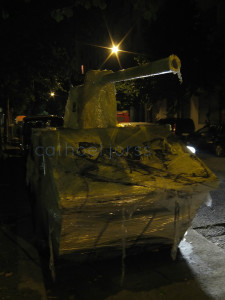
    photograph is of a building-site skip transformed into street art with the aid of a shopping trolley turret, carpet-roll gun & many layers of clingwrap plastic.

    H2O HoL gladwrap tank

  • the human scenery

    the human scenery

    On my last day in Berlin I visited at last the Museuminsel, Island of Museums. It feels strange to ride an arched bridge onto an island on your bike. The island being castled with stately buildings filled with treasures only makes it the stranger. My favourite was the first, which holds treasures rescued or stolen from ancient cultures around the world, many of them excavated and painstakingly reconstructed by Berlin historians. Bits are still missing. You walk into a temple rebuilt under a soaring roof and begin to feature on a hundred fellow tourists’ documentary records. So few people were examining the faulted relief work with their eyes. They carried screens, like bashful eighteenth-century ladies shading their virtue with fans.

    I was wearing a comical and very old beanie bought in a bead shop in Copenhagen. The lady who sold it to me bought it in Cameroon: she wanted a good price, saying, I am too old now to go back there and find more of them. “Kings wear them,” she told me, and showed me a photo of several kings standing about splendidly wearing hats like mine – it is woven out of navy and soiled cream yarn, and has all over little inch-long prongs sticking out like a fully occupied pincushion, a sea anemone. I went back to the shop three times and every time I put it on my head I felt a warmth and powerful groundedness rise down in me. In the third chamber of the museum a vast and mighty gate became the most beautiful thing I’d ever seen. It was clad in tiles in marine blue, sea green, round white daisies plopped one by one along the base of each wall. So beautiful, so moving, when my companion who had been reading the signs sidled up to me and whispered, Babylon, all at once I understood and my eyes filled with hot tears. I stood in front of the giant gate with my head tilted back, lost in that world, feeling some shard or fragment of how it might feel to live in a city of Babylon. I could feel the song in my blood, you know the song you have as a child and that revisits at odd occasions. Like lying face down in the hot sun watching the insects burrow among grass-stalk forests. Like half-waking, half-sleeping. Like sliding into a lake. When I turned there was a scampering behind me as a small tableau dissolved. Three Japanese ladies, elbow-height to me, were posed less than two feet from me as their friend, holding a camera and shooing them together like school children, took their picture using me, the giant with sprouting head, as colourful blue background.

    Sure, we all do it. At least, I do. But I try not to hurt or molest or offend people. I either ask permission with a lift of the brows or if discovered, make a laughing confession out of it and offer to show the picture. Sometimes if I happen to take a beautiful photo that has someone in it, a stranger, I’ll go up to them with it and ask if they’d like me to send them a copy. These women’s refusal to meet my eye was irritating and unnerving. I spoke to them, gently enough: Excuse me. It’s not very comfortable for you to use me as human scenery. They put their heads down and scurried away, whispering to each other as though an animal had spoken. I wanted to be heard, to be human. I went over to the lady who was packing up her camera. “Excuse me, do you speak any English? I really wish you wouldn’t use me for your pictures without acknowledgement. It’s unkind.” She too ducked her head and backed, holding up both hands and waving them flat to ward me off, an invisible windshield. I could imagine the stories accompanying this picture in the slide show: And then ~ she attacked us~! I saw a security guard look up and went over to him, feeling assailed and dismissed, wanting to talk to someone. “I just had a kind of upsetting experience,” I told him, in German, “those ladies used me as human scenery in their photos and then when I spoke to them, they wouldn’t answer me.”

    The expression on his face changed minimally. “Lord,” I said, “this must happen to you, like, 57 times a minute!” He said, “I hide in the corner there sometimes to get away from it. They look past me like I’m not even there.” “How awful!” I said. We were smiled by now, we kind of loved each other. “And don’t you feel… it’s as if, if I photograph everything instead of seeing it directly… am I really actually here?”

    Leaving the museum hours later I waved to the guard and he waved back. “Danke!” On the way in his colleague who’d collected our tickets had said, pointing at my head, “Tolle Mütze!” “Danke!” I said. The old man who snatched a photograph when he thought I couldn’t see him I followed around the corner til he stopped, then raised my own camera and took his picture, expressionless. That felt better. But mostly my bones and my blood were immersed in the sacred, cool atmosphere of the place, a whiff of many places, the ‘first megacity’ Uruk which was one of the seats of writing. They had small clay tablets like gingerbreads propped on clear plastic feet and telling how many fish had been provided for the workers, how to repel the evil left behind by an expected eclipse of the moon. Afterwards we walked to the Bodenmuseum where people had carved marble into lace. Many many Marys and many small Christs, the repetition struck me as humidity does when you return home to a tropical climate. “I finally get it!” I whispered to my friend, on tiptoe (he is 6’8″). “The Mary worship – it’s about motherhood!” “Yes,” he said, shrugging, raised on the stories. “Mother and son. And the son becomes king. And is murdered for love.” I think that’s what he said, I was in a daze with the old, perfect works, the high wooden ceilings, the light lapping over them when you tilt your head back reflected from the green canal lying outside the Museum’s windows. At the top of the Bodenmuseum is a tea rooms with lovely long windows and not, when we visited, a single customer to absorb and be blessed by its splendid, gently-urging, lace-stitching music.

  • you are fire

    you are fire

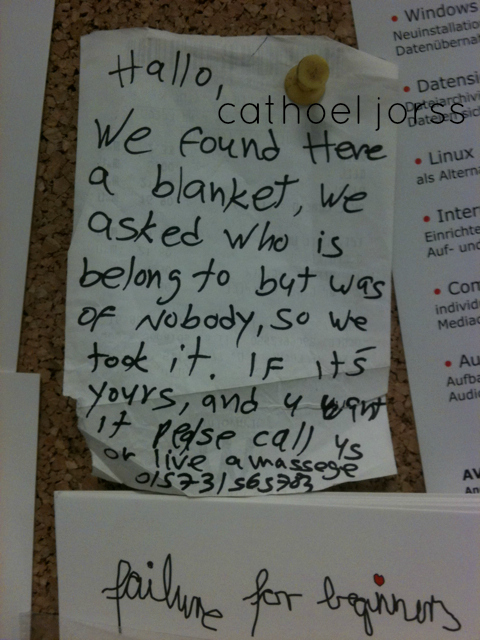
    Walking home past an outdoor restaurant in town that provides rugs for its hardier patrons. Everyone else was huddled indoors, it’s barely ten degrees and the wind is icy. A woman wearing a piled confection of blonded whipped hair drew on her cigarette as I passed and said, drawlingly, “…but it’s ok. I paid him in shag rate.” She saw me listening and fixed me with her eye and blew out a long, expressionless stream of blue smoke. Dragon lady! You are fire. I adore you.

    H2O HoL we found here a blanket

  • with tweezers

    with tweezers

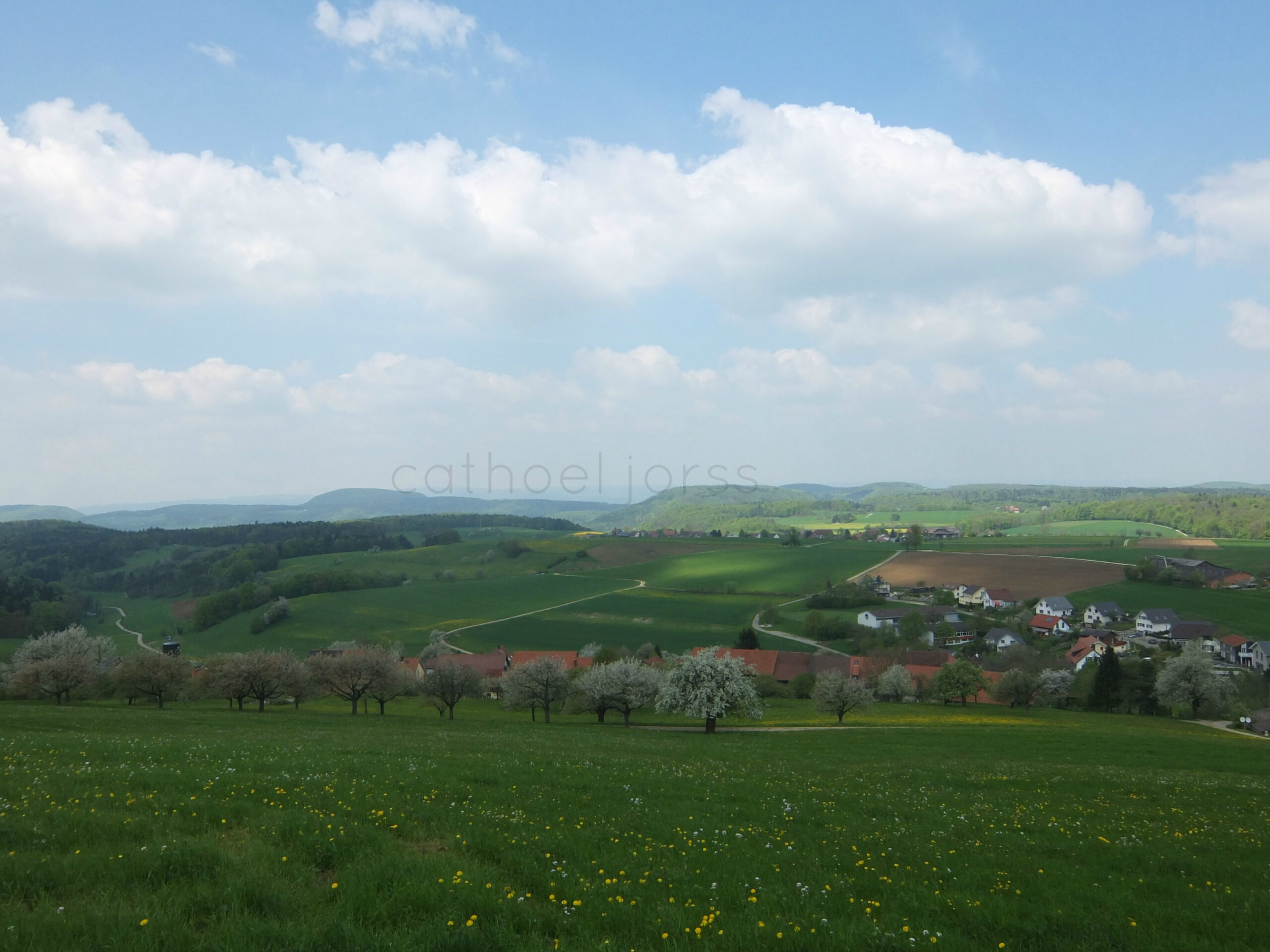
    Last time I was in Switzerland I said to my host, It’s so pretty! It’s like an endless reel of picture postcards, seamlessly unrolling.

    Yes, she said. And if I’m not on my knees in the garden on a Sunday morning, pulling up daisies with a pair of tweezers: my neighbours won’t speak to me.

    H2O HoL swiss countryside for tweezers