Tag: traveller

  • desert smoke

    desert smoke

    In 1999 I published my first book. A week later the girlfriend who used to live across the road returned to Brisbane from the desert and said, do you wanna make a road trip? We set off on retread tyres and with (it turned out) not enough tools to help out when things went wrong. Just outside Toowoomba (an hour west) I phoned my Mum. “Mum the van’s overheated! We forgot to check the water.” Anyway we made our way west, west, west. Spent the night in a grand hotel in Longreach with verandahs broad enough to foxtrot on. In the morning I stashed my packet of tobacco in a potplant and that is how I finally quit smoking.

    We spent the third night in Alice Springs. By this time we had bonded and had told each other our life stories. I read her passages from my diary. She told me stories of her abused mother’s fight to shift her relationship with the now aging grandfather, using delayed cups of lukewarm tea, passive-aggression, and humour. Only 700km to Uluru (‘Ayers Rock’): we were on the home stretch! It felt like our own driveway. Then we blew a tyre. Like superheroes we got down and changed it, yay for us. Then we blew another. Two people who were travelling round Australia in a mobile home stopped to help us. The man was seamed and nuggety, he said, Don’t you girls dare go a whisker over 30 kays, now: you’ll blow the tread, and then you’re really rooted. So we crawled home to the tiny community of Mutitjulu where she worked – the short drive took us more than seven hours. We daren’t stop. When one of us needed to pee the other took the wheel and we hung our bottoms out the window. She was still smoking but somehow, I had lost the knack. I had last left Uluru when I turned 21 and quit my tour guide job. I spent ten days in a dream of homecoming, rolling myself naked in the red dust of an evening, walking out the door or her little house, magnetically drawn, almost every time I glanced up and saw Uluru. Crouching there like something, someone, it’s unsacred to speak of. I found the tiny second hand shop in the resort, run by a ranger’s wife, and consisting of things the high-turnover staff had left behind. I bought old-man’s underpants and a singlet and dyed them to form a swimsuit. After that I swam laps every day in the Sheraton pool. A rich lady befriended me at the bar and confided if you showed up at the front desk with enough confidence, you could ask them for the keys for a ‘poolside room’ (that is, on the asssumption that your own room was too far away upstairs) and so that is what I did. I lazed in the big white beds and had baths. I wrapped myself in dense velvety white bathrobes every day. I met interesting people from faraway places. And I kept going back to the sacred place, every day, every day. One night I cycled round the base as it grew dark and had to follow a very merry carload of local men home: I could not find which sandhill concealed the community. Never been so glad to hear a booming generator.

    I took copies of my book into the newsagent and they said, yes, they would buy some and sell them. I went out dancing on the same dancefloor I’d loved when I was 20, and danced til I could barely remember my own name. When I was ready to come home, there was a problem: at that stage I had never owned a car, and saw no reason to carry my driver’s license in my purse. So as well as no shoes I had no photo ID. There was a tiny library for staff and the librarian was a Justice of the Peace. I explained to her my dilemma. I showed her the book, whose title is Going for the Eggs in the Middle of the Night. I showed her how the poem titles were printed in my own handwriting. And how it has photos in it of our family when we were kids, photos of me and taken by me as a child. “Ok,” she said, “it’s you.” And after she’d signed an affadavit I was entitled to buy a plane ticket and fly across the detailed and sumptuous red plains, to Brisneyland.
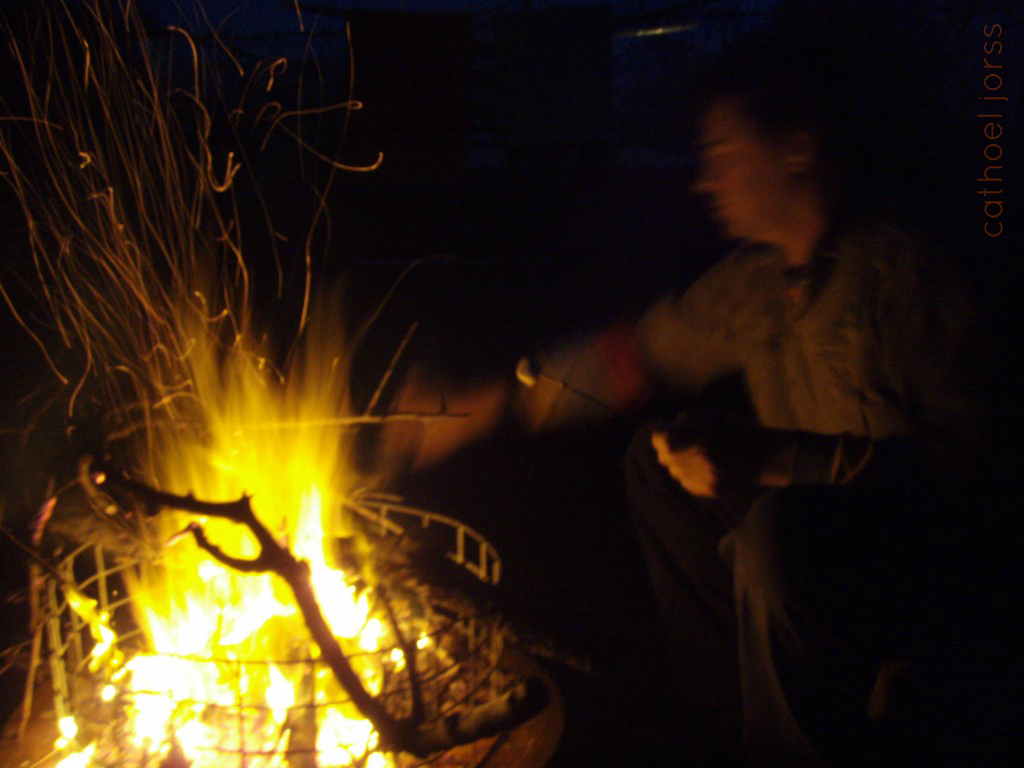
    H2O HoL ric with firepit

  • bag of bones

    bag of bones

    Bizarre visit to the local physiotherapist today. For one thing, we speak different languages, and the overlap (in creaking German) was slim. It took us a while to understand each other. At the top of his full-length consulting room mirror was a Post-It note with a downward arrow, which said, “This is what a person who is loved by God looks like.” But we didn’t get to talking about God straightaway. First he had to ask, what is the matter. I summarized the very ill-advised dance improv manoeuvre which originally tore my knee. The physio ran away with my first half sentence, making sketches to explain, building rapidly a diagnosis that showed the problem with my ligaments. “It’s not the ligaments,” I said. I finished my sentence and off he raced again. This happened five times before he grasped what was the matter.

    Ok not a good listener, no worries. I told him what I think (after various scans & examinations) is going on and eventually he heard me. “Please take off your jeans.” Then I sat in my t-shirt while he asked me about any previous illnesses, the age of both my parents, was I married, etc. During this time the physiotherapist’s ten-year-old son wandered in and was kissed by his father all over the top of his head. The boy left. I lay down. The physio asked if I would consider giving his son English lessons, “for his pronunciation.” He reached into my knee and began inflicting intense pain, good pain, pain which bore out his relieving theory that there was nothing wrong inside the joint, it is just that the muscle is cramped. “What religion do you have? Are you Catholic?” I blinked. “I don’t have any religion.” He looked grave. “We say, there are two ways to live. The good way. And: the bad way.”

    The bad way, it seems to me, involves ceaseless physical pain. Sometimes it wakes me out of my sleep. It’s a small kind of hell. “How’s the knee?” I asked him, pointedly, to bring him to the task. He had stopped massaging and was leaning on the sore leg, gesticulating. The weird thing is that when he stuck with it, his ministrations were lucid and effective. He worked his way into the joint and eased it, more professionally but in the same way as I have been instinctively doing. When he looked me up and down and said thoughtfully, You’re built like a mannequin, he wasn’t being creepy. “Know what I mean? Like a model? Like… an athlete?” (Yes, I said). “And when you were a teenager, clearly you would have been: Wow! Pretty as a picture!” (He flicked his loose hand as though shaking off water, to convey to me how goodlooking I used to be. Yes, I said. And sighed) ~ When he said all of those things, he wasn’t being grisly. It was said benignly: innocently, almost. A simple observation. Never mind the fact that his fingers were under my kneecap and I was lying there in my underwear.

    I might have forgotten to mention the skeletons. They were the first thing I noticed, apart from the Post-It on the mirror. Just plastic, educational skeletons – but somehow he stores them in an open-weave kind of hammock, suspended directly above the treatment table. I was gazing at them as he concluded his appearance-based theory of diagnosis: “I think you’re just athletic, and you’re fit and strong, and your muscles would naturally cramp up.” (Makes sense. And *of course* it would have happened a lot more – or is it less – when I was prettier.) He asked me to turn on my stomach. He dug his fingers into my shoulder, which has also been sore. I am stoical about pain but, man, this was pain. I did not cry out. I opened my mouth and rolled my eyes at the row of musculature posters. He dug his fingers in further and I gasped. Then he swooped down so that his head was level with mine on the table, and said in my ear, “Jesus said ~”

    Who?! “Jesus said, I am the vine. I am the roots and the trunk. If the branches are cut off from the roots, no grapes can grow.” Finally he let me sit up. The pain in my knee began to ebb, more than it has for months. “You see, Jesus is the only true teacher.”

    Like a traffic cop I put up my hand. “Actually, there have been lots of teachers. Plenty of great teachers. And not all of them men. Some are even alive today. The Dalai Lama for example.”

    He picked up the clipboard with his sketches of my ligaments and sat down beside me to draw the roots, the vine, and the grapes cut off from the source, apparently believing I’d missed the metaphor. “No other teacher rose from the dead,” he told me. “I get it,” I said. “I understand that this is what you believe. But I don’t believe it.” “What do you believe in, then?” I hardly knew what to say. “I believe in people. I believe in nature and people. I believe people’s hearts are full of love and that we want to be good to one another.”

    “If you’re cut off from the vine…” But I stopped him. My knee was throbbing. “Have you not noticed something? All of these teachers say the exact same thing. They say, love. They say, be good to one another, try to understand, treat as you would be treated.” We stood up and he put out his hand to shake mine. “I’m a philosopher at heart,” he said, unexpectedly. Walking me back down the corridor to Reception he asked was the little girl I’d been playing with when he came out to fetch me my daughter. “But you looked so happy together!” He asked about my health insurance and when he worked out I don’t have any, because I am not Swiss, said, “Then give I you this session gratis.” “I think you will find that in a few days,” he said, “all of your pain will have vanished.”

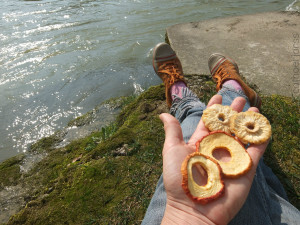
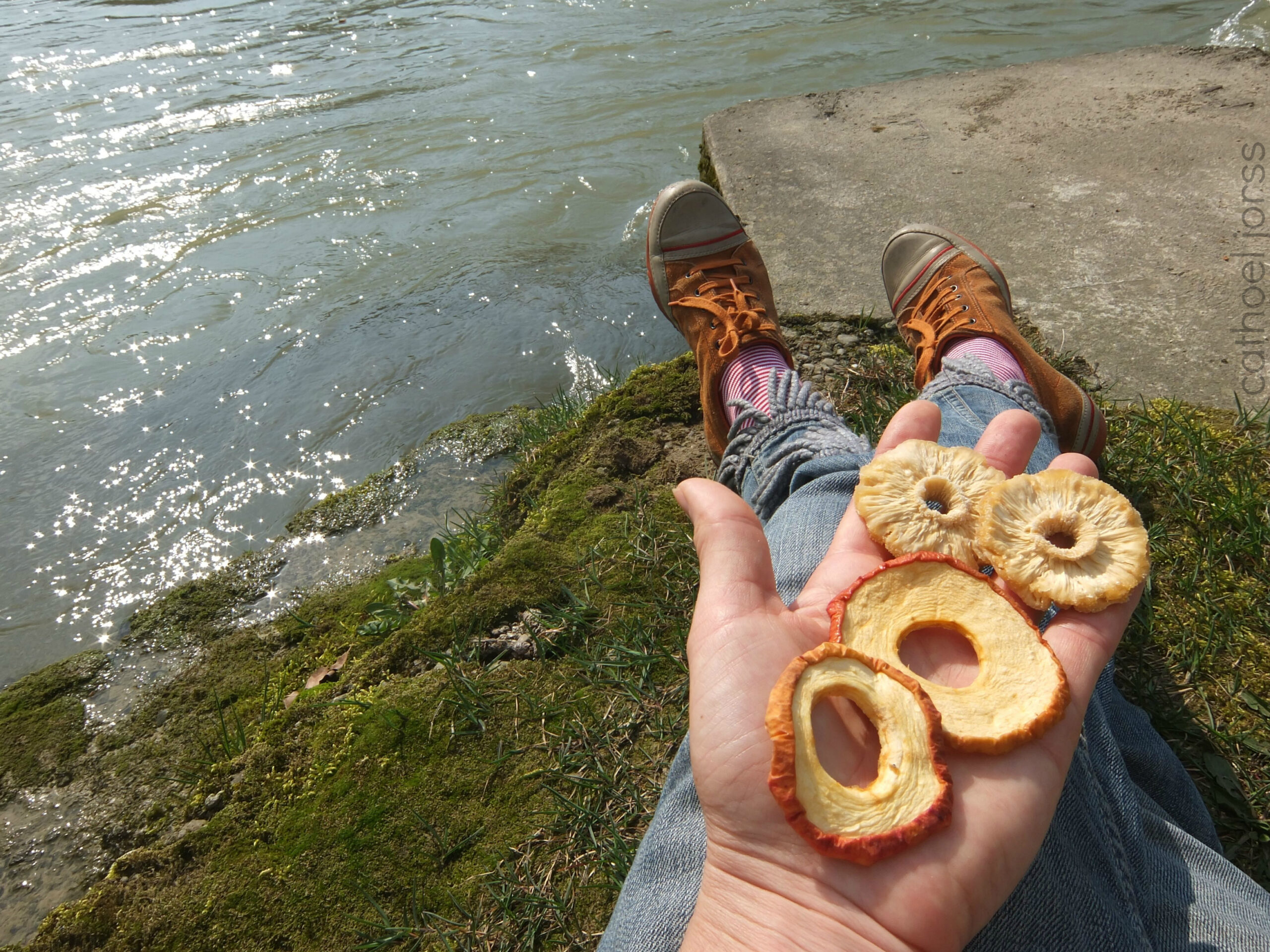
    H2O HoL dried apple bone

  • you are wild, you are free

    you are wild, you are free

    Scampering down the steep stone steps to gain the river path I met our neighbour, skulking behind the boat shed. He was smoking pot. I told him so. “You’re smoking pot!” ‘Ach,’ he said, ‘it’s just so…’ ~ waving his hand to encompass the day, the deepening afternoon, the greenery. “I agree,” I said, and we talked for a while about stinging nettles, and daisies. After that I walked for maybe an hour and didn’t meet anyone else nor their dog. Except for five shadows lurking on the other side of the river, sifting back and forth mysteriously in front of a huge raging fire they had built. The flames were leaping high and the mound of wood they’d set fire to was tall and triangular. This was under the long high roof of a storage shed thatched with bark tiles. Not thatched, exactly. I thought about the impenetrable Swissness of things, imagined the secretive signals by which they would have arranged they would meet up. A train went past a long distance away and at the same moment up on the hillside someone unseen let out a huge, scarifying shriek: the kind you let rip when the forest is all around mystifying you with its trees, and the sun won’t last much longer, it is time to be heading home to the domesticated landscape but for these few moments you are you, you are ancient, you are wild, you are free.

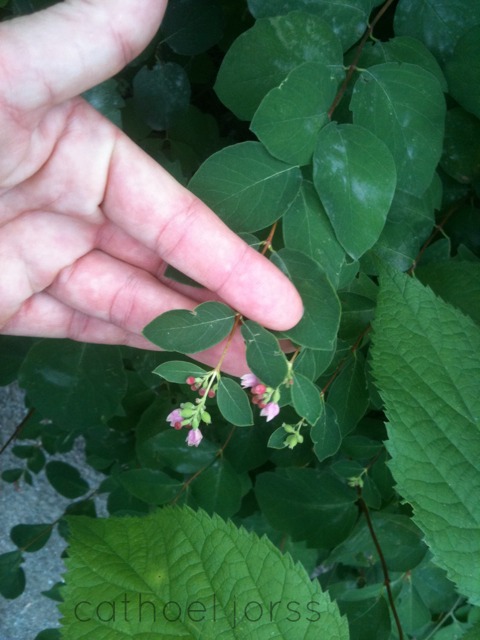
    H2O HoL show you leaves

  • riverside grave

    riverside grave

    A melancholy day. We visited the grave of my friend’s husband. The room where I am sleeping is filled with his things, fishing trophies he won and a fearsomely engraved pewter hard hat with his name on it and, from underneath as I gaze up at the glass shelf, a space where his mind once was.

    The graveyard is peaceful and small. It’s by the river. Big gates are closed but not locked. I asked did she want to be alone but no, this was a maintenance visit. Side by side we crouched down and plucked all the dead heads off the hyacinths growing over him. In another part of the graveyard an elderly man was drifting, carrying a candle in his hands. My friend looked surprised when he greeted her and told me afterwards, he had grown so thin she wouldn’t have known him.

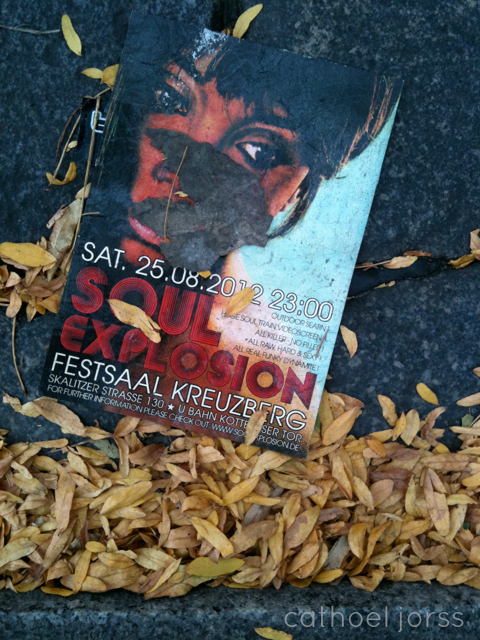
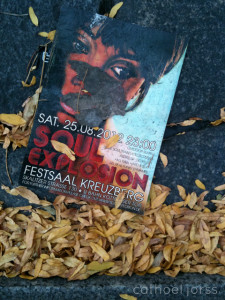
    H2O HoL soul explosion gutter girl

  • with tweezers

    with tweezers

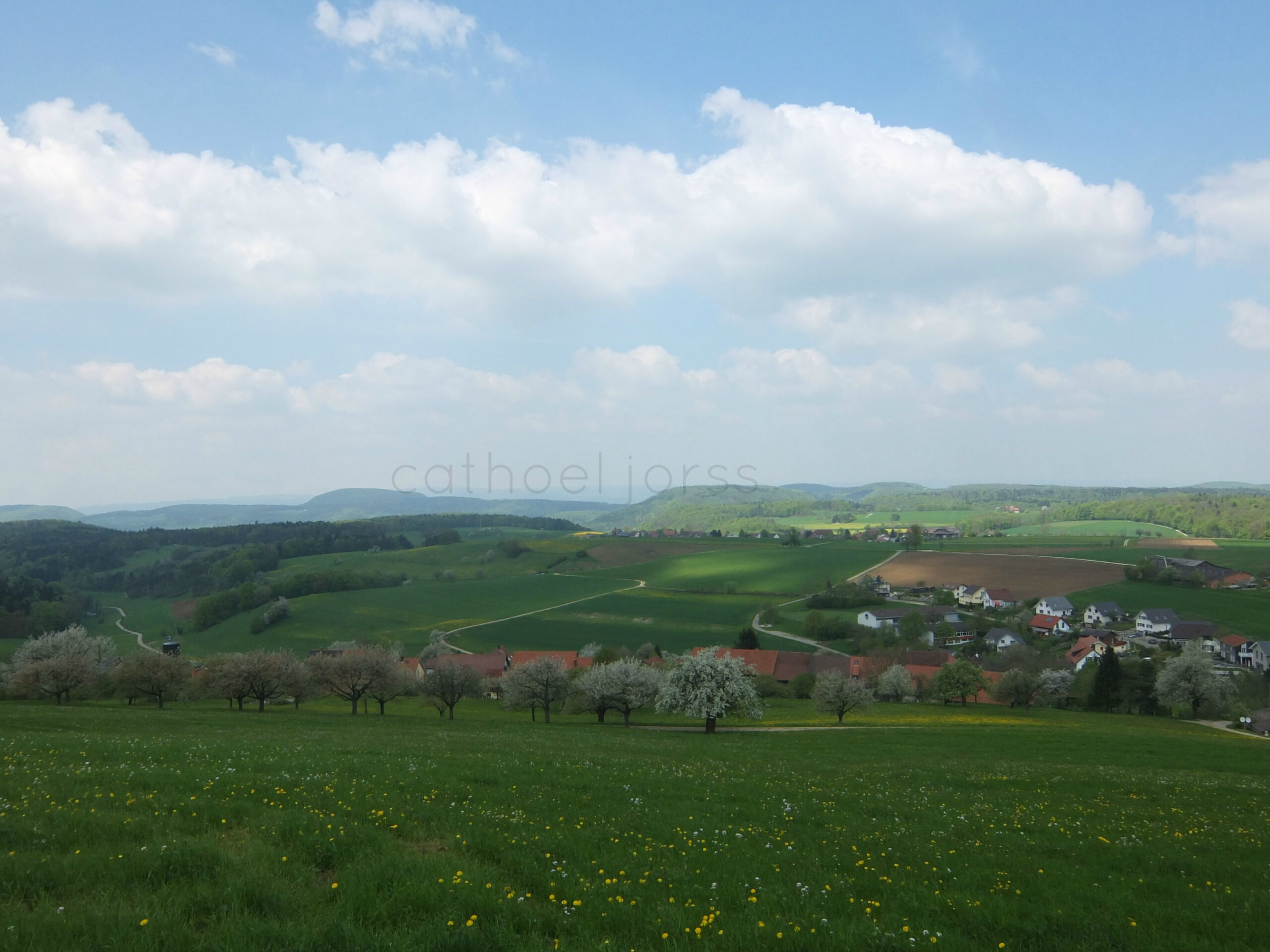
    Last time I was in Switzerland I said to my host, It’s so pretty! It’s like an endless reel of picture postcards, seamlessly unrolling.

    Yes, she said. And if I’m not on my knees in the garden on a Sunday morning, pulling up daisies with a pair of tweezers: my neighbours won’t speak to me.

    H2O HoL swiss countryside for tweezers

  • just entwined

    just entwined

    Found this unbelievable stationery store. It is vast and old-fashioned, everything neatly arranged. They had blocks of yellow writing paper, stacked in rows, some with no margin, some with a narrow margin, some with an extra-wide margin for some specialized purpose. They had gleaming jars of bulldog clips, silver ones, brass ones: pretty. They had all different kinds of string: hemp twine, sturdy and wrapped in a round ball the size of a baby’s head; and mean-looking black-and-white flecks, thin and strong; and a dreamy colourful cotton twine which came on a long tall spool and which I held in my hand for five minutes, warming it. Like an egg. They had a whole shelf of little cardboard boxes, the kind pastels and charcoal come in, held together on the corners by neatly folded staples. They had Moleskines designed by people who use Moleskines: the covers printed with one guy’s harbourside sketch of Hong Kong in pen and ink, another woman’s purling abstract with falling petals. They had slabs of plywood for balancing your painting on your easel and aisles thinly populated with drifters, holding up articles and musing on them, some of them wearing a kind of half-smile or fierce frown of concentration that seemed to me to indicate they were dreaming up what they would make with all these products.

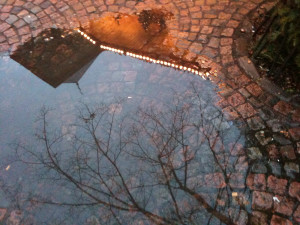
    This was in Copenhagen, which I visited at the age of 10 and again two months ago, and where if it didn’t cost twenty Kroner every second just to breathe, I would move tomorrow, and learn to play better piano and be a better jazz composer. In the teetering, cobbled old town I found five jazz clubs within a square kilometre; most of them filled to the gills; and the audiences ranged from age 20 to 70. What a lovely town. Cold and windy. But beautiful. And peaceful in the water.

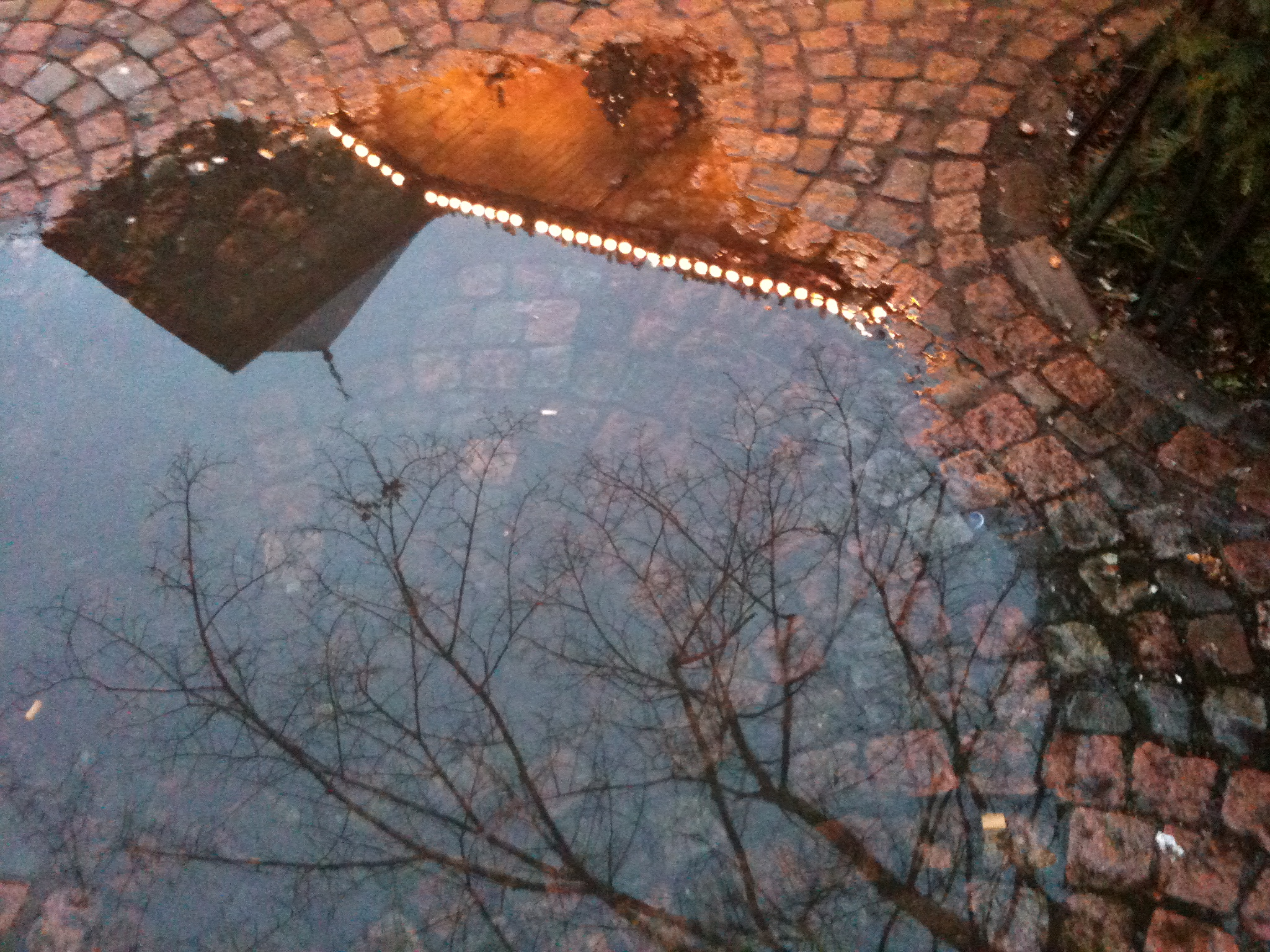
    h20 HoL cobbles puddle copper

  • antaquarium

    When I went to Copenhagen on my own it was cold and windy and there were times I felt very lost and alone. When I felt lost and alone I would take refuge in one of two places: the library, which has free wifi and a cafe and people clustered around low tables on Eames chairs, earnestly chatting; or this antiquarian bookshop I found, labyrinthine and lined to the ceiling in leather books, which has been made over into a student caff. There are little tables tucked under the shelves and in corners. They make a very rich hot chocolate and they serve cheap food. I loved to sit in there out of the wind and just gaze and gaze, letting people’s conversations filter through me, feeling how the venerable books stand shoulder to shoulder, a phalanx of minds, and how their massed presence like the presence of noble clouds grounded and rooted me with a kind of magic spell. I grew sleepy and the world seemed much kinder. My ears blurred. I sat for hours as though underwater.


  • quiet heart

    quiet heart

    When I walk between the quiet cottages and see people with their heads bowed, eating dinner… I can feel the wildness in my heart and I feel like a teenager, it feels like rage.

    H2O HoL brleave scrap stall

  • switzerland

    My friend lives by a rapid, cold river in northern Switzerland; her little village is a lot more built-up than it was when I was last here. We walked by the river in silence and a kind of sadness for what has become of the landscape. You have to kind of relax your mind away from the glaring new terraces with ancient trees felled in front of them to afford the new tenants a view; and concentrate instead on the mountains behind, the green meadows, the velvet of moss in the crannies of birches. I was tired from the eleven-hour train journey from Berlin with too many suitcases full of books. We saw a tree felled by a beaver, its stump whittled to a pencil point, its inner flesh fresh and not yet yellowed. We saw a man turning handstands on a promontory, again and again, his feet falling in front of him and his white shirt dousing his head. We saw a lamb curled in the grass and chewing very slowly, its expression consumed with a kind of passionate ecstasy that made us laugh again over dinner, hours and hours later.

    On our walk my friend waved to a nearby hillside and said, You see: that’s Germany.

  • a last-minute shimmy of the hips

    a last-minute shimmy of the hips

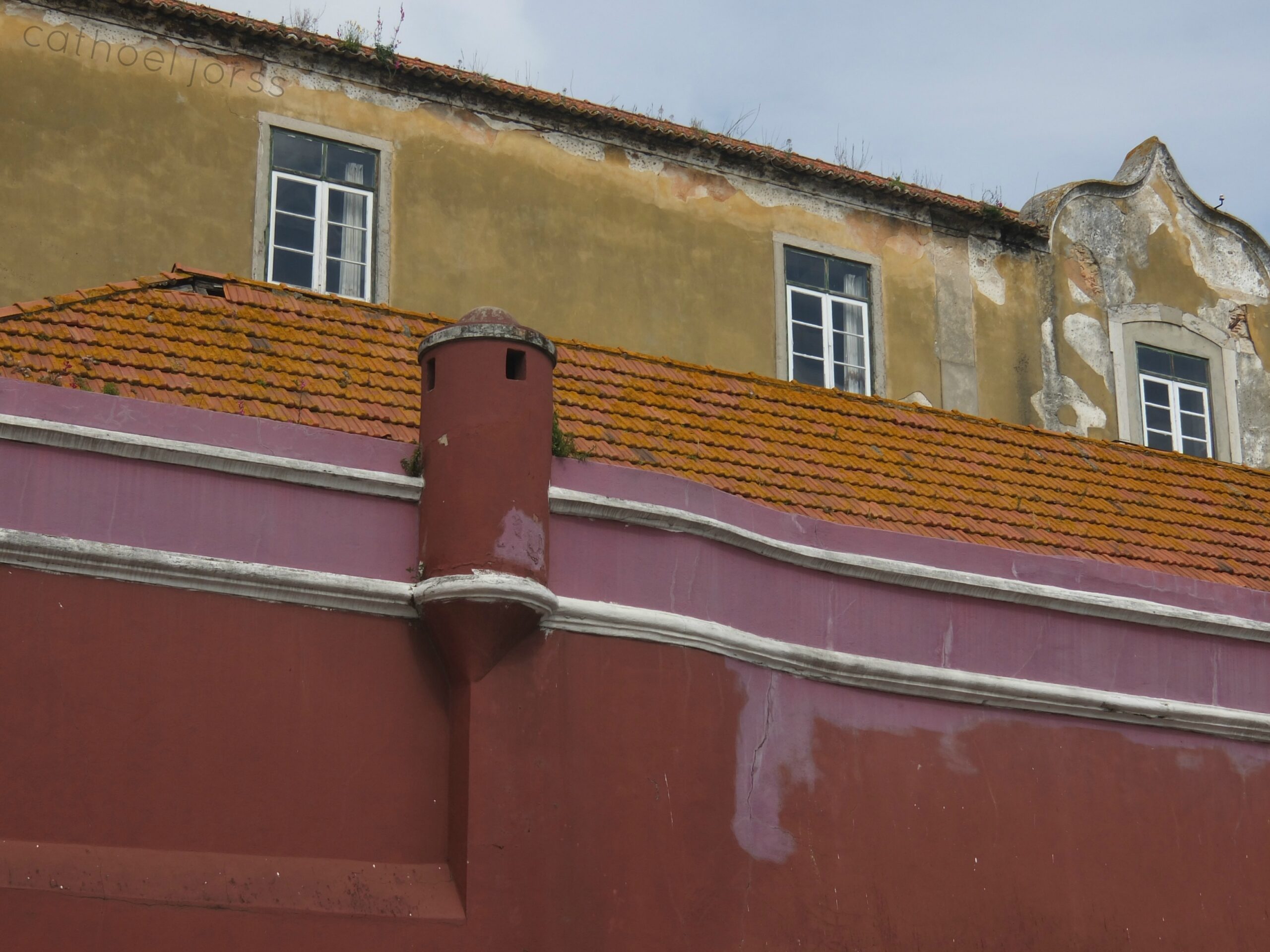
    Last night was the first evening in Portugal for either of us & we wanted to hear fado. Went for an evening stroll, and lo! on the first hilly corner was a handwritten sign saying, Fado Tonight. And on the next corner! And the next! We’re in the old quarter and fado is a boom industry. Touts walked backwards in front of us, crooning, Just buy one drink & entry’s free. Prices in the fado restaurants are oddly Scandinavian. We kept climbing. Up a side street festooned with colourful laundry, pelargoniums spilling from plastic pots, was a stooping little bar with crumbling steps. The bar owner was affable and had a genial, rubbery face. We ordered dessert. In a shadowy corner two fellows were playing guitar. One of them tilted his curly head back against the wall and began to sing. After his first song there was a modest commotion at the doorway: up there at street level stood a small, gleaming, bald man of 70 or 75 resplendent in a cream suit with wide lapels and the most gorgeous pale blue tie. He came down the steps and conferred with the musicians. Then standing easily with no affectation of manner he closed his eyes and sang. His voice was throaty and weathered, from time to time it throbbed. Caramel rice custard dissolved down my throat like sweet tears. He sang two songs and then vanished with a kind of conqueror’s wave. Then it was the turn of the bar owner, who turned up some canned background music and puffed out his chest. His voice was big and round, his gestures dramatic, he was a natural-born ham. His wife kept serving, stoically. He slid past all the tables and with three pinched fingers took up a trilby hat from the top of the cash register. Setting it on his head he went on singing, oh so roundly, oh so bigly. His wife behind him gestured to a table of Germans “two beers? oh, three? three beers” and as her husband simperingly launched a second song (“I sing just one more,” he said, “one more,” so apologetically that my heart rushed to love him and their hard-working marriage) she glided round the bar with three beers and presented them, carrying a little last-minute shimmy of the hips. He had tears in his eyes when he finished. Because music makes queens of us all.

    H2O HoL lisbon colours