Tag: tropics

  • pity flamingo

    Every week I cross town on the train and we pass a tower block of identical grey-frame units which have grey balconies. One balcony, at eye level with the train, has a bright pink inflatable flamingo hanging like a lurid fern, I guess somebody went to Florida or Havana and brought it back with them to bring back the tropics. It doesn’t look tropical. It looks more defeated. The air has shrivelled out of it, or perhaps shrunk in the bitter chill of Berlin’s below-zero winter. The bird sags, motionless, its head drooping over its breast and hanging down to the shrivelling feet.

    Poor tropical bird, alone trapped in glassy Berlin and its colourless end of year season, after all the other bright birds have vanished down to the southern shores to caw and preen.

    Snow lies on the ground in greying patches. Hardened scars of black ice have been strewn with sharp pocks of gravel from the big grey plastic bins. This fake bird is the only pink thing. Apparently flamingoes, naturally flamboyant or perhaps insecure on their wavering stalk legs, will not make babies unless a crowd of other bright pink flamingoes stands round them watching.

    Zoos have had to set up elaborate peacock tails of mirror to encourage them to breed. Gazing out at this sad blow-up bird sometimes I think about staging an intervention. What if every passenger put on a pair of Edna Everage sunglasses. What if we all stared out the windows and flapped our arms. Maybe the dying flamingo would stir on its still leaf of string. Maybe the neck would waggle and stretch, and the tiny head come up again to display proudly its improbable and superciliously curled coconut ice pink swan lip.

    But Berlin’s trains are courteous and pragmatic. People stand back tiredly to let each other on. This week I’ve passed a junkie shooting up right into the arm, against a pillar at my nearest U-Bahn station; five people in a row who were all reading books but seemed unaware of each other; and a sturdy Polish tourist who rolled, under my nose, a plump head of ganja into his palm so that when we all got off the train, he could light it.

  • the true markets

    On Sunday in the midst of strife I had a most wonderful day. Met an acquaintance who wanted something from me, and we walked into a foreign land so familiar that I fell into my childhood, and the sweet world intricate and divine which sustained my deepest breaths when I was seven, nine, twelve, eleven rose up in me and about me again and the trees were all there, we knew each other, the soft wind… I cannot describe and no one can transport that essence, the spirit of the place wrapping its tendrils like

    a delicate sweet love

    like a plant which is birdsong, a vine divine

    or like the bride of the forest who shyly beckons shadows, and sings underwater, and has rooms for all our grief.

    You walk in through the trees and there are people everywhere, eating and chatting. I took two hundred photographs. I remembered wandering on my own in the pasar, on the markets, in Jakarta

    alone but never alone, and the trustfulness held in the colourful world back then. Adults were sexy and cool. They didn’t impose. Nobody touched me. Only the lady, the old ibu, wrapped in her thin scarf who took hold of my head in Blok M and cried all over my face, down my neck, her reddened betel-nut tooth stumps, and her grace and words: this child, this girl, she has depth, she is in the world, she is a soul I can see, she is one of the ones.

    I can’t remember her words. But I will never forget the shy proudful sensation of her touch on me and her recognition, down from the mountains, the cave with a wall solid behind it which creates a resonance.

    On the bright Thai food markets which began, my Peruvian friend told me, from the longing people had to scent and taste their lovely homeland

    where food is beautiful, and fresh like birds, cooking a kind of singing

    not all pickled, roasted, brewed, we found Asia in Berlin. The laying out of rugs and seagrass mats. The bright umbrellas and bold plastic implements, lime green, orange, blue. All the families squatted comfortably at their esky tables and their cardboard carton frying-boxes, each carton spattered inside with dark from the oil splitting off in the toiling wok –

    There were stalls everywhere, low at ground level, people squatting on their mats pounding and chopping and skilfully frying things. Freshness drew me and my acquaintance, who had said “I will be there for you in this hard time” but in five hours asked me not one question about all of my news and myself, down one grassy alley after another, under the trees, and out in the big clear grassy field. I overheard a Berlin punk on his phone saying, “We are here in the Hauptfressgasse,” the principal pig-out aisle, “come find us,” and the sky

    with its inimitable piles like God’s geography, pleasurable, transient. The sky was a beast you could watch for hours straining its leash. And then the train home so swaying and fast between the treetops and the speed was exciting, the lurching and long corners, the sense of riding rapidly above the grimy familiar streets and swinging, like an ape so joyous in his homeland, vine to vine, hand to hand, song to song – that was all I was conscious of. It was such a relief.

    I wouldn’t say I was drunk. But I was so very, so very, just so relaxed. A lady under a purple umbrella with a carton-top of bottles, the world’s smallest, freshest bar, mixed up an unholy powerful brew. In Thai German Spanish she said, “You want capina? You want mosquito.” I chose mosquito. Then she sliced the lime with two sharp chops, into the palm of her hand, with a cleaver and crushed it in the cane sugar with her big pestle. Mint leaves then she filled the whole beaker to the rim with gold Havana rum. “Drei Euro.”

    Clear tubs with jelly shapes swimming bright and glutinous in the milk, milk of the coconut, mother that travels long seas. The plangent scrabble and wail of unselfconscious Asian voices, familiar in my oldest memories and so sweet and salty and spiced and honest to my ear. Berliners roar, a guttural beery spume: in blaring Jakarta the screeching, the Bulgarian mountaintop want of modulation, the intensely modelled fineness and discretion – that is culture, or one early formation of cultural expectation, to me.

    People sitting crouched around a frayed mat under the trees were throwing yellowed dice high again and again, some unfamiliar game printed on the cloth they had spread between the five of them. Little children kicked their legs. I ate and ate. Every mouthful seemed precious. The fresh feisty fruitfulness, realness, diverse sprung view. There were plates of fried insects, sweets wrapped in banana leaves, hot spicy soups. Bright pink milky drinks and bottles garlanded in flowers. I had satays, dumplings, green papaya salad threshed in a trophy-sized mortar which filled my mouth and throat with remembered fire. The high thick combing trees foamed around the park, a large, open park, almost concealing the buildings. We could have been anywhere, we could have been in the Seventies when adulthood was a charm I held inside me. Could have been in the tropics. Could have been out to sea somewhere in the congruent, lasting, more intricate world, that was built by many hands and had trees and is gone.
  • the pickling palace

    The people across the road are drunk and two of them are planning to have sex together tonight for the first time. That’s at this stage, it’s not even dark yet, we’ve still got the Fight that Blows Up Out of Nowhere and Falling Asleep in the Pizza up our sleeves. Their voices carry and then the Friday afternoon traffic will surge up the hill again to carry them away. He says something and she says, “You are fucking kidding me.” “No,” he says, something something. “You’re just making that up!” Her incredulity is a dare. Climb this tree for me and bring that fruit. He says, “No, I’m deadset serious. Anything you like.” One of the other blokes says something and then the girl begins to sing, or chant, like she was at a football game: “Je-sus, Je-sus, Je-sus, Je-sus.” The positive guy sings something over the top of her, harmonizing. He’s making it up. He’s fucking-kidding her. Their verandah falls apart in a seething heap of laughs just as a truck roars down the road. When the noise clears he is saying, aggrieved, “…been doing it all my life.” I know that feeling, I have too. I have just got home from a delicate day of negotiations in my unconscious and as we swept over the bridge with its hanging-lantern streetlights and banners I felt a song unbrew in me. I sang it out the window in handfuls of confetti and as we pulled away from under the biggest fig tree, that the road goes around (the greatest kind of road), I said, to my long-legged companion who was driving, “Did you see that girl on the corner, the beautiful girl, with the guy who’s just so in love with her?” “Yes,” he said, his voice warm as if fond of them. “How she was just standing there in her little purple dress,” I said, “holding the orange flowers he brought her. He’s looking at her so carefully, he’s in love with her every little gesture. She’s not even noticing, telling him something, he’s in love with the way that she says it.” “So is she in love?” he wanted to know. I said, “Could be. But she’s not thinking about it, she is remembering something that happened and telling him. So it was hard to tell.”

    We drove round a sweeping corner prickly with pedestrians. We had watched a giant ibis as it took off from a street sign and flew the length of Charlotte Street, its white wings insignia. The prosperous tropical colonialism and sandstone and big bunches of trees made me feel at home. I wound my seat back and propped my foot out the side window. I said, sentimentally, “Both of them standing there with their bicycles.”

  • dusk, dusk, dusk

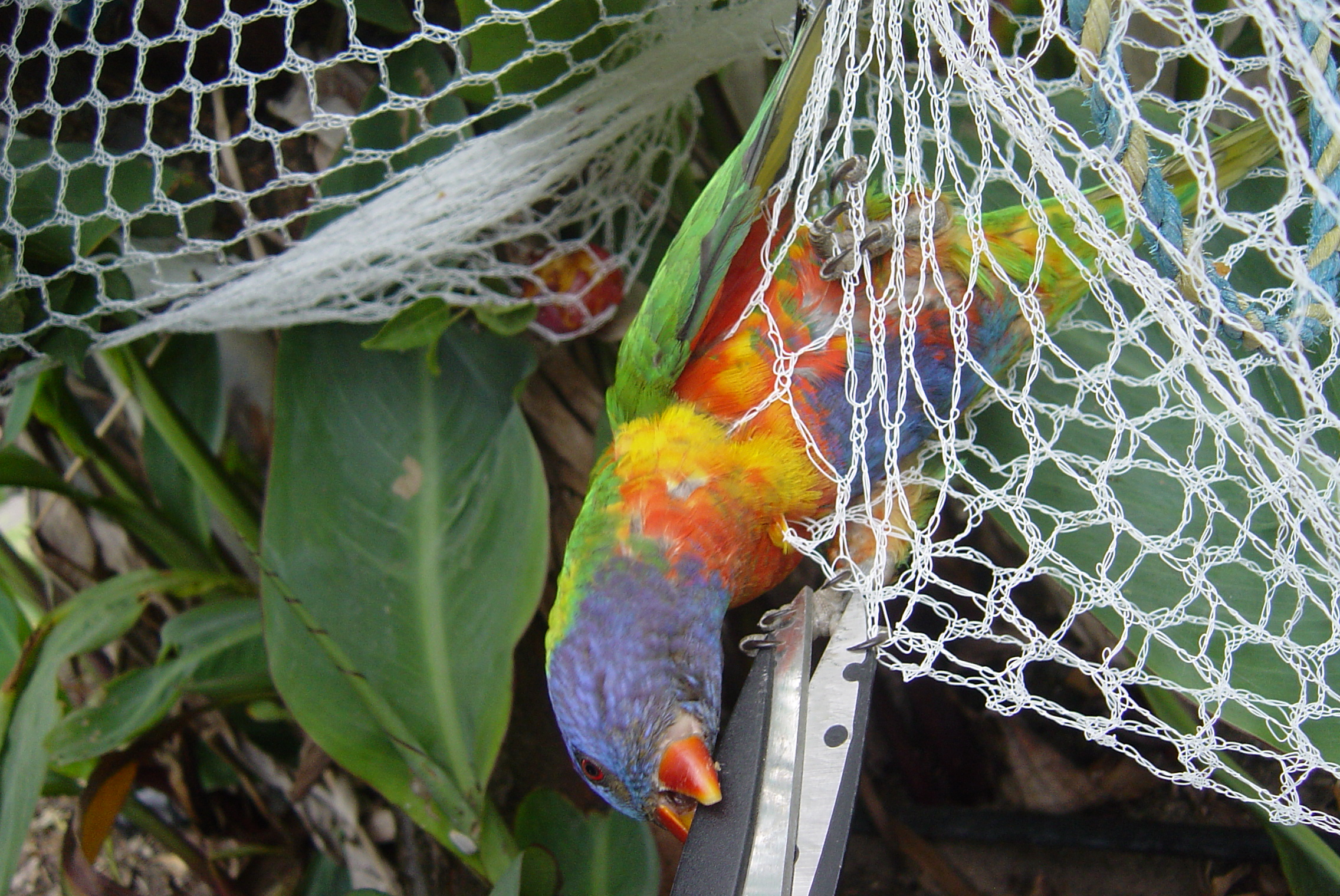
    The strange screeching of tropical birds spurling into midnight’s blue sky at 6 o’clock, as the night gathers like a dew, forms like a band, a marching band of strange and unaccountable, uncountable, nasty-beaked bird, weird big birds, glossy little birds, green birds and brown. Brisbanana. You are utterly the weirdest, my sweet suburban love.

  • no use to a lizard

    A small scream from the other room. “What? What?” “Can you come here?” On the rug is lying toes-up a small, lucid-bellied, iridescent, recently murdered gecko. Its tail has been severed to a bloody stump: it didn’t just drop, it was ripped off. By its extreme corners I pick up the rug and gingerly carry it to the ferns. “Tisch! Tisch! Where are you, you little cat-monster?” A cat-bell is no use to a lizard. We both stand over it mournfully, uselessly. “Poor little dragon,” he says.

  • bristanbul

    bristanbul

    Brisbane always was like this…. for me. Suburban and shrill in the day; shadowed and sultry by night.


  • replanting

    “Aw!” ‘What?’ “Aw just… somebody’s torn this little plant out, and now it’s gunna die.” I could hear my surprised, injured tone of voice, high like a disappointed child. My friend stopped and I had already squatted in front of the dismal garden bed built round the trunk of a tree, in which someone had planted four or five tiny evergreens and a wilting marigold. It was two degrees this morning; I had on leather gloves. Ideal for scraping out a hole in the soil. Took up the tiny shrub, lying on its side in what seemed to me a foetal position, and stowed it in it new hole, tucking soil around its roots and talking to it as I pressed the dirt into place. “There you go, that’s better…” I stood up, brushing my gloves against one another, and turned back to my friend and our conversation. A woman on a bicycle had stopped to watch. She gave me this head-tilting, compassionate look with two very very slow blinks of her eyes, acknowledgment.

    At home on my kitchen windowsill I have a shred of pelargonium stolen from someone else’s window box, a present for a friend who cannot keep sprigs of basil from the supermarket alive yet dreams of being a gardener. He only has a tiny, bricked-in, West-facing balcony that looks dismally over a supermarket car park. I’ve shown him photos of how, in an Australian climate at least, you can grow a lot of food in such a space. When I saw this still-flowering window box with not just red and pink but also the darker, sultrier, more sophisticated velvetty maroon flowers, I filched a bit, peeled from the undermost hem of the plant where the person caring for it would lose least enjoyment. A few paces further on I found an empty plastic cup. Scooped up a cupful of leaves for the bottom layer and then a handful of rich dark friable soil. Stowed the incipient plantmonster in there and will nurture it until it has begun to send out some roots, hopefully before I leave Berlin, so then it can be passed on to its new owner with hopefully some chance of surviving the grey winter.

    As a child in the tropics I used to worry about the trees, who seemed to me buried to the neck in hot, foetid soil, unable to move, >trapped!!< It took me years to work out that this kind of simple projection is not really compassion, does not help anyone. Years, and some lambasting from a Tibetan Buddhist nun who yelled, “You have too much compassion & no wisdom! No wisdom!” In any case one imagines suffocating heat is less of a problem for a German tree.

    H2O HoL white river flowers